Flax Scutching Bee — History & Facts
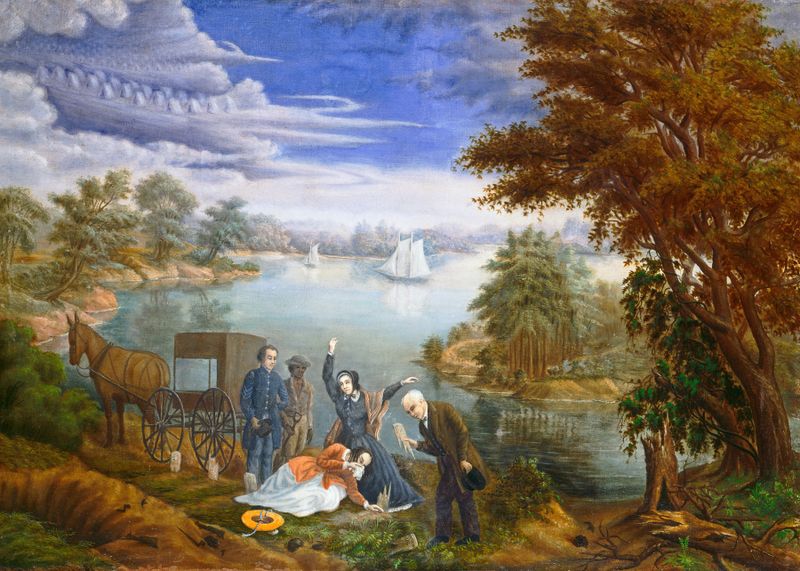
Can beauty exist without sorrow? In the heart of rural life, where the relentless rhythm of toil meets the delicate beauty of nature, loss lingers like an uninvited guest, shaping the landscape of existence. Look closely at the composition, where the figures are engaged in the laborious task of scutching flax. The soft hues of ochre and green dominate the canvas, drawing your gaze to the center of activity. Notice how the light filters through the leaves, casting gentle shadows that interplay with the workers’ gestures.
The tension between movement and stillness encapsulates a profound sense of purpose—each hand, each tool telling a story of both beauty and hardship. In the background, the distant fields stretch out, a reminder of the ephemeral nature of life and labor. The expressions of the workers tell their own tales of endurance, reflecting an emotional landscape shaped by tradition and sacrifice. The contrast between their focused expressions and the idyllic setting evokes a sense of longing—suggesting that amidst the beauty of rural life, there exists an undercurrent of loss and nostalgia. Created in 1885, this piece emerged during a transformative period in the artist’s life.
Linton Park was deeply embedded in the artistic movements of the time, seeking to render the everyday experiences of laborers with empathy and realism. The social changes and industrial advancements were reshaping the landscape, pushing artists to explore the intersections of beauty, productivity, and the quiet sorrows that accompanied them.