
The Exhumation — History & Facts
Who listens when art speaks of silence? In the stillness of The Exhumation, a haunting yearning emerges, beckoning the viewer to confront the unspoken narratives buried beneath the surface. Begin by focusing on the somber color palette of muted browns and grays that envelops the scene, drawing the eye to the central figure, a laborer, kneeling amid the earth. Notice how the light predominantly filters through the dense foliage, casting dapples of illumination that both highlight and obscure the act of unearthing. The meticulous detailing of the worker's posture, caught in a moment of intensity and reverence, contrasts with the surrounding shadows of the graveyard — a powerful reflection of life meeting death. The emotional tension in this piece is palpable.
The act of exhumation represents not merely a physical labor but a profound relationship with memory, loss, and the desire for closure. The expression on the laborer’s face is steeped in both determination and sorrow, hinting at the weight of the history being unearthed. Small details like the tremors in his hands and the slight bend of his back convey a deeper truth: that even in the darkest acts, there lies an eternal quest for understanding, for connection. Created around 1890 during a time of burgeoning artistic experimentation and social upheaval, the artist painted The Exhumation while residing in England.
This period marked a pivotal moment in his career, where themes of mortality and human experience began to dominate his work. The cultural discourse surrounding death and remembrance heavily influenced his direction, leading him to embrace a narrative style that invites viewers to engage with the weighty silence of the past.
More Artworks by Linton Park
Browse all →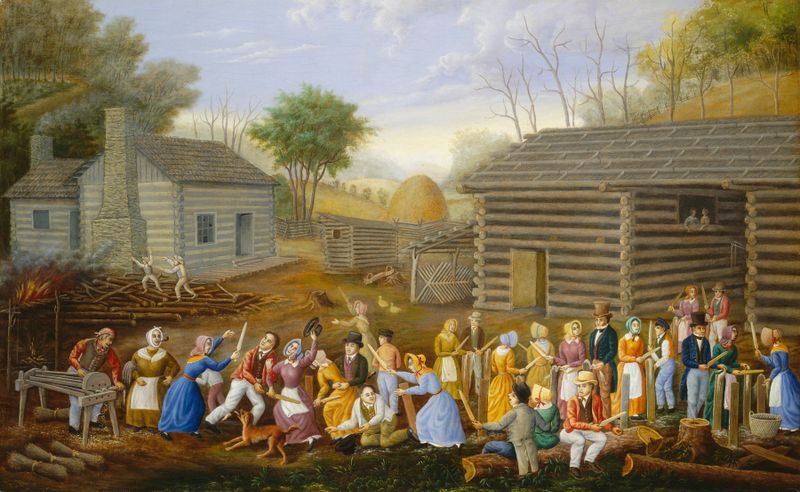
More Historical Art
Browse all →
The Night Watch Militia Company of District II under the Command of Captain Frans Banninck Cocq
Rembrandt van Rijn

Lincoln Memorial
Henry Bacon

The Third of May 1808
Francisco de Goya

Isaac and Rebecca, Known as ‘The Jewish Bride’
Rembrandt van Rijn

The Charge of the Mamelukes (1814)
Francisco de Goya

De vier ruiters van de apocalyps
Albrecht Dürer