
Flood at the City Gate — History & Facts
Is this a mirror — or a memory? The floodwaters rise ominously, blurring the line between the city’s vibrant life and the impending chaos that nature threatens to unleash. Look to the foreground, where figures struggle against the current, their bodies twisted in a dance of desperation and resilience. The artist employs a muted palette of blues and browns, suggesting both the murky waters and the somber mood in the air. Notice how the light catches the glistening waves, illuminating the tumultuous scene, while shadows deepen in the background, hinting at the dark unknown just beyond the city gate. Amidst the tumult, contrasts abound: the tension between human vulnerability and nature’s unstoppable force, the chaotic movement of the crowd against the stillness of the ancient gate.
The artist captures a moment of balance — a fleeting pause between catastrophe and survival, emphasizing the fragility of existence. Small details, like a child clinging to their parent or a dog suspended mid-leap, evoke empathy and serve as poignant reminders of personal stakes amid collective tragedy. Elias Pieter van Bommel painted Flood at the City Gate in 1841 during a tumultuous period in European history marked by social upheaval and shifting artistic currents. Living in the Netherlands, he was part of a movement that sought to marry realism with emotional depth, reflecting the anxieties of a society grappling with industrialization and its consequences.
This piece encapsulates not only a moment in time but also a timeless reflection on humanity's relationship with nature.
More Artworks by Elias Pieter van Bommel
Browse all →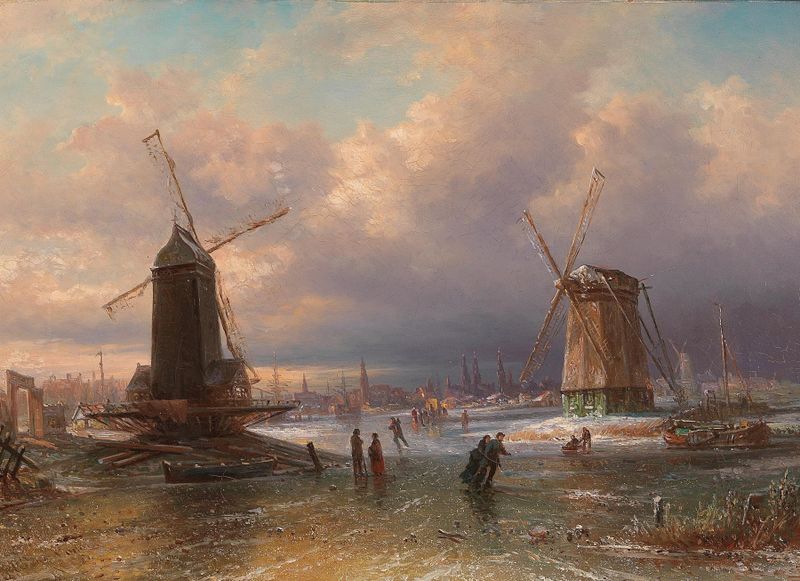
Winter Pleasures on the Ice outside a Dutch Town
Elias Pieter van Bommel
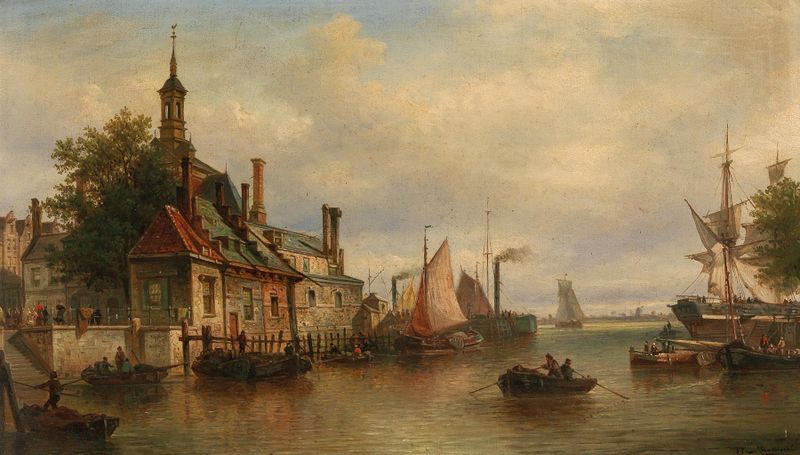
The Old Hanse Gate on the Maas in Rotterdam
Elias Pieter van Bommel

The Singel and Brouwersgracht, Amsterdam
Elias Pieter van Bommel

View from the Nieuwengracht in Amsterdam
Elias Pieter van Bommel
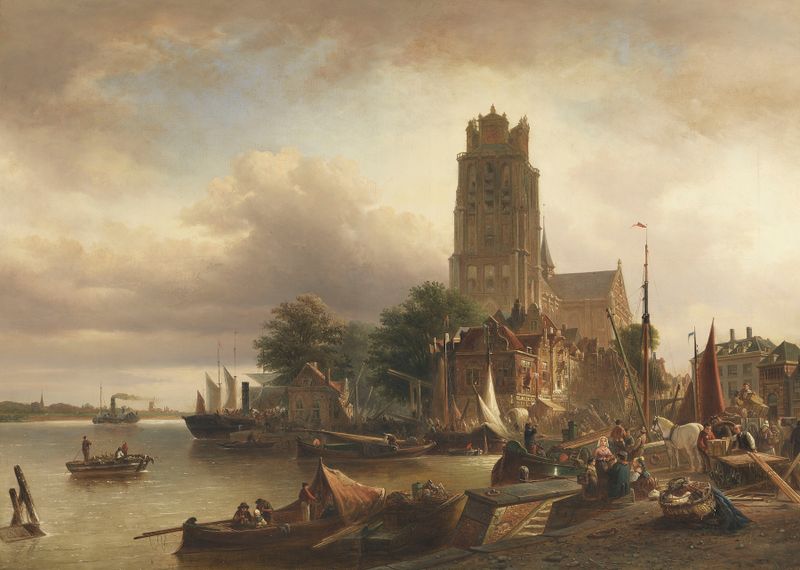
Ansicht von Dordrecht mit der Grote Kerk
Elias Pieter van Bommel
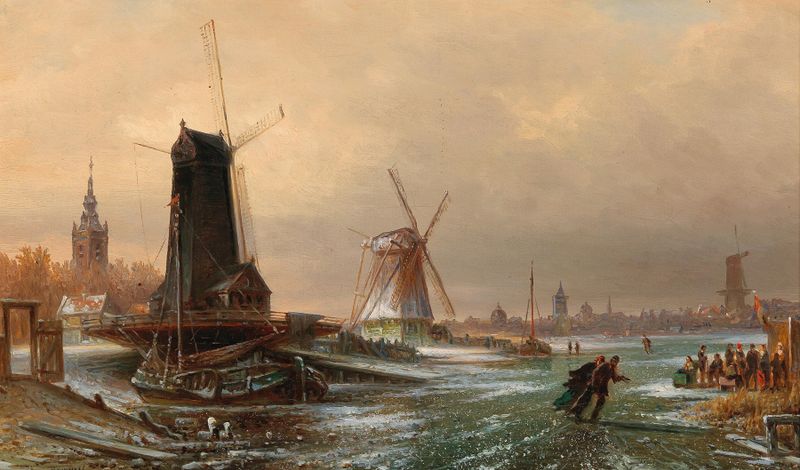
Dutch Sawmill, Water Mill and Flour Mill, near Amsterdam
Elias Pieter van Bommel
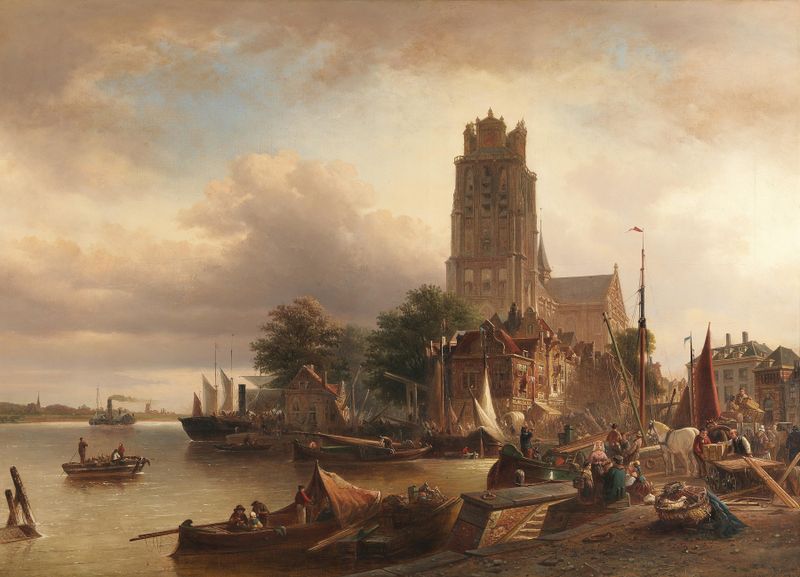
Dordrecht
Elias Pieter van Bommel

Motif Of Dordrecht
Elias Pieter van Bommel

A Winter View of the City of Dordrecht
Elias Pieter van Bommel
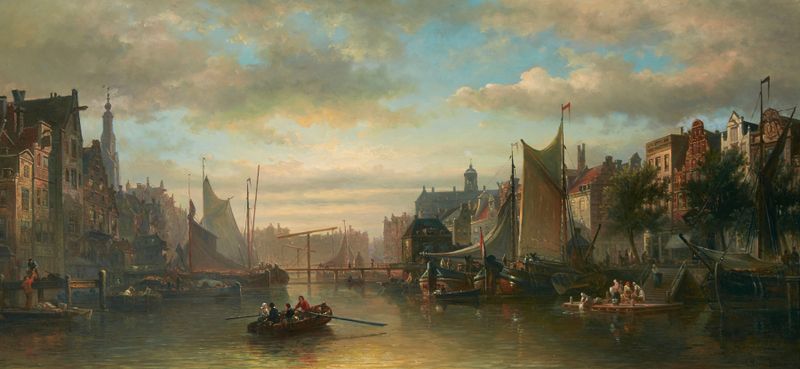
A view of Amsterdam
Elias Pieter van Bommel
More Historical Art
Browse all →
The Night Watch Militia Company of District II under the Command of Captain Frans Banninck Cocq
Rembrandt van Rijn

Lincoln Memorial
Henry Bacon

The Third of May 1808
Francisco de Goya

Isaac and Rebecca, Known as ‘The Jewish Bride’
Rembrandt van Rijn

The Charge of the Mamelukes (1814)
Francisco de Goya

De vier ruiters van de apocalyps
Albrecht Dürer