Floral Still Life with Hollyhock and Marigold — History & Facts
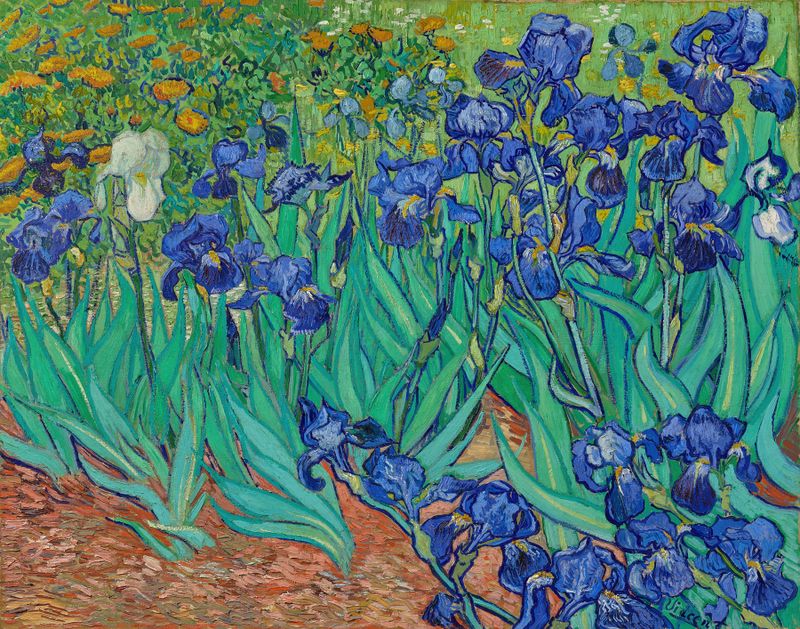
Could beauty survive in a century of chaos? In the hands of Jan van Huysum II, it flourishes, vibrant and defiant against the tumult of time. Look closely at the cascading blooms in Floral Still Life with Hollyhock and Marigold. The foreground bursts with color, where vivid marigolds and delicate hollyhocks intertwine with lush green leaves. Notice how the play of light dances upon the petals, cast in a symphony of warm yellows and deep reds that pull the eye into their lively embrace.
The meticulous detail captures the very essence of each flower, inviting the viewer to appreciate the transient beauty of nature, as if each stroke of paint is a heartbeat. Delve deeper, and you'll uncover a juxtaposition of fragility and resilience. The vibrant colors seem to pulse with life, yet they quietly reflect the brevity of existence, a reminder of the inevitability of decay. The contrast between the steady background and the dynamic floral arrangement speaks to the movement inherent in all living things, suggesting that beauty, while ephemeral, possesses the power to captivate and inspire even in the face of adversity. Created around 1718, this work emerged during a period when van Huysum II was establishing his reputation amid the Baroque art movement in the Netherlands.
The era was marked by an appreciation for intricate detail and vibrant color, reflecting a society in transformation. Art collectors sought out van Huysum’s floral compositions, which combined technical precision with emotional depth, allowing him to thrive in an age characterized by both beauty and upheaval.