Flower and Bird Illustrations (Kachō emakimono) — History & Facts
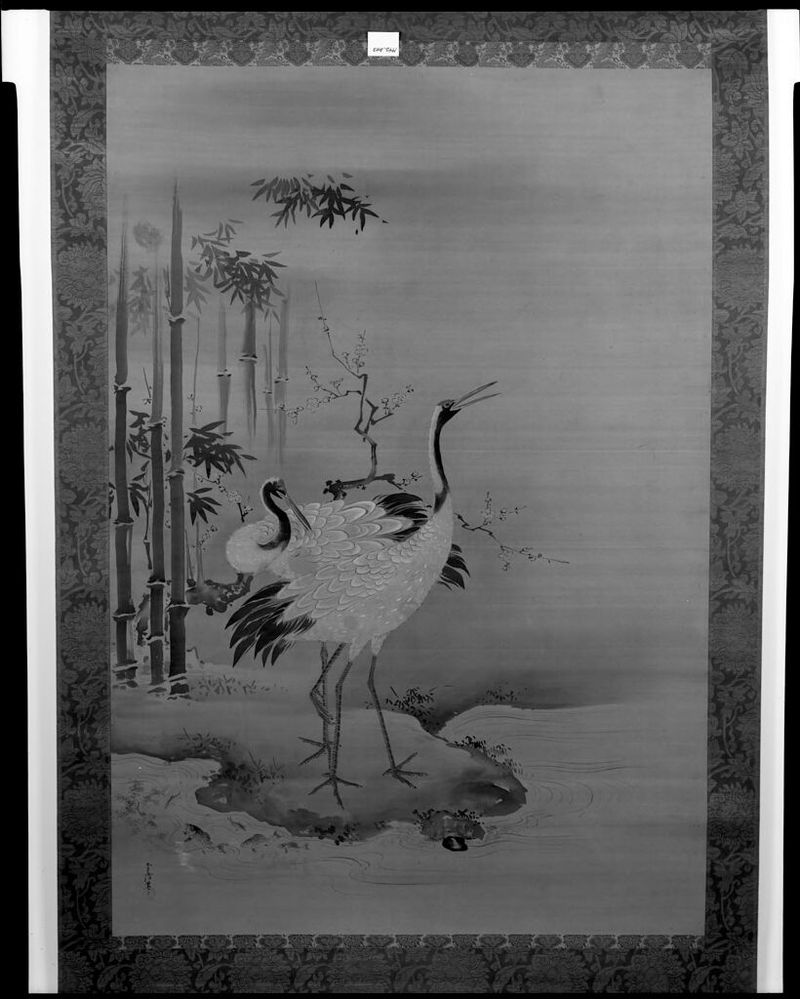
What if beauty was never meant to be finished? In the delicate strokes of this 18th-century masterpiece, the fleeting essence of nature lingers just out of reach, echoing the impermanence of life itself. Look to the left at the soft petals unfurling in vibrant hues, their colors bleeding into one another like a gradual dawn. Notice how the artist meticulously captures the iridescence of the bird's feathers, a shimmering cluster of blues and greens that seem to flutter with a life of their own. The composition is carefully balanced, a harmonious dialogue between flora and fauna, yet each element exists distinctly, like whispers in a quiet room, reinforcing the sense of solitude within beauty. Hidden within the interlaced patterns are themes of transience and absence.
The bird, poised yet distant, suggests a yearning for connection, while the flowers, though resplendent, evoke the inevitable decay inherent to their existence. This juxtaposition invites the viewer to confront the tension between creation and loss, an invitation to appreciate beauty in its ephemeral form. Kano Tsunenobu painted these illustrations during a period of significant cultural refinement in Japan, reflecting the transitional nature of art in the Edo period. As a member of the Kano school, he embraced traditional methods while responding to the demands of a society increasingly captivated by natural beauty and the significance of nature in daily life.
This work emerged at a time when Japanese art was evolving, yet deeply rooted in a respect for the simple, the subtle, and the unrepeatable.