
Flowers, fruit and jug — History & Facts
What first seizes the eye in Flowers, fruit and jug by Alexej von Jawlensky is the audacity of its color: flowers explode in molten orange, their forms outlined with a decisive, almost sculptural blue. The composition is a riot of contrasts, with cool, shadowy leaves pressing against a background that pulses with violet and plum. Each object — the jug, the bowl of berries, the scattered fruit — is rendered not as a study in realism, but as a vessel for pure color and energy.
The light does not fall naturally; instead, it electrifies, flattening space and making every shape pulse with its own inner life. The palette sets a mood of restless abundance, as if the table itself were caught in the moment just before a feast. Painted in 1909, this work belongs to a world in upheaval, when artists across Europe were breaking with tradition and searching for new ways to see. Still lifes like this, once the quiet domain of Dutch merchants and bourgeois parlors, became a laboratory for modern painters to test the limits of form and sensation.
Jawlensky was working in Munich at the time, part of the ferment that would soon give birth to the Expressionist movement. The National Gallery of Slovenia now holds this piece (NGS1363), a vivid record of that restless era. Look again at the flowers: they are no longer mere decoration, but a declaration of what painting could become.
More Artworks by Alexej von Jawlensky

Murnau
Alexej von Jawlensky
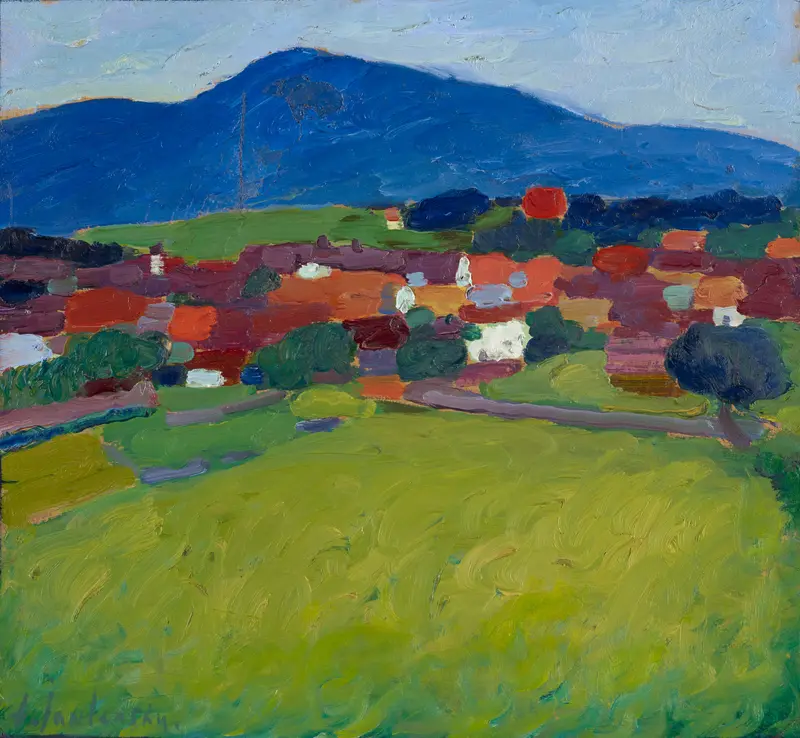
The Village Of Murnau
Alexej von Jawlensky
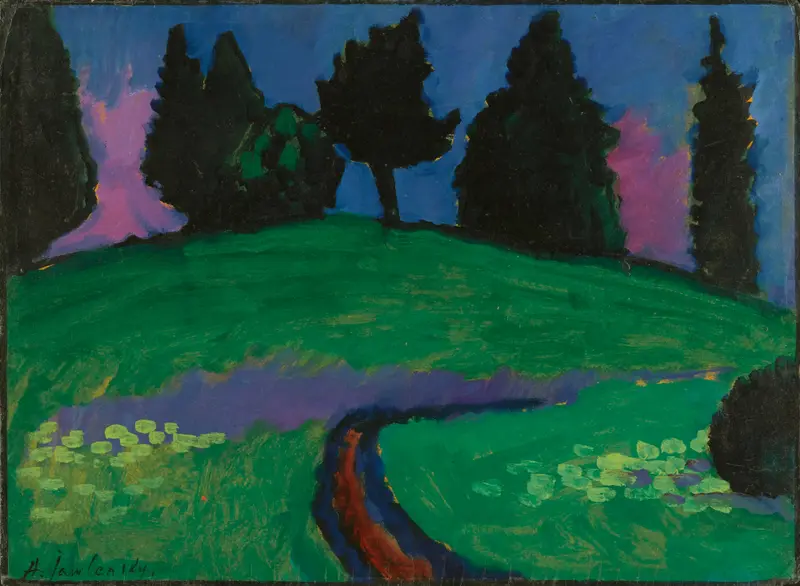
Dunkle Bäume über Grünem Hang (Dark Trees Over Green Slope)
Alexej von Jawlensky
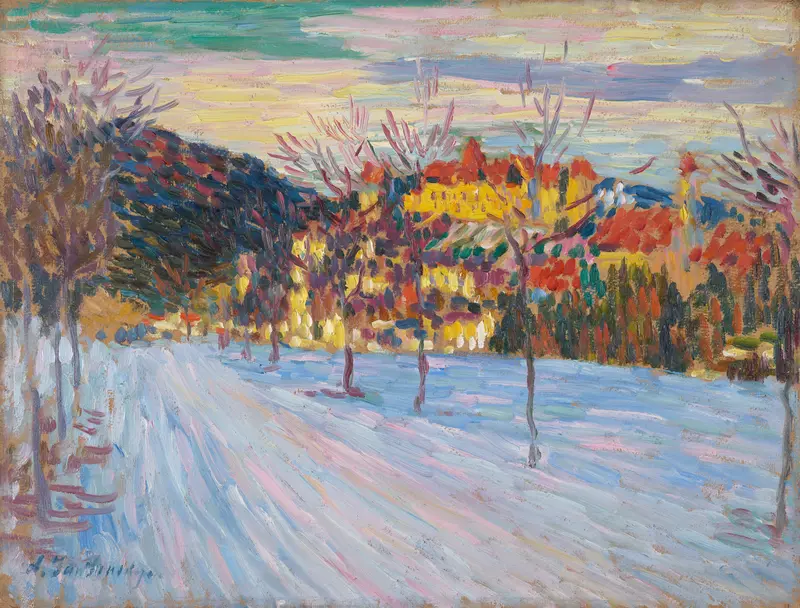
Füssen
Alexej von Jawlensky
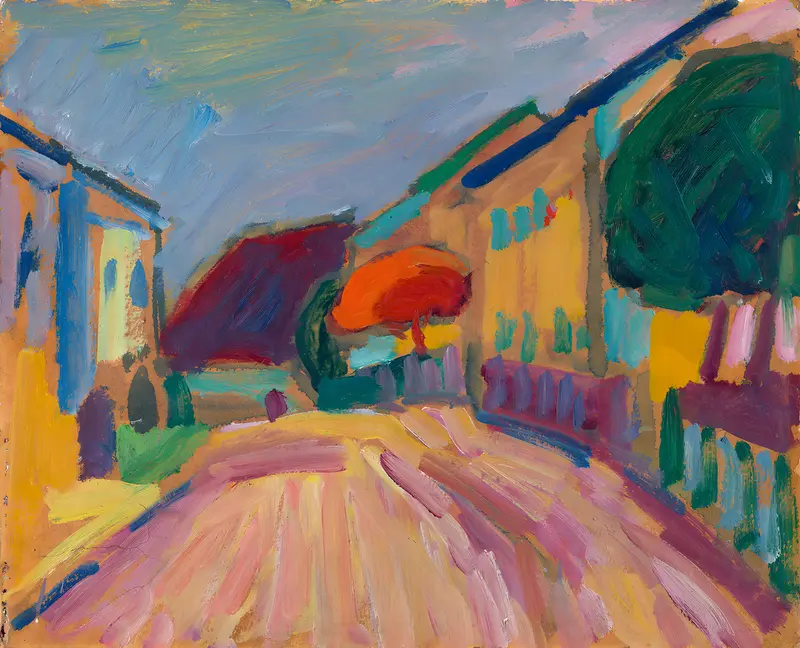
Sketch from Murnau
Alexej von Jawlensky
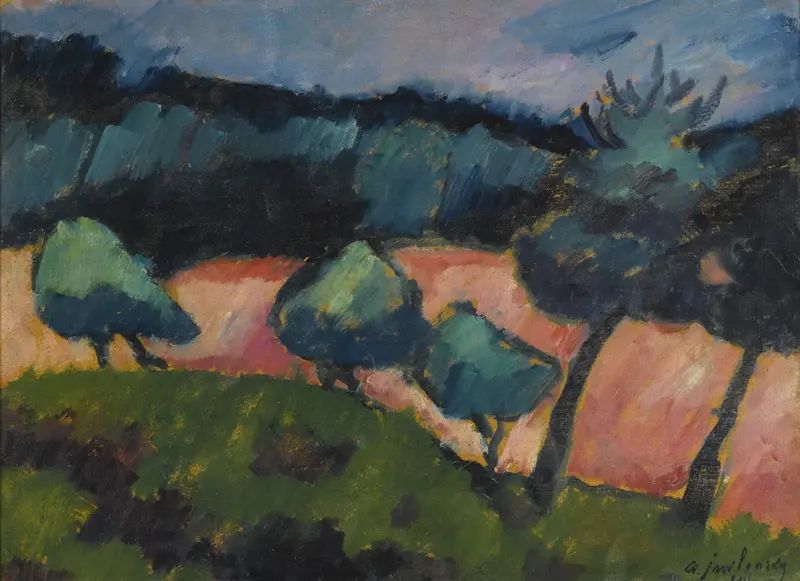
Bäume und Dünen in Prerow (Trees and dunes in Prerow)
Alexej von Jawlensky
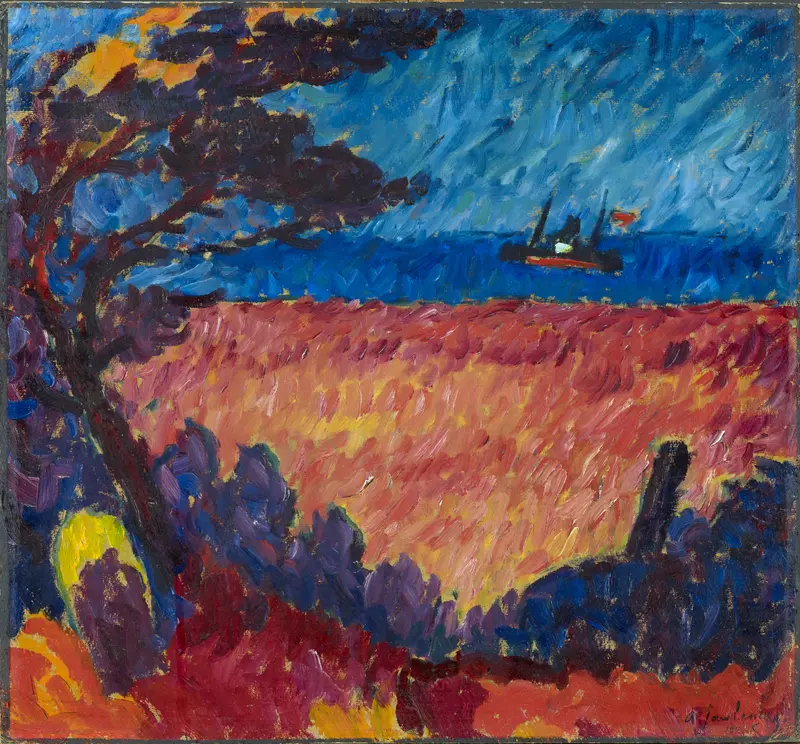
At The Baltic Sea
Alexej von Jawlensky
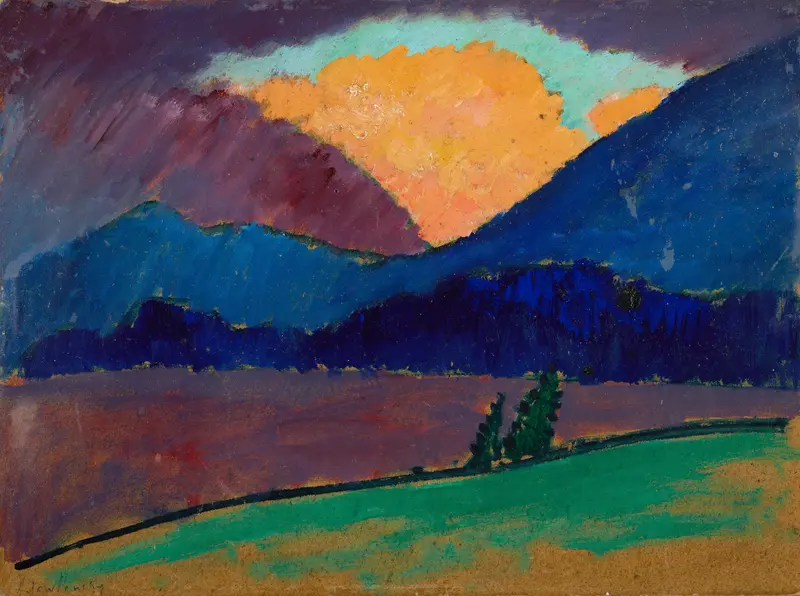
Summer evening in Murnau
Alexej von Jawlensky
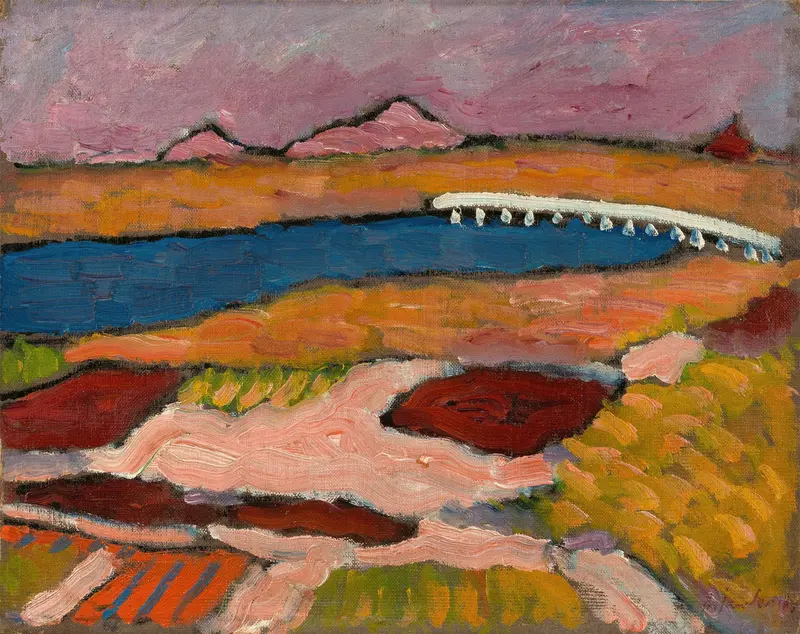
Prerow (Darß), Pommern
Alexej von Jawlensky
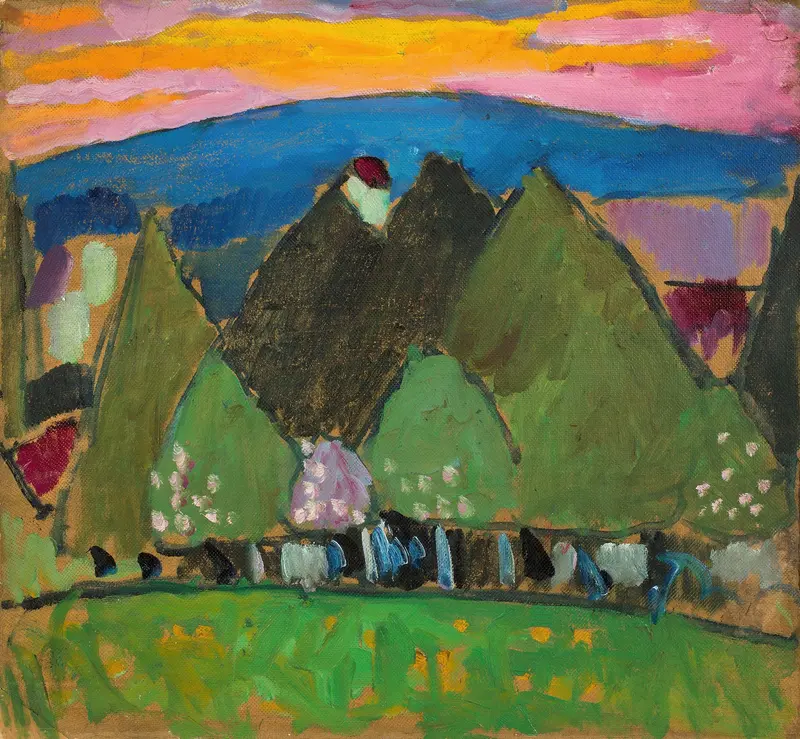
Landschaft mit Bäumen
Alexej von Jawlensky





