Flusslandschaft — History & Facts
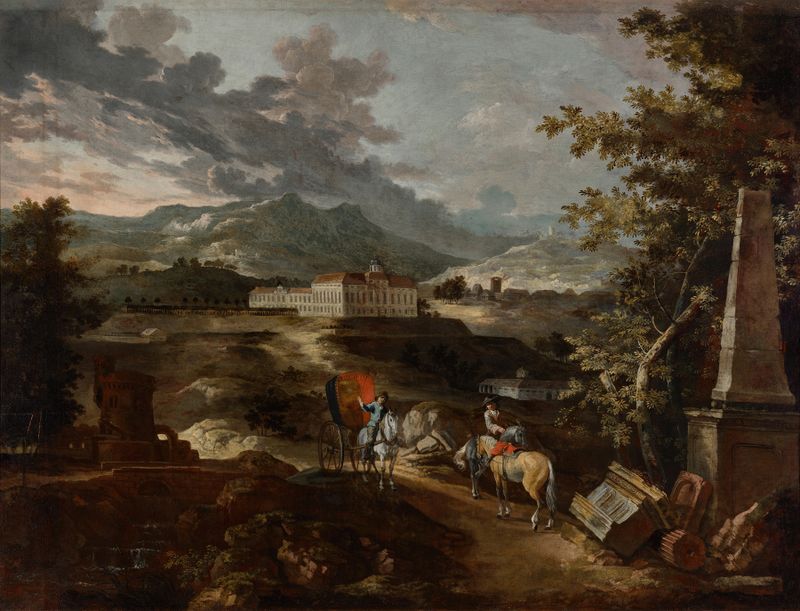
In Flusslandschaft, the artist captures the fragile balance between nature and the human spirit, evoking a sense of introspection. Look closely at the gentle curve of the river, winding through lush greenery, where the shimmering water reflects the soft hues of a delicate sky. Focus on the subtle gradation of blues and greens that harmonize in this serene landscape, painted with meticulous brushwork that breathes life into the foliage. The play of light and shadow across the terrain invites you to explore every inch, guiding your gaze along the riverbanks where the trees whisper their secrets. Amidst the calm, there exists an underlying tension.
The soft brushstrokes evoke tranquility, yet the viewer senses a profound fragility in this idyllic scene, as if it teeters on the brink of change. The interplay of light and water suggests the passage of time, while the isolated figures, dwarfed by nature, reflect humanity's vulnerability within this vast landscape. Each detail, from the delicate ripples in the river to the distant hills, speaks to the transience of beauty and life. Ignaz Flurer painted Flusslandschaft between 1730 and 1742 during his time in Germany.
This period was marked by the rise of the Rococo style, which sought to explore the aesthetic qualities of landscapes. Flurer, influenced by this movement, emphasized the delicate beauty of nature, capturing a moment that combines serenity with an awareness of its fragility, reflective of both his personal contemplations and the artistic currents of his era.