
Flusslandschaft mit Segelkahn und Ruderboot — History & Facts
When did color learn to lie? This question echoes through the landscape painted by de Boissieu, inviting us to explore the delicate interplay between nature's beauty and the artist's interpretation. Focus on the tranquil water that stretches across the canvas, shimmering with soft azure and muted greens. Notice how the boats drift weightlessly, their reflections merging with the ripples, as if trying to transcend the confines of reality. The gentle strokes of the brush create a sense of calm, while the distant hills loom with a hazy softness, blurring the line between heaven and earth. Yet, beneath the serene surface lies a nuanced tension.
The sailboat, with its billowing white sail, embodies freedom, juxtaposed against the rowboat’s steady pull, suggesting a struggle against nature's currents. The palette, with its harmonious blend of earthy tones and ethereal light, reveals a duality: the beauty of the scene contrasts with the ephemeral nature of existence itself, hinting at the transient moments that escape our grasp. In 1795, de Boissieu painted this work in France, a time marked by political upheaval and the Enlightenment’s flourishing ideas. Amidst the shifting tides of revolutionary change, he sought to capture the sublime, exploring how representation could evoke a transcendence beyond reality.
This piece reflects not only his personal quest for beauty but also the broader artistic movement that grappled with the relationship between nature, humanity, and the divine.
More Artworks by Jean-Jacques de Boissieu
Browse all →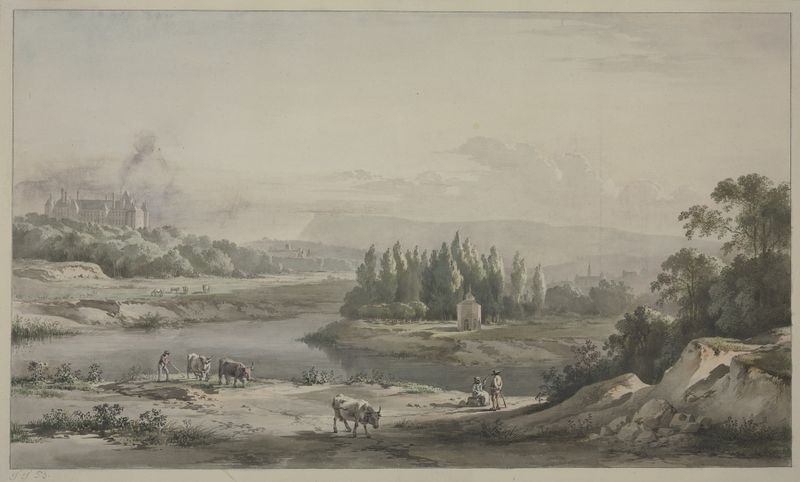
River Landscape
Jean-Jacques de Boissieu

Vestiges du temple d’Apollon au bord du Lac d’Auverne
Jean-Jacques de Boissieu

Vue du pont de la Guillotière à Lyon
Jean-Jacques de Boissieu
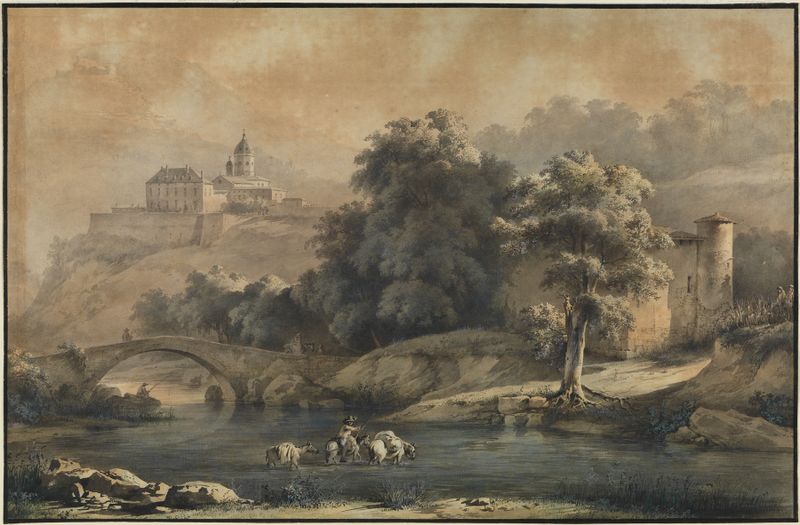
Flußlandschaft mit Bergkloster
Jean-Jacques de Boissieu
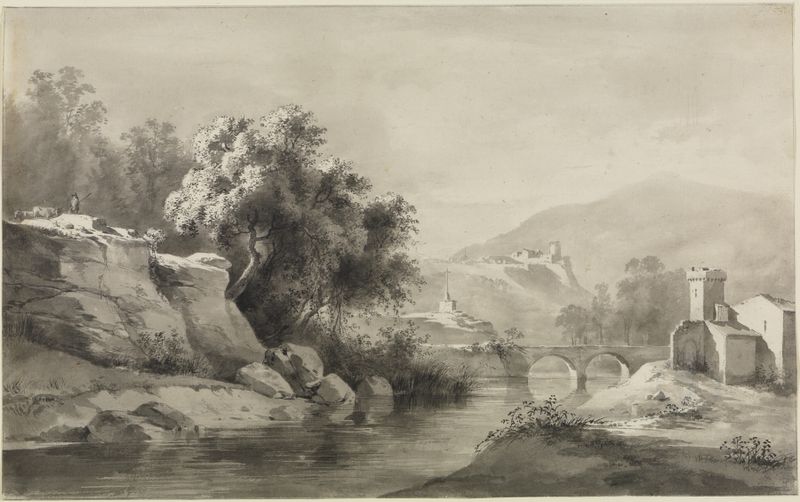
Flusslandschaft mit Doppelbogenbrücke und Kreuz
Jean-Jacques de Boissieu
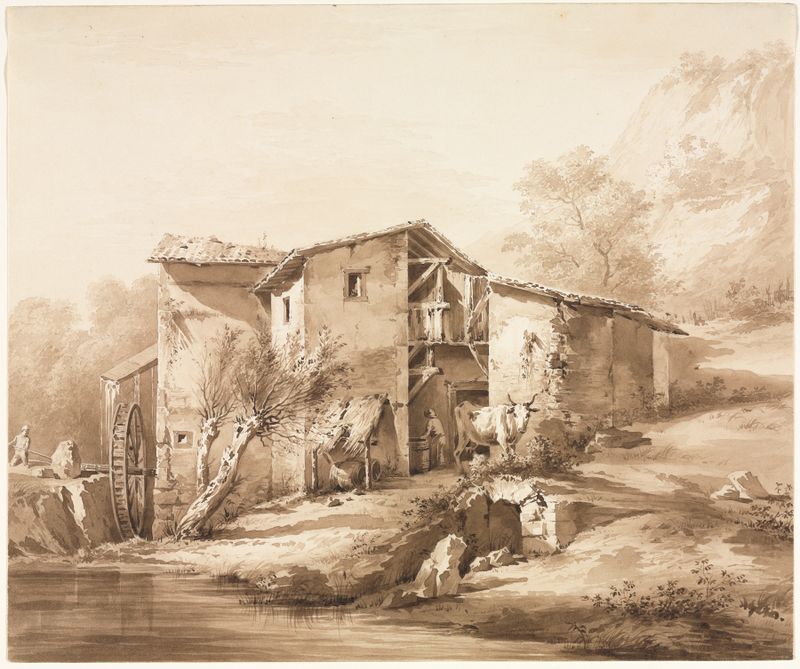
Landscape with Watermill
Jean-Jacques de Boissieu

Château Galliard
Jean-Jacques de Boissieu

Flußlandschaft bei L’Arbresle im Lyonnais
Jean-Jacques de Boissieu
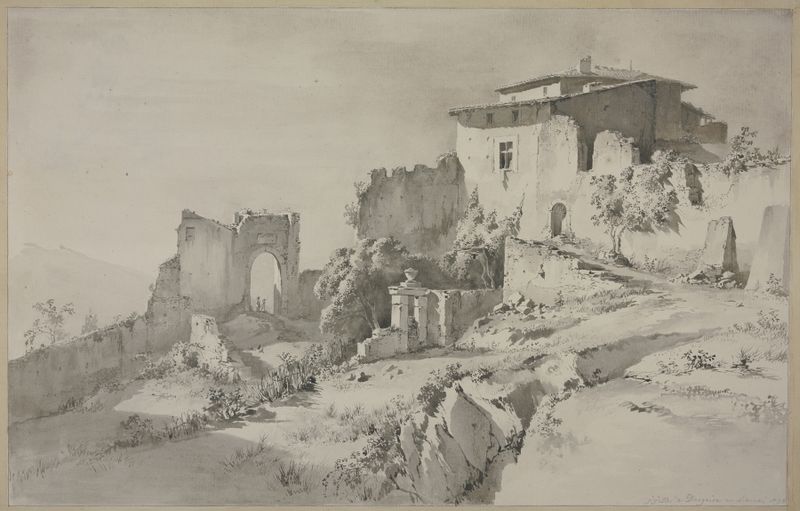
Landscape near Dargoire
Jean-Jacques de Boissieu

Tree with leafless treetop
Jean-Jacques de Boissieu





