
Vestiges du temple d’Apollon au bord du Lac d’Auverne — History & Facts
Did the painter know this moment would outlive them? In a world where time erases all traces, the quiet beauty of a landscape can resonate through centuries, capturing an eternity in a single glance. Focus first on the serene expanse of the lake, where soft ripples embrace the fading light. The gentle hues of sunset blend harmoniously into the sky, creating a delicate balance between earth and the ethereal. Notice how the ruins of the temple stand solemnly on the shore, their crumbling stones intricately woven into the fabric of nature, as if time itself has paused to preserve this scene.
The artist’s deft technique creates a sense of depth, drawing the viewer’s eye across the water toward the distant horizon. In this artwork, contrasts emerge vividly: the enduring remnants of civilization juxtaposed with the fleeting shadows of dusk. The temple, once a symbol of reverence and power, now lies in quiet disarray, illustrating both loss and resilience. The delicate interplay of light and shadow highlights the emotional weight of history, and the trees framing the scene evoke a natural sanctuary that speaks to continuity amidst decay.
This balance of human achievement and nature's reclamation invites reflection on transience and permanence. Created in 1766, this piece reflects the artist's profound engagement with landscape painting during a time when neoclassicism was beginning to flourish in France. De Boissieu worked in Lyon, where he found inspiration in the surrounding countryside and its historical significance. His focus on capturing the essence of nature and architecture mirrors broader artistic movements, while also expressing a personal connection to the landscape of his homeland.
More Artworks by Jean-Jacques de Boissieu
Browse all →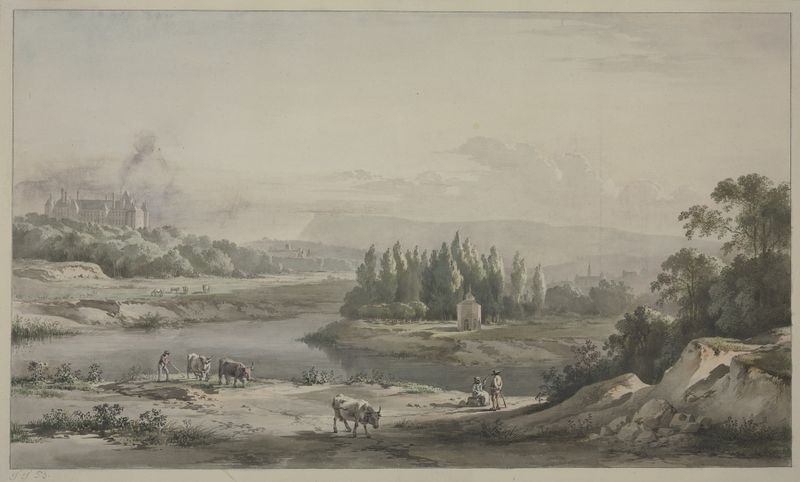
River Landscape
Jean-Jacques de Boissieu

Vue du pont de la Guillotière à Lyon
Jean-Jacques de Boissieu
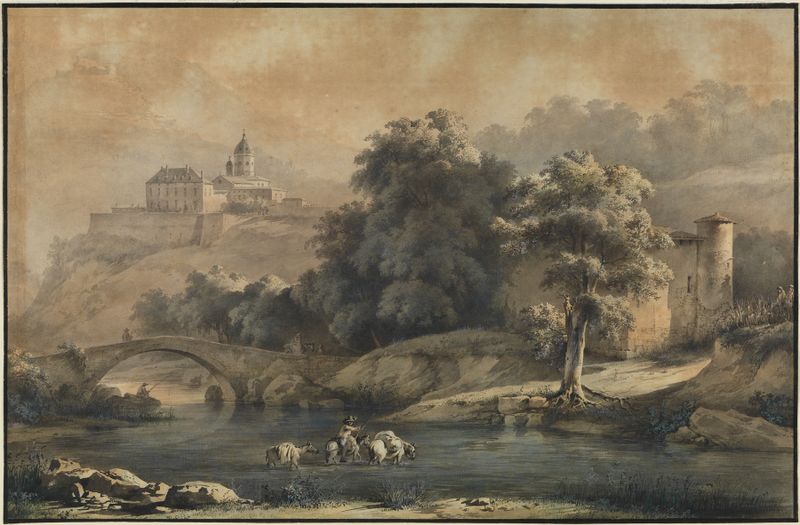
Flußlandschaft mit Bergkloster
Jean-Jacques de Boissieu
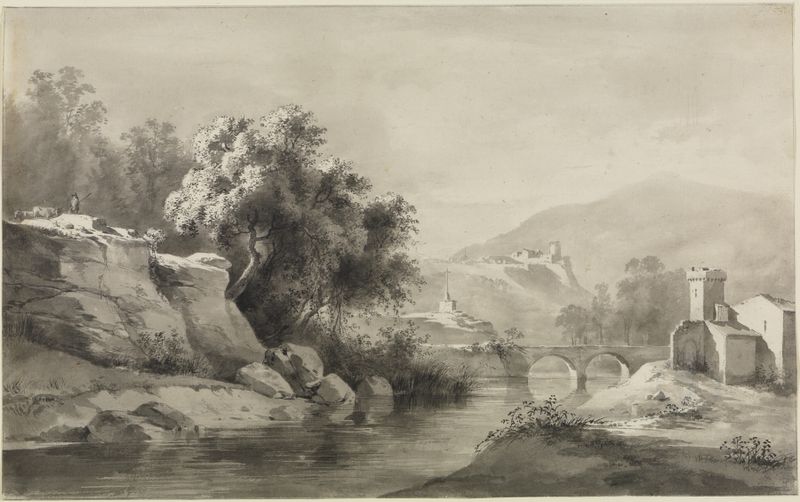
Flusslandschaft mit Doppelbogenbrücke und Kreuz
Jean-Jacques de Boissieu
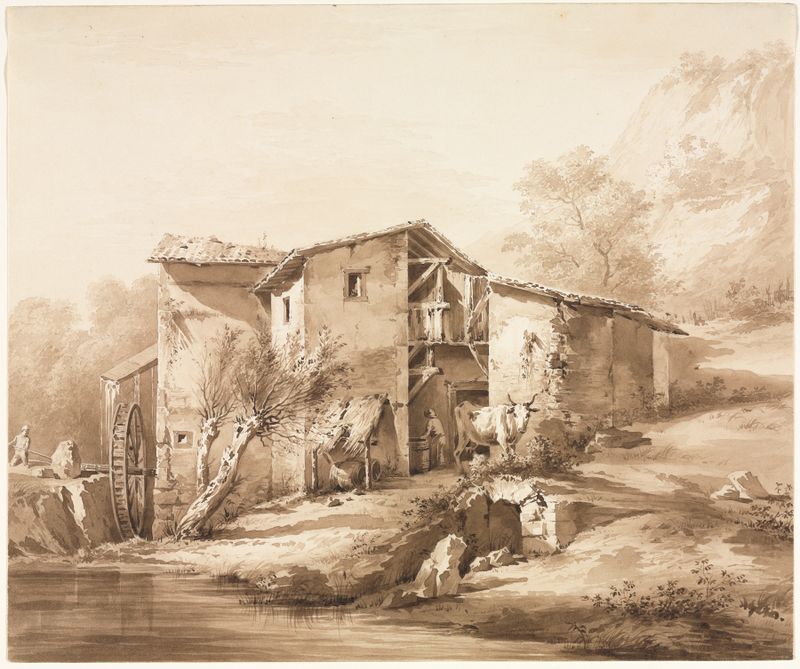
Landscape with Watermill
Jean-Jacques de Boissieu

Château Galliard
Jean-Jacques de Boissieu

Flußlandschaft bei L’Arbresle im Lyonnais
Jean-Jacques de Boissieu
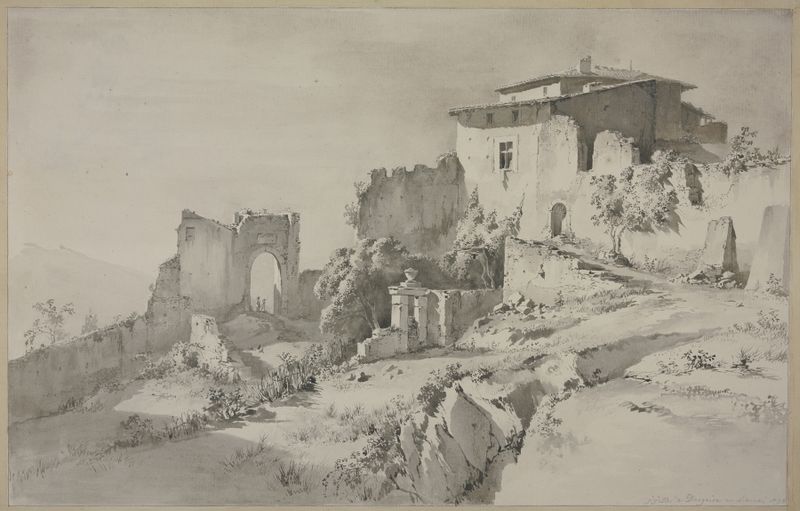
Landscape near Dargoire
Jean-Jacques de Boissieu

Tree with leafless treetop
Jean-Jacques de Boissieu
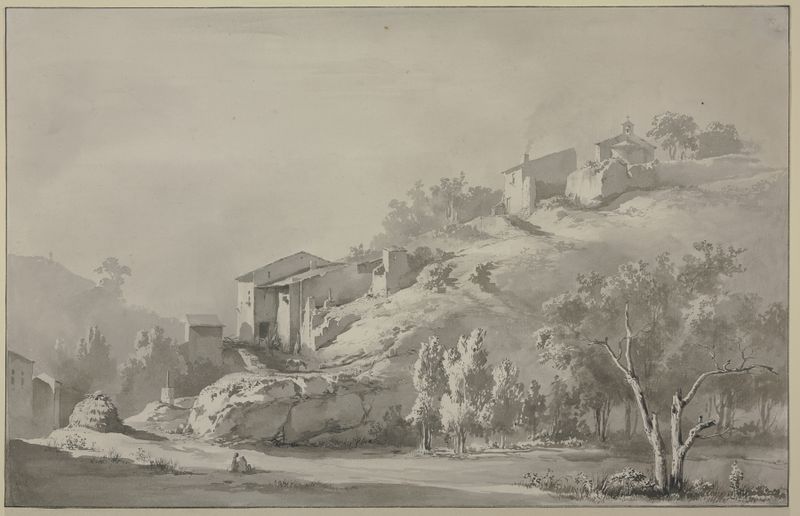
Landscape with a Chapel and Houses on a Mountainside
Jean-Jacques de Boissieu





