Foggy Day in Late Autumn — History & Facts
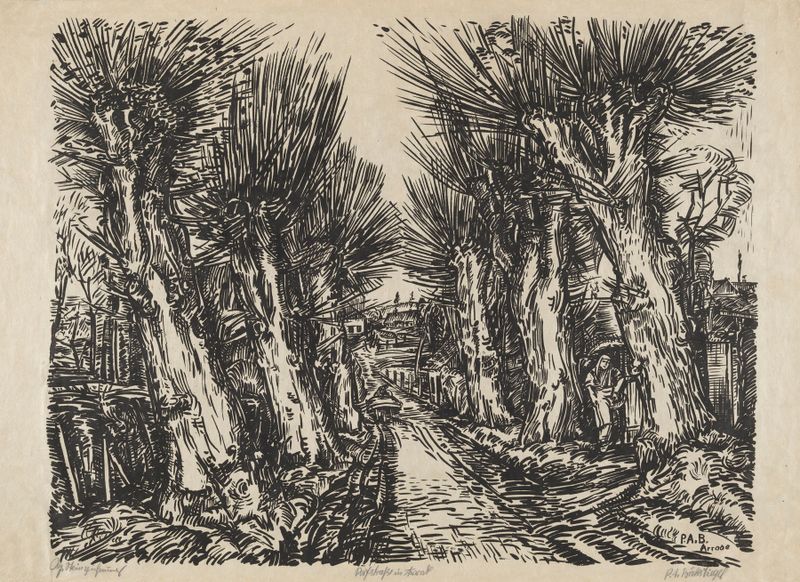
What if silence could speak through light? In Foggy Day in Late Autumn, a tranquil hush envelops the landscape, compelling the viewer to listen to the unspoken language of nature. Look to the center, where a soft white fog blankets the scene, transforming trees into ghostly silhouettes. The muted palette of grays and browns creates an atmosphere of introspection, drawing you further into the composition. Notice how the gentle brushwork evokes the texture of the air, blurring the edges of the trees and the horizon, inviting contemplation of what lies beyond the veil of mist. Amidst the obscured figures, there’s a profound contrast between presence and absence.
The fog serves as a metaphor for the unseen, suggesting the fragility of life and the passage of time. The interplay of light and shadow reveals hidden depths; though the landscape is shrouded, it pulsates with a quiet energy. Each brushstroke seems to whisper secrets of the season, hinting at the transition between the vibrancy of autumn and the approaching stillness of winter. In the fall of 1919, Böckstiegel was living in Germany, grappling with personal and societal upheaval following World War I.
This period saw a resurgence in interest in nature as an emotional refuge, reflected in the artist’s choice to depict the fog-laden landscape. Influenced by the expressionist movement, his work sought to convey a deeper truth, merging illusion with reality, capturing a moment that resonates emotionally and philosophically.