Village Road in Arrode — History & Facts
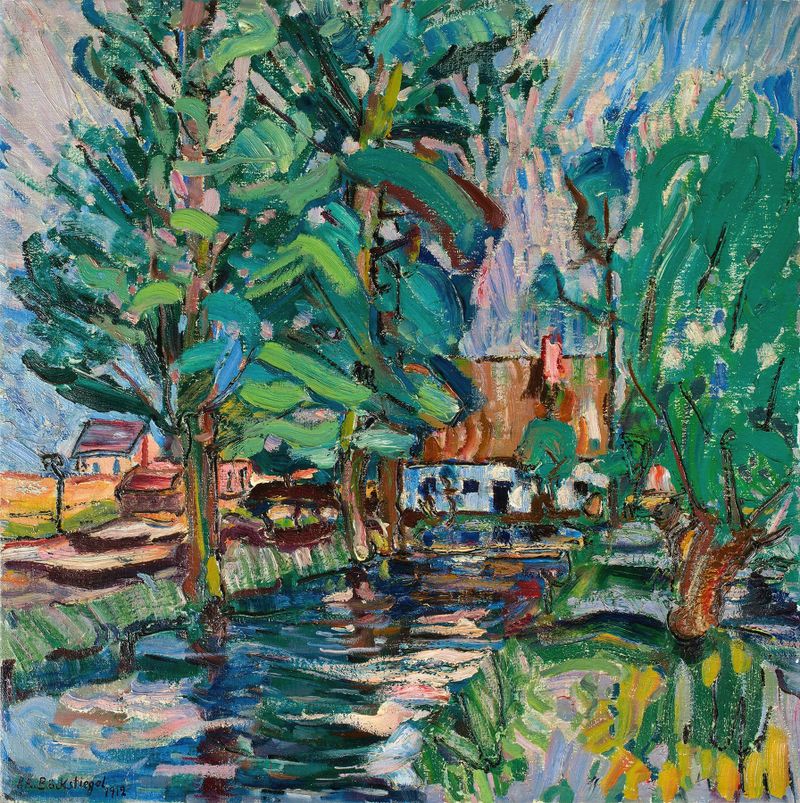
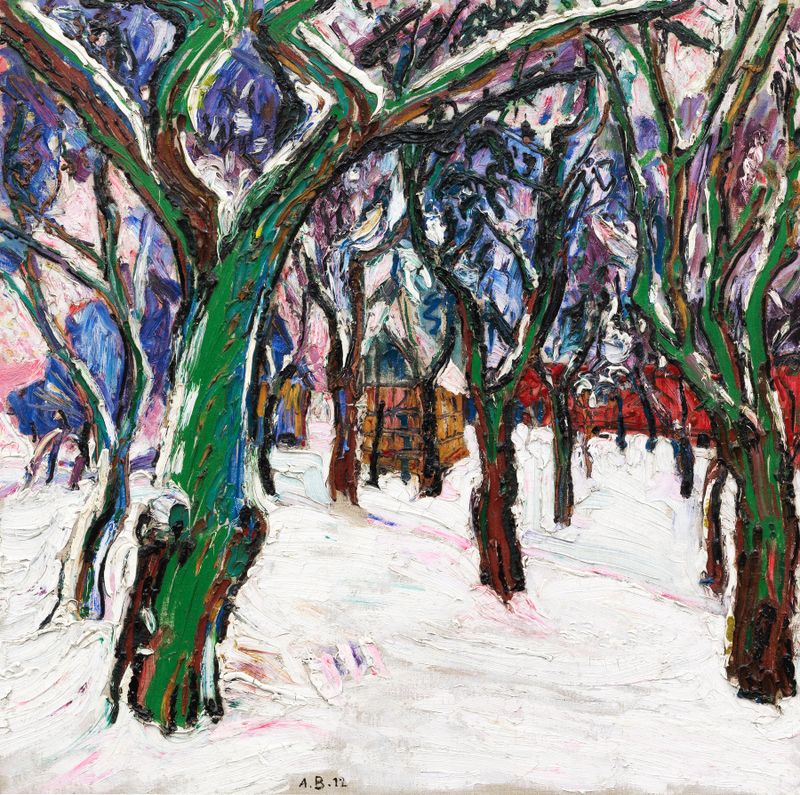
Where does light end, and longing begin? In the delicate hues of a rural landscape, innocence finds its voice. Look to the left at the gentle curve of the dirt road, leading into a horizon softened by the embrace of twilight. The path, rendered in earthy browns and muted greens, invites you to follow, each brushstroke alive with the essence of rural life. Notice how the fading daylight casts elongated shadows, accentuating the simplicity of the scene while hinting at the complexities of the lives lived in its quiet corners.
The composition is unpretentious yet profound, whispering secrets of a world untouched by the tumult of modernity. As you delve deeper, the contrast between light and shadow emerges as a metaphor for innocence lost and nostalgia felt. The distant houses, shrouded in warm light, stand as sentinels to the life lived within, yet they also convey a palpable distance, both physical and emotional. This juxtaposition of safety and solitude evokes a yearning—a longing for connection amidst the isolation of existence, suggesting that the essence of innocence often lies in what is not seen. In 1919, Böckstiegel painted this piece against the backdrop of post-World War I Germany, a nation grappling with the scars of conflict.
The artist, having recently returned from war, channeled his reflections on rural life into his work, capturing both the serenity of nature and the underlying tensions of a world seeking solace. In this moment, the artist offered a poignant reminder of the innocence found in tranquility, a stark contrast to the chaos surrounding him.