Mühle in Deppendorf — History & Facts
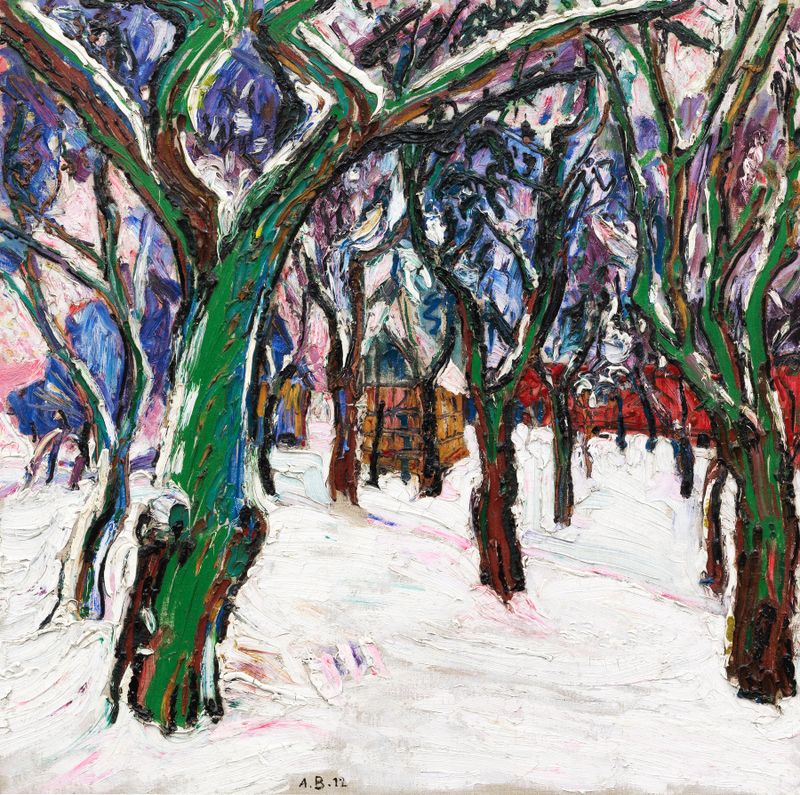
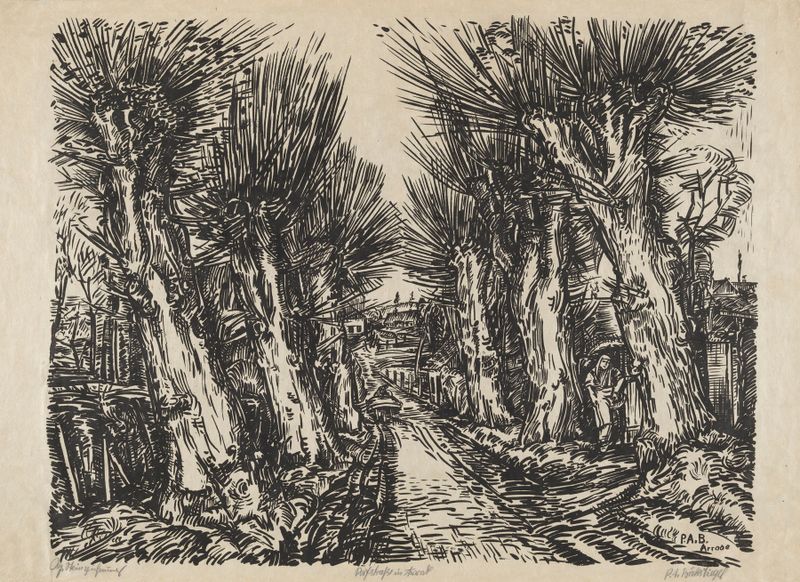
In the quietude of rural life, the violence of memory lurks just beneath the surface, waiting to be unleashed. Focus on the vivid green of the fields that surround the mill. Notice how the light dances across the canvas, illuminating the structure while casting deep shadows that suggest unseen turmoil. The windmill stands tall and proud, yet its silent presence stirs an undercurrent of tension, hinting at the struggles of those who reside in its shadow.
The colors are rich and evocative, with earthy browns contrasting against the vibrant greens, creating a landscape that is both serene and unsettling. As you explore the details, consider the juxtaposition of the idyllic setting and the potential for violence that lingers in the air. The mill, a symbol of labor and sustenance, also represents the weight of history — the grind of daily life punctuated by moments of desperation. The turbulent sky hints at impending storms, a reminder that tranquility is often accompanied by strife.
This duality invites the viewer to reflect on the complexities of existence, where beauty and conflict coexist in an uneasy balance. Peter August Böckstiegel painted Mühle in Deppendorf in 1912 while living in Germany, a time marked by social and political upheaval. The artist was deeply influenced by his rural surroundings, and this work reflects his connection to the landscape and the struggles of the working class. Art during this period was shifting, grappling with the realities of modernity, and Böckstiegel’s exploration of these themes resonates powerfully in this poignant piece.