Winterbild mit Bauernhäusern — History & Facts
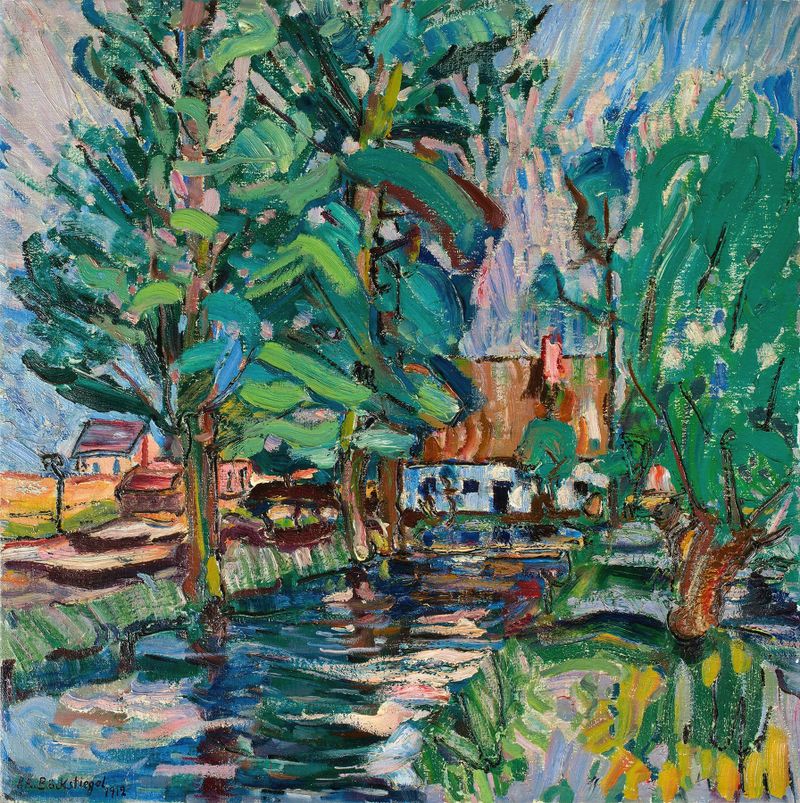
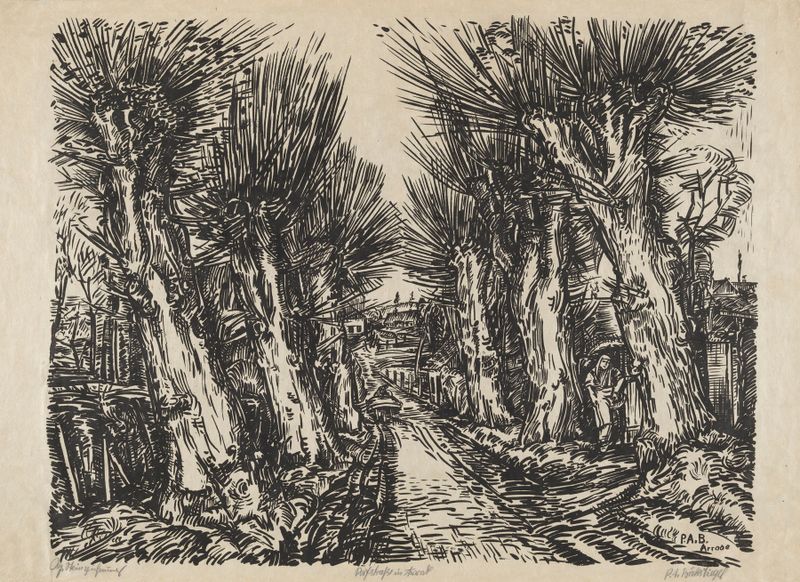
In the heart of winter, the landscape stands still, clothed in a blanket of snow, whispering stories of both solitude and melancholy. The simplicity of the scene invites introspection, where each farmhouse becomes a silent witness to the passage of time and the human condition. Look to the left at the quaint, rustic houses, their roofs weighed down by glistening snow, as if bearing the burden of untold memories. Notice how the muted palette of blues and grays envelops the village, contrasting with the stark white of the snow, creating a sense of isolation.
The brushstrokes are soft yet confident, conveying both the chill of the season and the warmth of the lives within those houses, a duality that pulls the viewer deeper into the emotional landscape. Böckstiegel’s choice of a winter setting hints at a reflection on life’s transience. The starkness of the environment mirrors the introspective silence that often accompanies solitude. The absence of people emphasizes a poignant longing, a reminder of the stories and lives that reside in such quiet places, evoking feelings of both nostalgia and melancholy.
Each element, from the trees to the smoke curling from the chimneys, invites contemplation of what lies beneath the surface. In 1912, when this work was painted, Böckstiegel was establishing himself within the German Expressionist movement, seeking to convey emotional truths through his landscapes. Living in Germany during a time of societal change, he grappled with themes of nature and existence, reflecting a world on the brink of war. His works often explore the relationship between humanity and its environment, and Winterbild mit Bauernhäusern stands as a testament to that exploration, capturing a moment of quiet reflection in an ever-changing world.