
Forest Study — History & Facts
Can paint confess what words never could? In the hands of a master, the unspoken truths of nature’s majesty and human struggle emerge with a profound clarity that resonates deeply. Focus first on the verdant foliage to the left, where the brushstrokes create a symphony of textured greens and browns. The interplay of dappled light and shadow draws your eye upwards, revealing a towering canopy that seems to cradle the sky in its leafy embrace. As you explore further, notice how the entwined branches appear almost sentient, whispering tales of resilience and tranquility amidst the chaos of life below. Delve deeper into the contrasts present within the composition: the vibrant hues of the leaves juxtaposed against the earthy browns of the forest floor evoke a sense of hope rising from the depths of despair.
Each glance reveals new narratives—the delicate intertwining of roots and branches symbolizing interconnectedness, while the distant play of light hints at a world outside the forest, caught in the throes of revolution. Tidemand expertly encapsulates both the beauty and fragility of nature, suggesting a delicate balance between human existence and the wild. In 1871, Adolph Tidemand painted Forest Study during a period marked by sociopolitical upheaval across Europe. Living in Norway, he was influenced by the Romantic movement’s reverence for nature as both personal sanctuary and a reflection of societal struggles.
His work emerged at a time when artists sought to bridge the gap between the natural world and contemporary life, where the forests became a canvas to explore themes of change and unity amidst the tumult of the era.
More Artworks by Adolph Tidemand
Browse all →
Bridal Procession on the Hardangerfjord
Adolph Tidemand

Fra Haugsbygd
Adolph Tidemand

Domkirkeruinen, Hamar
Adolph Tidemand
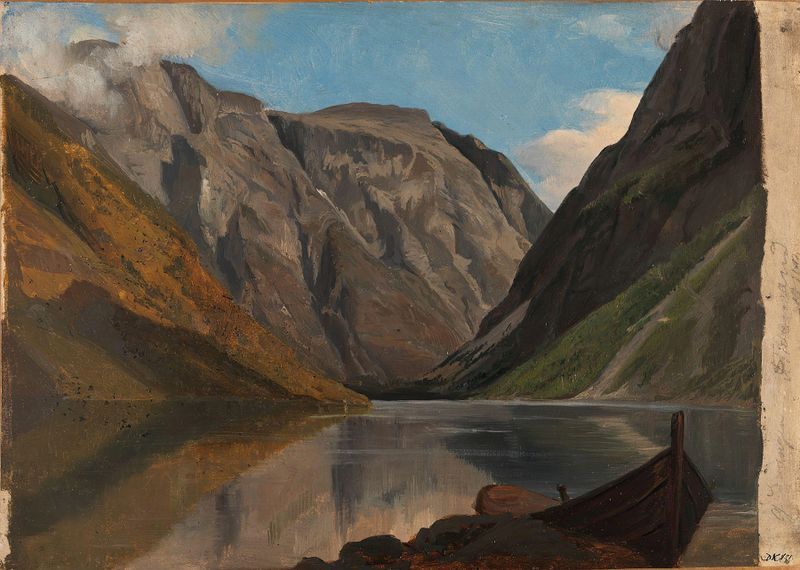
View of Gudvangen
Adolph Tidemand

Hagestad prestegård, Ulvik i Hardanger
Adolph Tidemand

View from Gudvangen
Adolph Tidemand

Fra Gulsvik
Adolph Tidemand

From Kullen in Sweden
Adolph Tidemand

Country Road
Adolph Tidemand

Untitled
Adolph Tidemand





