
Forest Study — History & Facts
What if beauty was never meant to be finished? The stillness of nature whispers this truth, urging us to linger and explore its depths. Look to the center of the canvas, where dappled sunlight filters through the dense canopy, casting intricate shadows on the forest floor. The careful layering of greens and browns evokes a sense of tranquility, inviting the viewer to step into this serene woodland. Notice how the brushstrokes vary in intensity, with softer strokes outlining the lush foliage while the bolder strokes on the trunks of trees convey strength and permanence. Hidden within the scene are glimpses of transience — the gentle sway of leaves suggests a breeze just out of sight, while the fallen branches hint at the cycle of life and decay.
Each element captures a moment suspended in time, reflecting the delicate balance between beauty and the inevitability of change. The harmonious interplay of light and dark also reveals emotional contrasts, embodying both the allure of nature and the fleeting nature of existence. Hans Gude created this work in 1842, during his time in Norway, where he sought to define the essence of the Nordic landscape. This period marked a growing interest in Romanticism, emphasizing the emotional connection between humanity and nature.
As he painted Forest Study, Gude was carving his niche in the emerging art movement, responding to both personal experiences and the broader cultural shifts of his time.
More Artworks by Hans Gude
Browse all →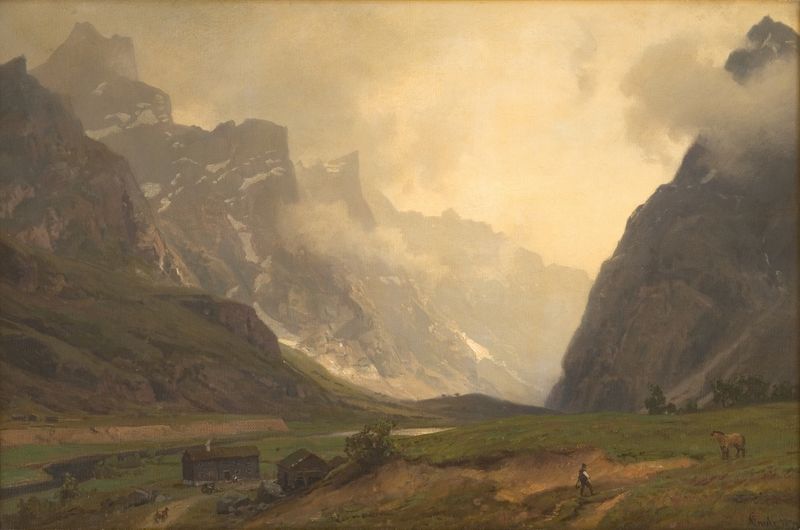
The Troll Peaks in Romsdalen, The Foot of Romsdalshorn to the Right
Hans Gude
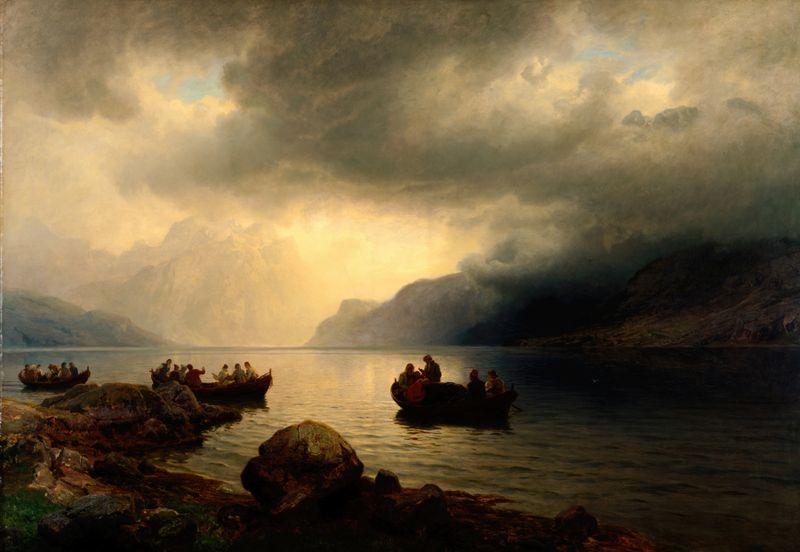
Funeral Procession on the Sogne Fjord
Hans Gude
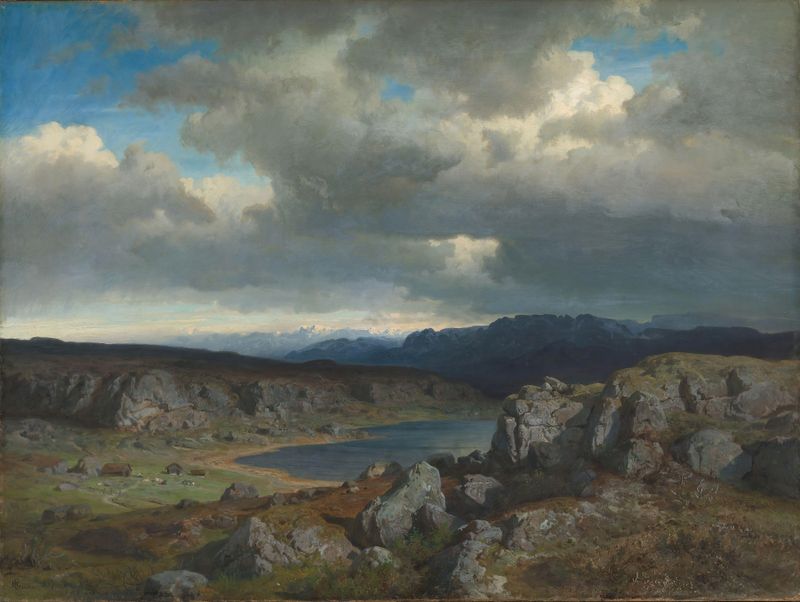
Norwegian Highlands
Hans Gude
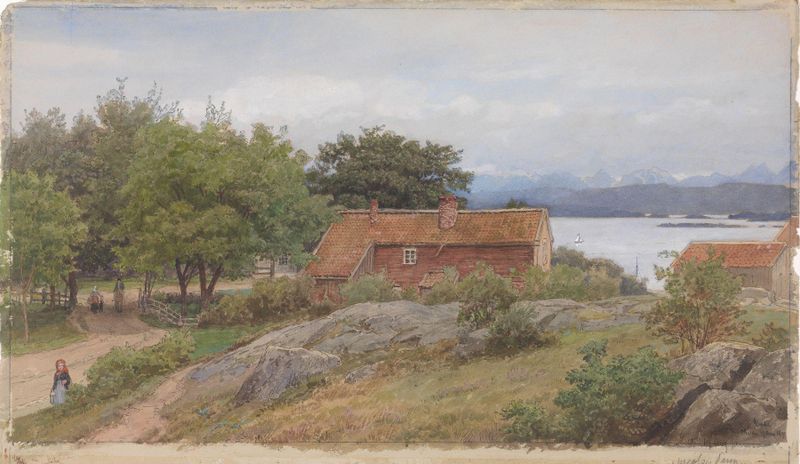
Landskap med bondegård ved Molde
Hans Gude
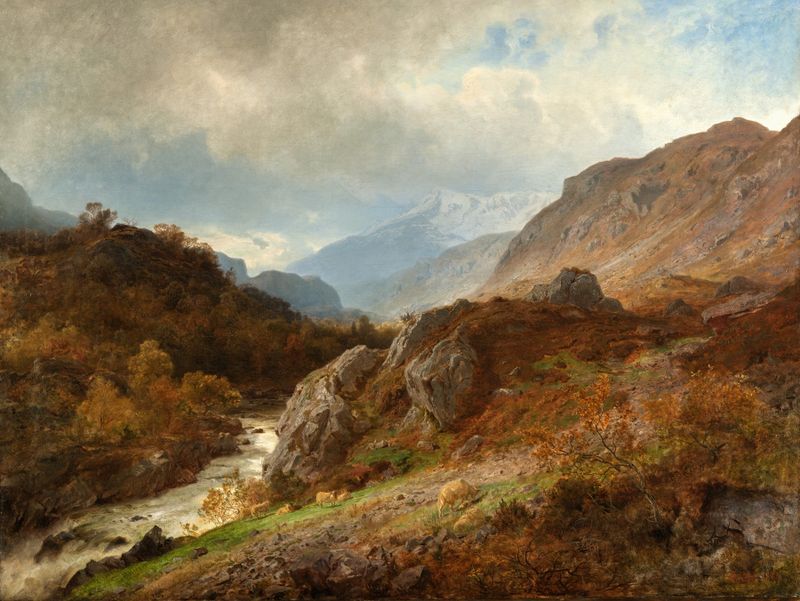
Mountain Landscape
Hans Gude
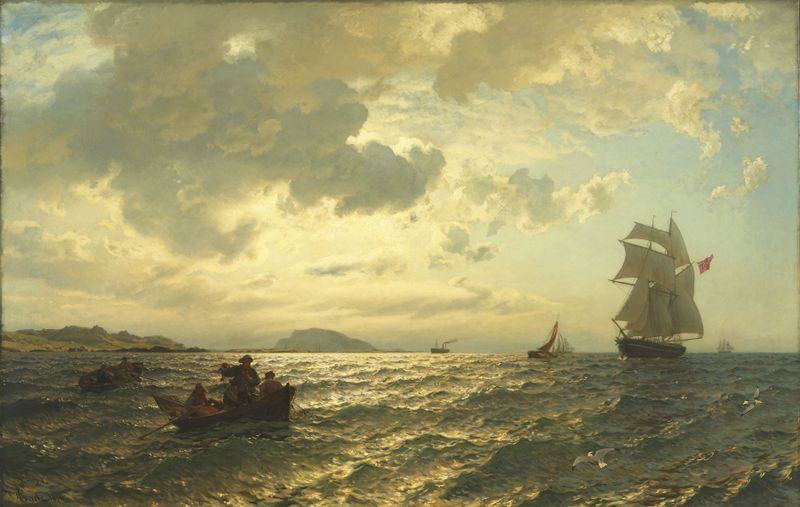
Fresh Breeze on the Norwegian Coast
Hans Gude
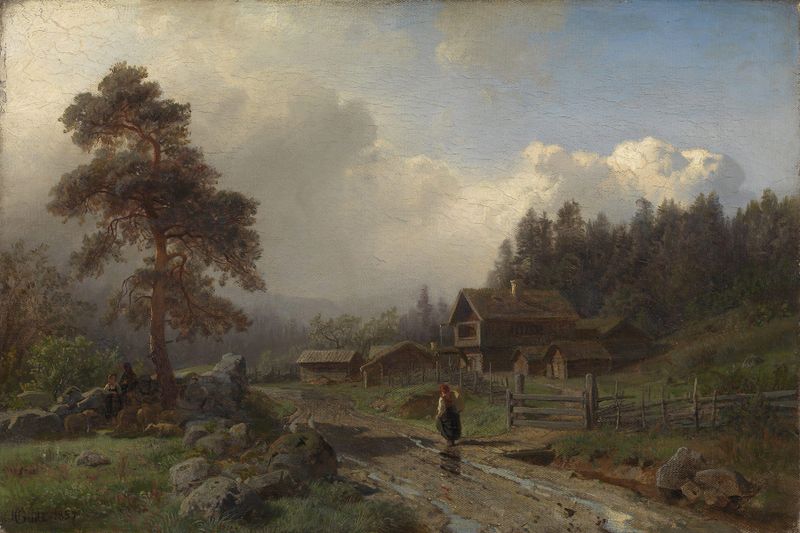
Norwegian Landscape in Rain
Hans Gude
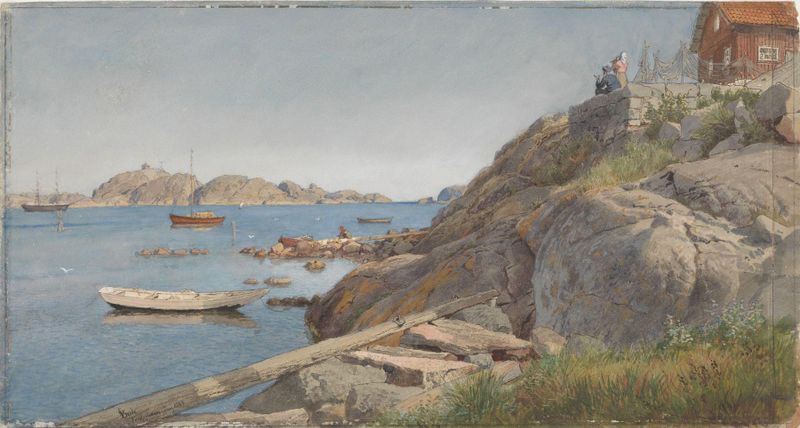
Landscape by Stavern
Hans Gude
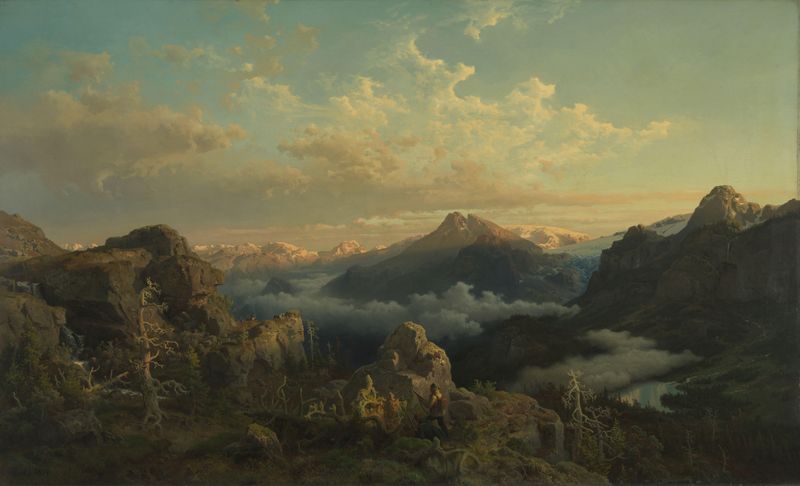
Norwegian Highlands in Sunrise
Hans Gude
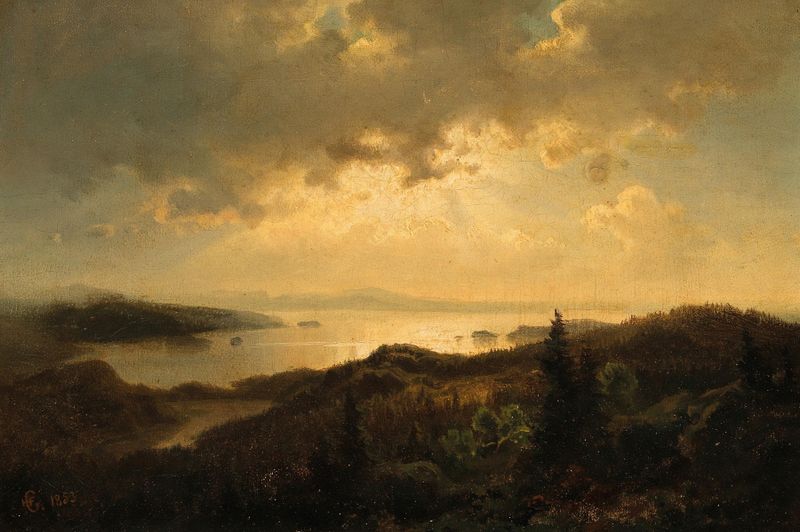
A Scene at Dusk in Norway
Hans Gude





