Foret De Fontainebleau — History & Facts
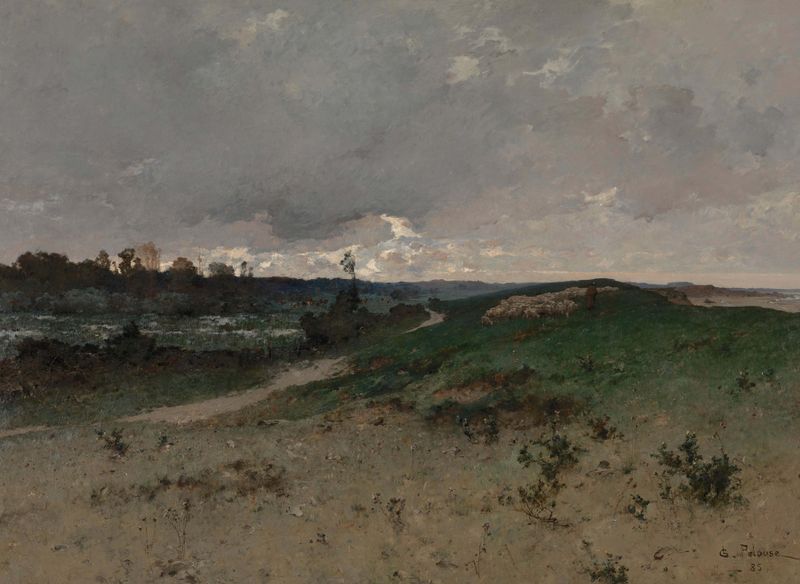
Can paint confess what words never could? In the depths of a tranquil forest, nature reveals its unspoken truths, whispering through the leaves and shadows of the trees. Look to the left where the sunlight spills through the canopy, casting dappled golden patterns upon the forest floor. The rich greens and browns blend harmoniously, creating a tapestry of texture that invites you deeper into the composition. Notice how the brushstrokes evoke the gentle sway of branches, each stroke a silent hymn to the serenity of the woodland.
Pelouse’s mastery lies in his ability to capture light’s dance; it not only illuminates but breathes life into every element. Yet beneath this serene surface lies an intricate interplay of solitude and connection. The towering trees stand sentinel, conjuring both a sense of isolation and an unyielding bond among themselves. Each tree’s unique form speaks to individuality, while their shared canopy suggests unity, inviting contemplation on the nature of existence.
The soft rustle of leaves seems to echo the unvoiced conversations of the forest, hinting at deeper layers of life, growth, and decay that permeate this tranquil setting. Painted during a period of burgeoning impressionism, the artist found himself in the picturesque surroundings of Fontainebleau, where the interplay of light and nature captivated many contemporaries. This era marked a shift toward capturing ephemeral moments in art, as society began to embrace the beauty of the natural world. The artist's environment and the evolution of artistic thought were crucial as he sought to translate the forest's quiet truths onto the canvas.