Paysage — History & Facts
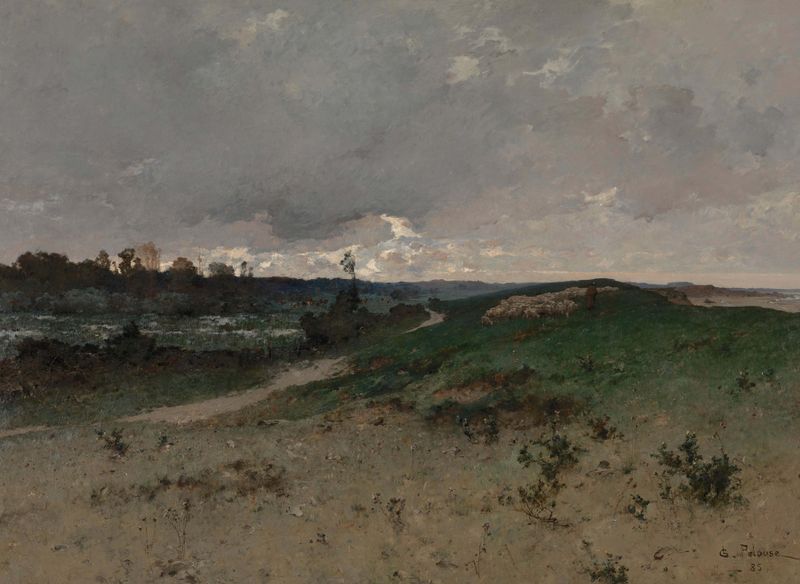
Can beauty exist without sorrow? The answer lies in the delicate balance of nature, where each vivid hue and gentle curve tells the story of a fleeting moment, echoing legacy through every brushstroke. Focus on the foreground, where a lush expanse of green meets the soft whispers of a winding river. Notice how the light dances across the water’s surface, casting shimmering reflections that playfully tease the eye. The artist employs a rich palette of earthy tones, creating a landscape that feels both inviting and melancholic, drawing the viewer into a world that thrives on the tension between joy and loss. In the background, the contrasting darkness of distant hills looms, suggesting the weight of time and the inevitability of change.
Each tree stands as a testament to endurance, their gnarled branches reaching out like hands grasping for a past that may never return. The gentle blend of colors hints at the cycle of life and nature, evoking contemplation on how beauty, intertwined with sorrow, becomes a profound legacy that lingers in memory. Created in the late 19th century, this piece reflects the artist's exploration of impressionism and the shifting perspectives of the natural world. During this period, Pelouse was deeply engaged with capturing the essence of fleeting moments, amidst a growing interest in the interplay of light and shadow.
As he painted this landscape, he was part of a broader movement that sought to redefine perception and legacy within art, forever altering how we experience beauty.