January-Cernay-near Rambouillet — History & Facts
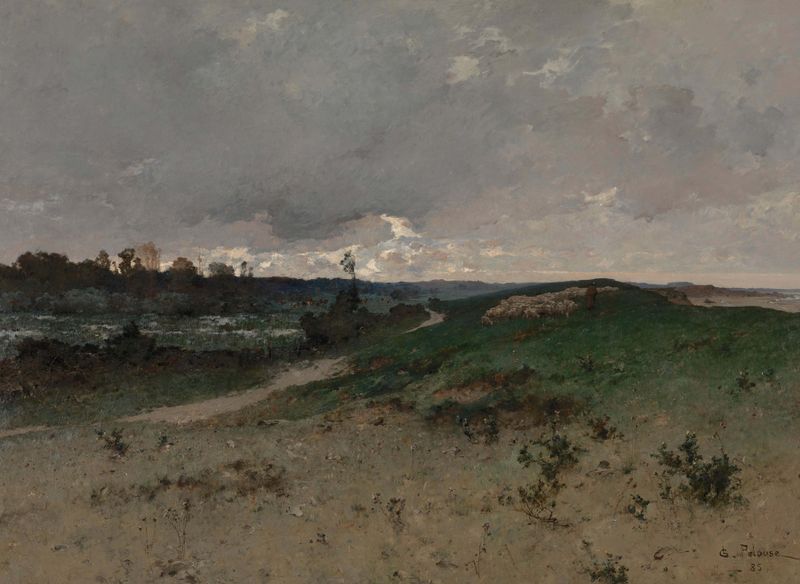
Can paint confess what words never could? In the silent expanse of a winter landscape, a profound stillness awaits. Look to the left at the delicate brushstrokes that outline the sparse trees, their branches etched against a pale sky, whispering secrets of the season's starkness. The snow blankets the ground, casting a serene glow that balances the cool tones of blue and grey. Notice how the horizon blurs softly, inviting the eye to wander through the gentle undulations of the field, each stroke a testament to the artist’s meticulous technique and the weight of winter's embrace. Here lies a poignant contrast between the tranquility of nature and the void it evokes.
The emptiness of the landscape reflects both isolation and introspection, challenging the viewer to confront their own stillness. Even the muted palette speaks to an emotional resonance, as the absence of vibrant color embodies the melancholy of winter—a season of waiting, of pondering what lies beneath the surface. Léon-Germain Pelouse painted this work during a time of artistic exploration in the late 19th century, when landscape painting was evolving to capture more than just beauty. Working in a period marked by the rise of Impressionism in France, he sought to express the nuances of atmosphere and emotion.
The exact date of this piece remains uncertain, yet the artist’s dedication to nature as a vessel for deeper reflection is unmistakable, inviting viewers to delve into their own contemplations amidst the quiet of winter.