
Fort at the West Bow, Edinburgh — History & Facts
The delicate nuances of longing permeate the atmosphere of this artwork, evoking a sense of nostalgia for a time we can never reclaim. Focus on the foreground, where the detailed architecture of the fort stands resolute against the soft wash of pastel skies. The intricate stonework reveals the artist's patience and dedication, each brick seemingly breathing with history. Notice how the muted colors harmonize, capturing the fading light of dusk, and how the gentle interplay between shadow and sunlight creates a melancholic yet warm embrace. Yet, beneath the fort’s formidable exterior lies a poignant contrast.
The juxtaposition of the sturdy structure against the fleeting sky hints at the tension between permanence and transience. The figures meandering through the scene evoke a sense of longing, their silhouettes almost swallowed by the grandeur of their surroundings, suggesting a deeper yearning for connection, for memory, or perhaps for a vanished past. Louise Rayner created this piece amidst a growing interest in capturing urban landscapes in 19th century Britain. This period saw a blending of romanticism with realism, as artists sought to portray both the beauty and the everyday life of cities.
Rayner, known for her detailed and atmospheric depictions of architecture, expertly navigated this artistic landscape, capturing the essence of her surroundings and the complex emotions they stirred.
More Artworks by Louise Rayner
Browse all →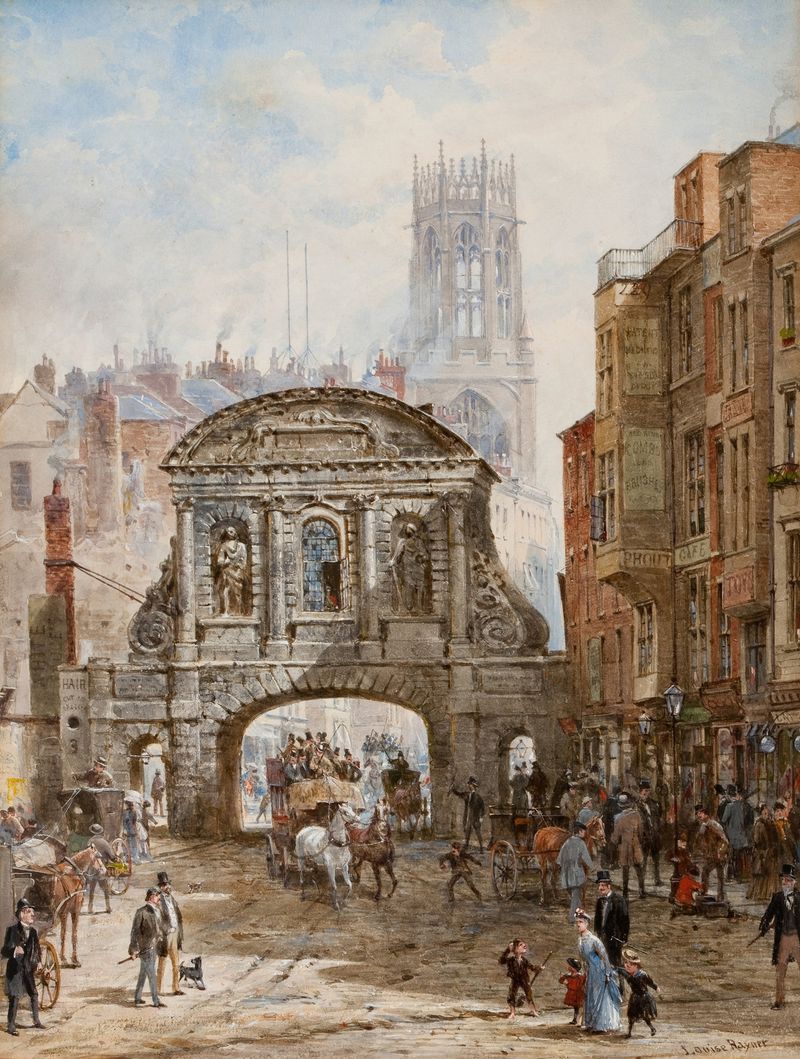



More Architecture Art
Browse all →
The statue of Liberty
Frédéric Auguste Bartholdi

View of Houses in Delft, Known as ‘The Little Street’
Johannes Vermeer

View of Houses in Delft, Known as ‘The Little Street’
Johannes Vermeer

The Cathedral in Rouen. The portal, Grey Weather
Claude Monet

The yellow house
Vincent van Gogh

The Church in Auvers-sur-Oise, View from the Chevet
Vincent van Gogh