Market Cross — History & Facts
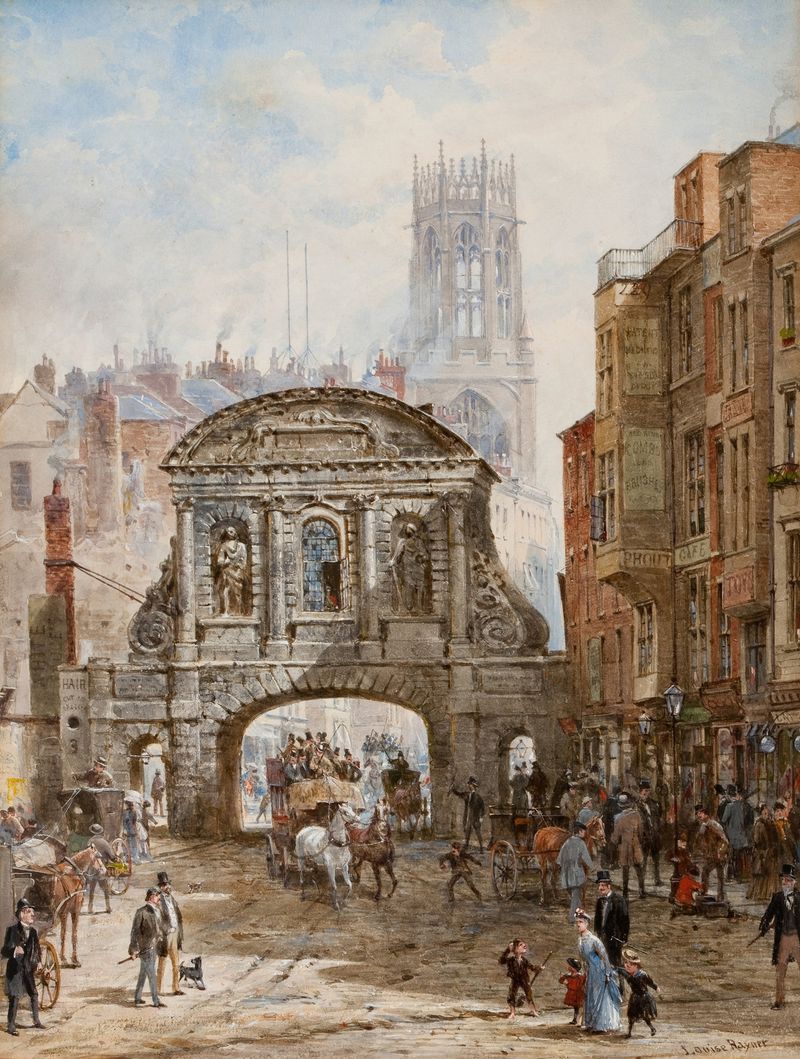
Could beauty survive in a century of chaos? This question reverberates through the vibrant brushstrokes and intricate details of an 18th-century market scene, inviting the viewer to contemplate the balance between art and the tumult of its time. Look to the foreground, where an array of characters engage in animated conversation, their expressions animated yet defined by a subtle melancholy. Notice how the light plays delicately across their faces, casting warm hues that contrast with the cooler tones of the cobblestone streets, suggesting an interplay of joy and sorrow. The careful arrangement of stalls, each bursting with goods, draws the eye upward, leading to the architectural elegance of the market cross, a steadfast sentinel amid the lively chaos, symbolizing a bridge between the everyday and the divine. Deeper still, the artwork reveals layers of emotional tension.
The juxtaposition of bustling activity and the solitary figure lost in thought within the crowd speaks to isolation amid social interaction. Each vendor’s wares serve not only as a testament to commerce but as reflections of personal stories and dreams, hinting at an obsession with materiality that defines human experience, even amidst the backdrop of a changing world. Created during an era marked by rapid industrialization and social upheaval, the artist captured this scene at a time when the struggle between tradition and modernity was palpable. Rayner, an observer of everyday life, painted this work in an atmosphere where urban development was beginning to reshape landscapes and lives, encapsulating the essence of a community at a crossroads.