Fort Snelling — History & Facts
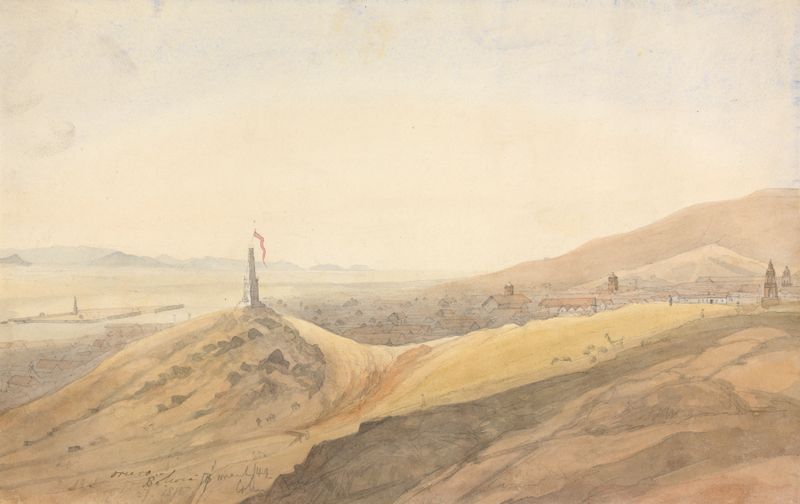
Can beauty exist without sorrow? In Fort Snelling, Godfrey Thomas Vigne captures more than just a landscape; he evokes the intricate dance of movement through a scene filled with history and the weight of unspoken narratives. Focus on the sweeping hills that cradle the fort, where the earthy tones of the soil meet the soft, luminous blues of the sky. Notice the delicate brushstrokes that animate the grasses, suggesting a gentle wind, while the fort’s stoic presence stands resolute against nature's elements. The juxtaposition between the vibrant life surrounding the fort and its imposing structure invites contemplation, guiding the viewer’s gaze from the foreground’s lively textures to the distant horizon. Delve deeper into the contrasting emotions woven into the fabric of this composition.
The fort, a symbol of military might, hints at the complex narratives of conflict and protection. Yet, the surrounding landscape—alive with movement—whispers of resilience and peace, suggesting that beauty flourishes even amidst the shadows of history. Each blade of grass and cloud in the sky seems to echo the silent stories of those who have passed through this space. In 1853, Vigne painted this work during a transformative time in the United States, as expansion and conflict loomed large on the horizon.
Living in a period marked by the Westward Expansion, he sought to blend the natural beauty of the American landscape with the realities of its tumultuous history. This painting reflects not just the visual but the emotional landscape that defined an era.