
Fra Corrie, Arran — History & Facts
Can beauty exist without sorrow? In Fra Corrie, Arran, the viewer is invited to explore the profound interplay between nature's splendor and the weight of human experience. Look to the left at the rugged cliffs, their jagged edges softened by the gentle caress of early morning light. Notice how the shimmering water reflects the deep greens and blues of the landscape, capturing a moment suspended between tranquility and turmoil. The composition invites your eye to wander, revealing layers of texture in the foliage and the ethereal quality of the mist that clings to the hills.
The palette, rich yet subdued, enhances the sense of an untouched wilderness, inviting contemplation. Here, the contrast between the stillness of the landscape and the subtle hints of an approaching storm evoke a tension that resonates deep within. The solitary figure of the traveler, dwarfed by the monumental scenery, represents not only human humility in the face of nature’s grandeur but also an existential quest for meaning amid the beauty that surrounds us. Each brushstroke serves as a reminder that even in our moments of awe, we carry the shadows of our own narratives. In 1877, Hans Gude painted this piece during a time of great change in European art, amidst the burgeoning Romantic movement that emphasized emotion and individual experience.
Living in Norway, he drew inspiration from the dramatic landscapes of his homeland. The era was marked by an increasing fascination with nature and a desire to encapsulate its sublime qualities, reflecting both personal and collective journeys through the interplay of beauty and sorrow.
More Artworks by Hans Gude
Browse all →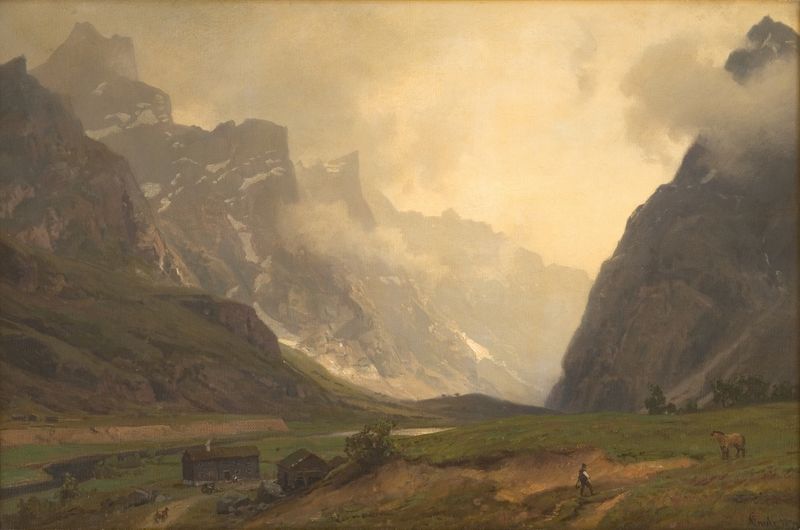
The Troll Peaks in Romsdalen, The Foot of Romsdalshorn to the Right
Hans Gude
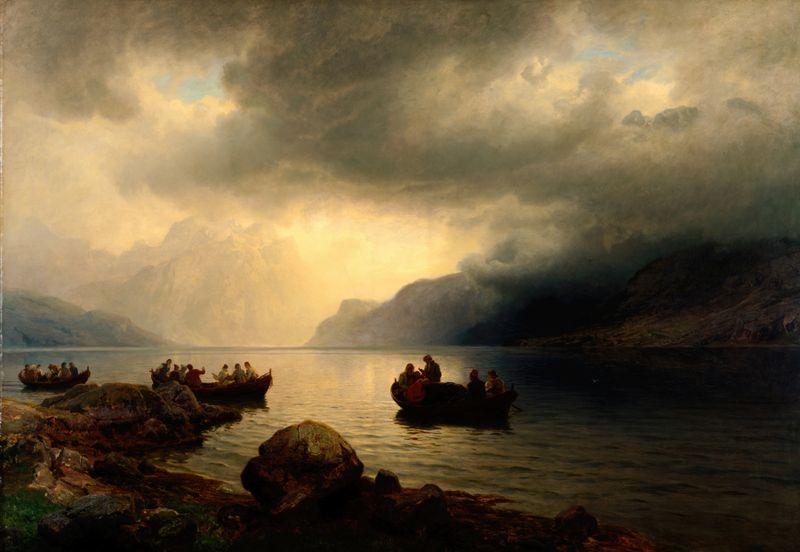
Funeral Procession on the Sogne Fjord
Hans Gude
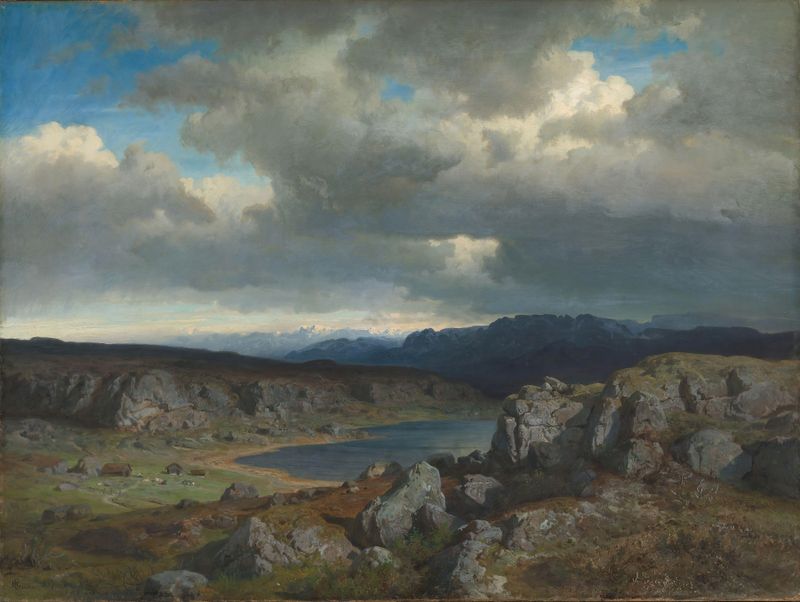
Norwegian Highlands
Hans Gude
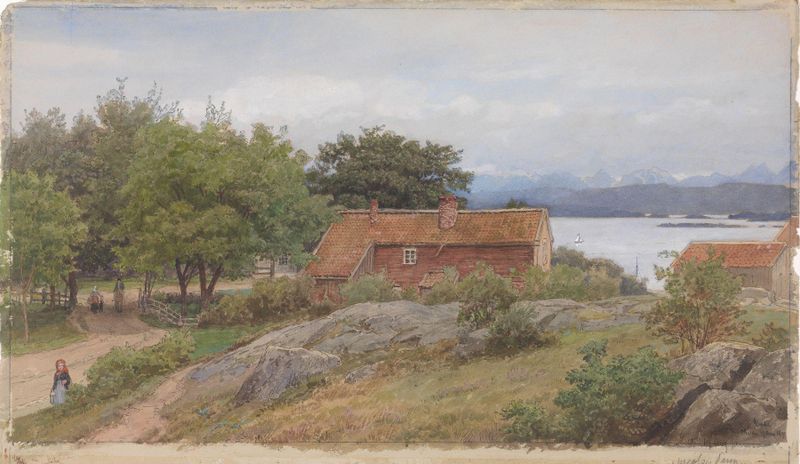
Landskap med bondegård ved Molde
Hans Gude
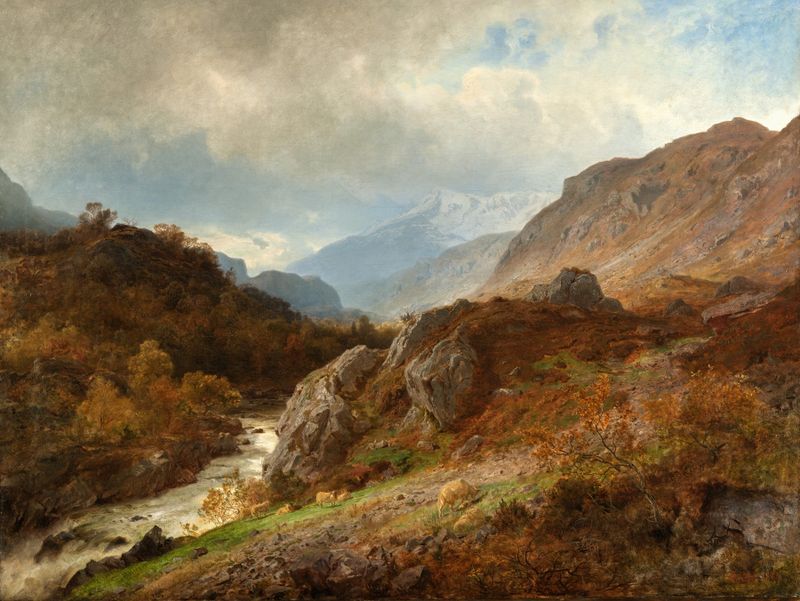
Mountain Landscape
Hans Gude
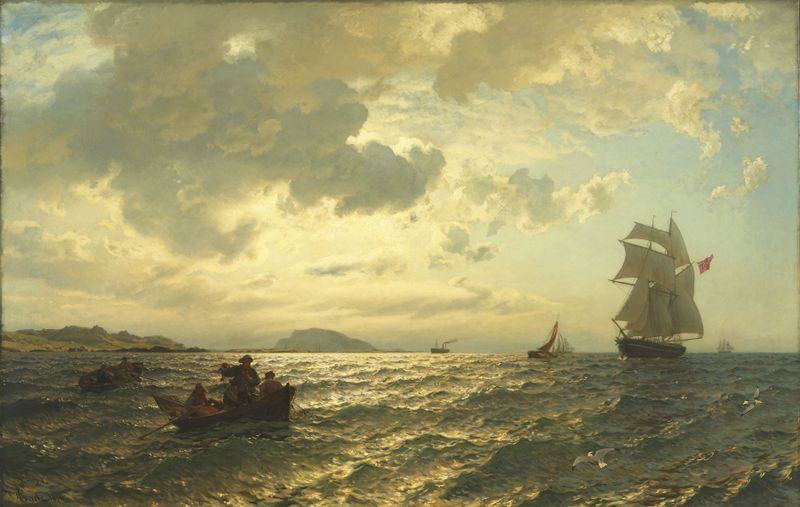
Fresh Breeze on the Norwegian Coast
Hans Gude
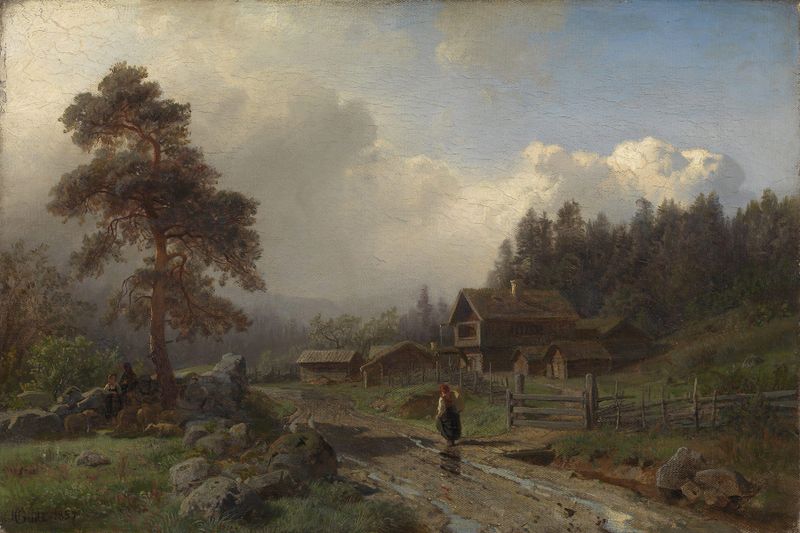
Norwegian Landscape in Rain
Hans Gude
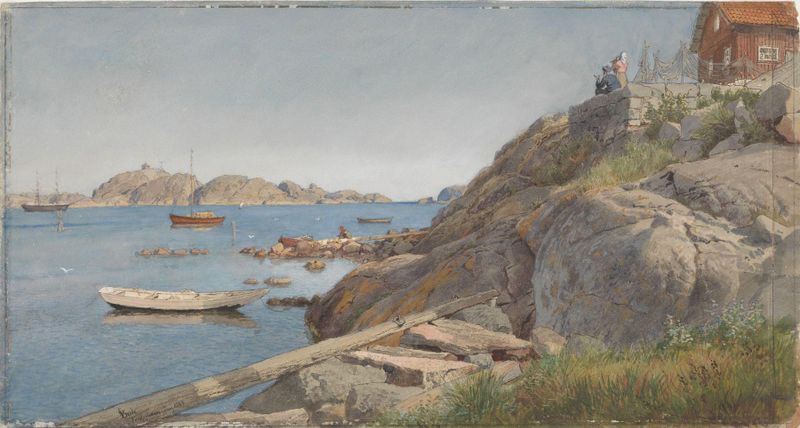
Landscape by Stavern
Hans Gude
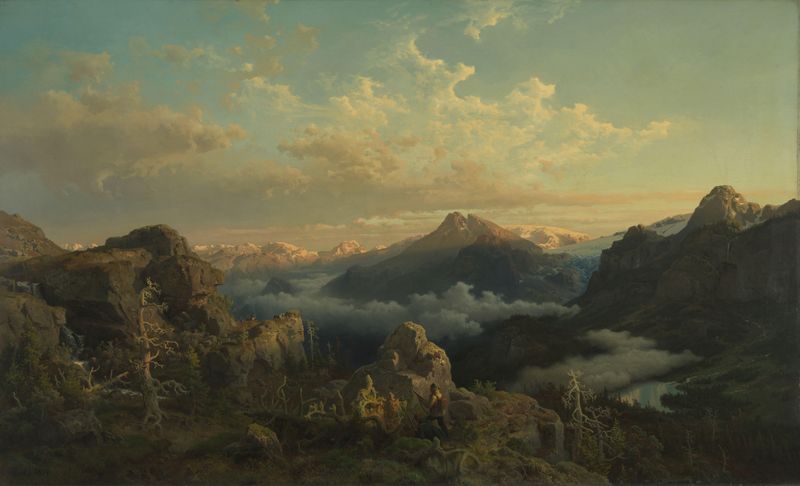
Norwegian Highlands in Sunrise
Hans Gude
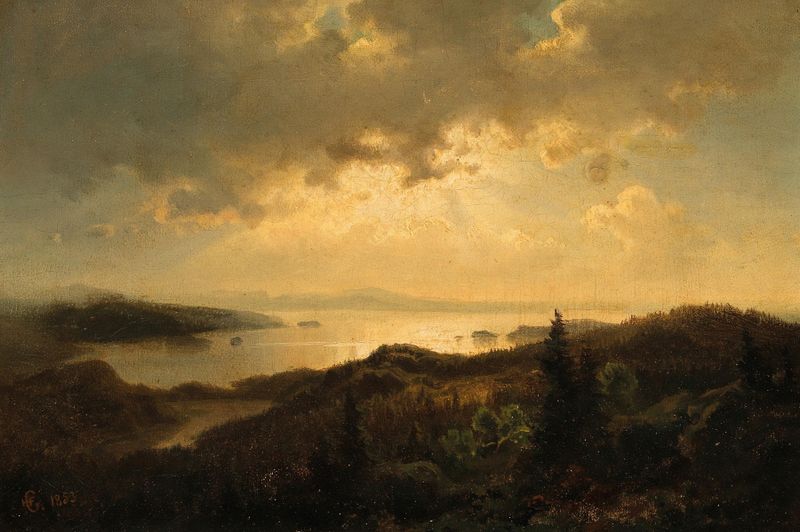
A Scene at Dusk in Norway
Hans Gude





