
Freitag Abend (Synagoge) — History & Facts
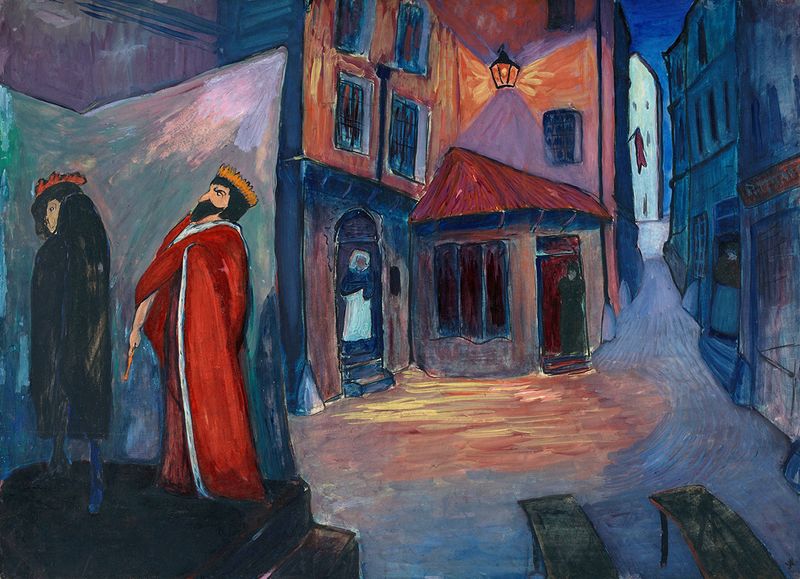
In Freitag Abend (Synagoge), color becomes the vessel of emotion, weaving a narrative of contrasts that linger in the viewer's soul. The hues echo stories untold, inviting contemplation on the fragility of existence against a backdrop of vibrant celebration. Look to the rich blues and deep reds that dominate the canvas, drawing your gaze toward the interplay of light and shadow. Notice how the golden accents illuminate the intricate details of the synagogue, creating a visual rhythm that captures the atmosphere of a sacred gathering.
The shapes are somewhat abstract yet resonate with familiarity, as if Werefkin seeks to blend the physicality of the structure with the spiritual essence of community. Delve deeper into the piece, and you'll find a palpable tension between the vibrancy of the colors and the stillness of the figures. Each brushstroke hints at the emotional weight of the gathering, suggesting both joy and an underlying sorrow. The congregation, depicted in muted shades, contrasts starkly with the radiant environment, embodying a sense of longing that transcends the physical moment—perhaps a reflection on the artist's own experiences and losses. In 1909, when this work emerged, Marianne von Werefkin was living in Munich, amidst a burgeoning avant-garde movement that challenged traditional artistic expressions.
As a prominent figure in the Expressionist circle, her personal struggles and complex relationship with her Jewish identity illuminated her work. The world around her was charged with sociopolitical tension, and her explorations of color and form were not only a response to her surroundings but also a declaration of her own artistic liberation.
More Artworks by Marianne von Werefkin
Browse all →


More Religious Art
Browse all →
The Return of the Prodigal Son
Rembrandt van Rijn

The Garden of Earthly Delights
El Bosco

Count Orgaz’ funeral
El Greco

The Hundred Guilder Print: the central piece with Christ preaching, the plate arched
Rembrandt van Rijn

The Descent from the Cross
Rogier van der Weyden

The return of the prodigal son
Rembrandt van Rijn