Prerowstrom — History & Facts
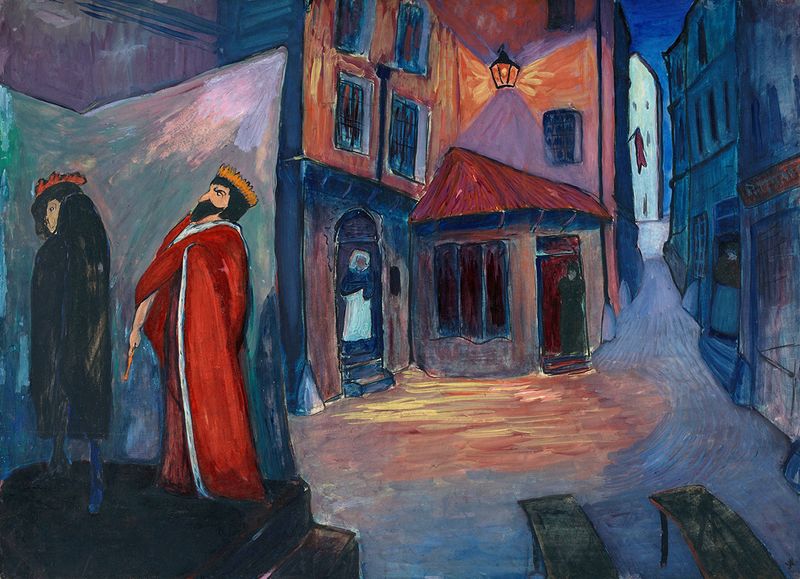
In Prerowstrom, transformation flows through the canvas like a river, stirring emotions that ebb and flow with each glance. This artwork invites viewers to reflect on the profound changes that shape our existence, capturing a moment of metamorphosis that resonates deeply. Look to the center of the piece where swirling colors converge, a vivid representation of water caught in motion. The hues—deep blues and greens contrasted with vibrant splashes of orange and yellow—create a dynamic interplay that draws the eye into this aquatic dance.
Notice how the brushstrokes pulse with energy, almost alive, as they ripple outward, suggesting both turbulence and harmony simultaneously. The technique is expressive and gestural, reflecting a moment suspended between chaos and tranquility. The artist encapsulates the tension of transformation, with soft, flowing lines juxtaposed against sharp, jagged strokes that evoke a sense of struggle. This duality speaks to the complex nature of change; while it can be unsettling, it also holds beauty and promise.
Observing the edges of the canvas, you might find glimpses of light breaking through, symbolizing hope amid the currents of life. Each detail contributes to a narrative of evolution, reminding us that growth often emerges from the depths of uncertainty. In 1911, Werefkin created Prerowstrom during a period marked by her relocation to Germany, where she experimented with her style and themes. At this time, she was part of the vibrant expressionist movement, grappling with personal and artistic transformations.
These experiences shaped her vision, allowing her to convey a potent emotional landscape that resonates with viewers seeking their own paths of growth and change.