Precipice — History & Facts
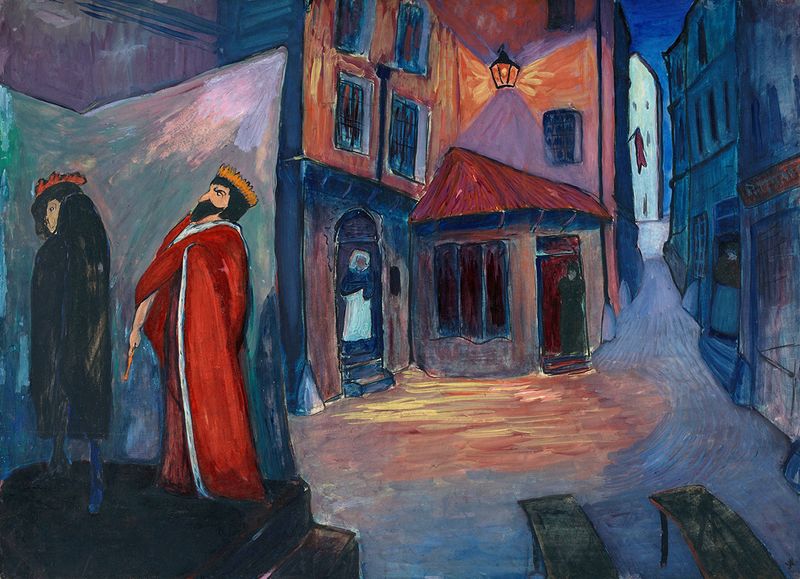
In the midst of revolutionary fervor, art transforms turbulence into elegance, illuminating the depths of emotion. Look to the center of the canvas where vibrant, swirling colors converge, creating the sense of a tumultuous landscape. The bold brushstrokes, both aggressive and tender, intertwine to form exaggerated forms that seem to dance upon the precipice of despair and hope. Notice how the dark, moody hues give way to bright splashes of color, suggesting a tumultuous yet beautiful journey through distress. The tension in the composition reveals a battle between stability and chaos.
The sharp contrasts between dark and light not only symbolize emotional disarray but also evoke a sense of urgency—the viewer can sense that a decision hangs in the balance. Hidden within the layers, there are hints of figures that seem to emerge and dissolve, representing the fleeting nature of identity amid societal upheaval. This interplay speaks to the duality of existence, where beauty and turmoil coexist, urging us to find grace in chaos. In the 1920s, during a time of significant upheaval in Europe, the artist was deeply influenced by the socio-political climate surrounding her.
Working primarily in Germany, she was part of the expressionist movement that sought to convey deeper truths through emotional resonance. This period marked a pivotal moment in her career, as von Werefkin's work simultaneously responded to and critiqued the rapid changes occurring in society, reflecting her status as both an artist and a revolutionary voice.