Fresnes — History & Facts
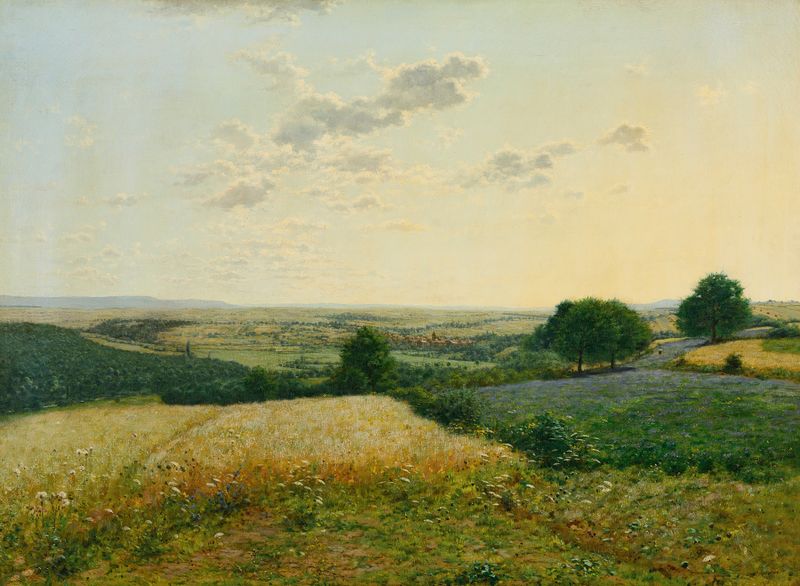
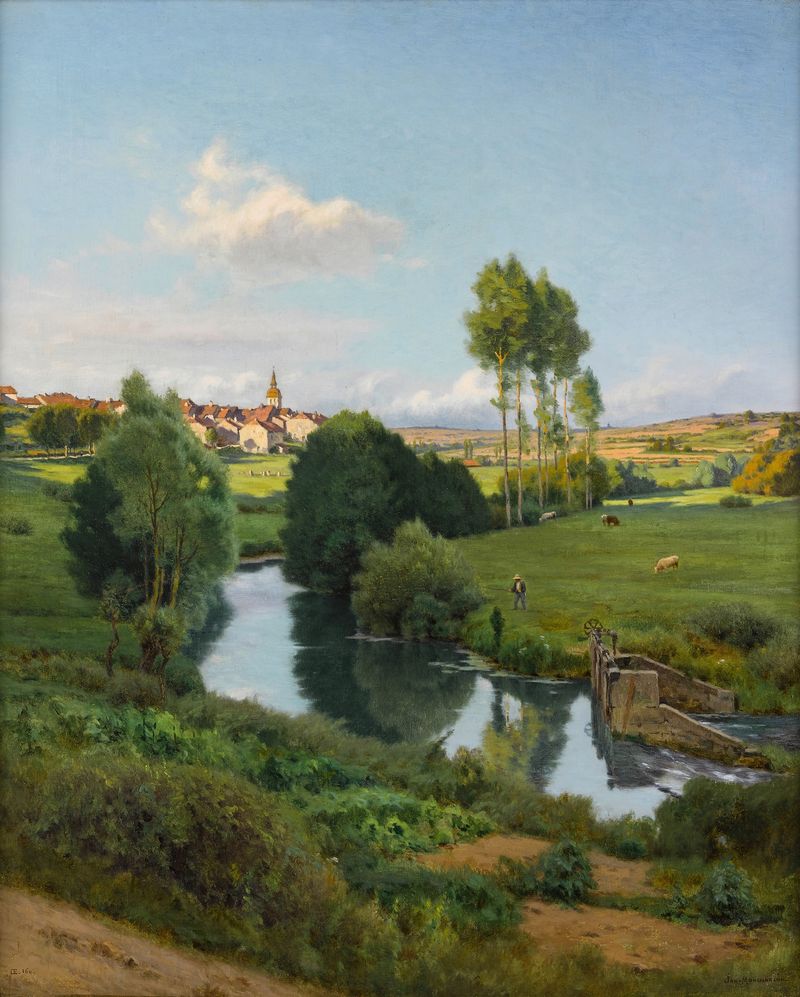
Within its surface, light becomes a storyteller, revealing secrets of a moment bathed in quietude and introspection. Look to the golden hues that wash over the landscape, beckoning your gaze to the horizon where the sky meets gently rolling hills. Notice how the soft brushstrokes create a sense of movement, as if the wind whispers through the trees. The play of light here is not merely a backdrop; it envelops the scene, highlighting details such as the delicate flowers and the dappled shadows beneath the foliage, giving life to this tranquil vista. Yet, beneath the surface of this serene landscape lies an emotional tension.
The vibrant colors contrast with the shadows, suggesting a dance between hope and melancholy. The light, while illuminating the beauty of nature, also hints at impermanence, as if time is fleeting and moments are cherished, yet ultimately ephemeral. This dynamic interplay invites the viewer to reflect on the passage of time, evoking a sense of nostalgia intertwined with the beauty of the present. In 1897, Monchablon crafted Fresnes during a period marked by a growing appreciation for plein air painting, as artists sought to capture the light and atmosphere of the natural world.
Residing in France, he was influenced by the Impressionist movement, which emphasized the fleeting effects of light. This work stands as a testament to that philosophy, capturing a moment in time infused with the artist's own contemplation of nature and existence.