Paysage Près De Fresnes — History & Facts
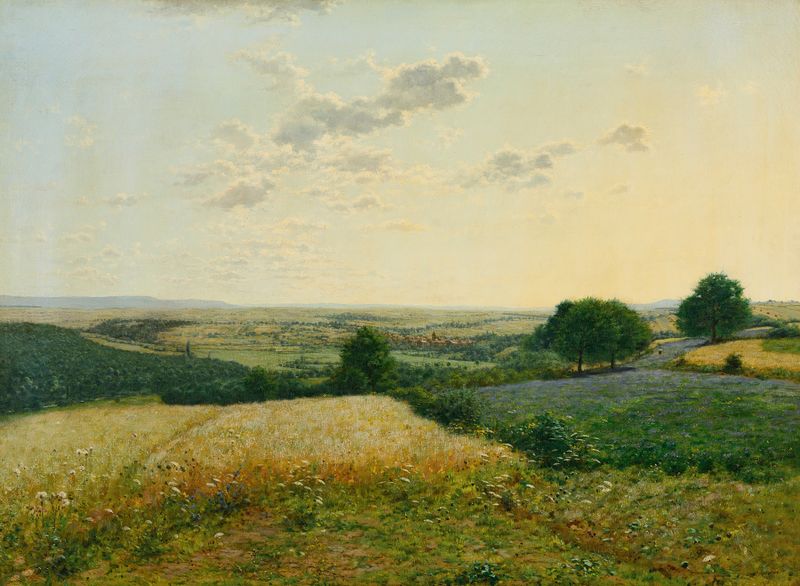
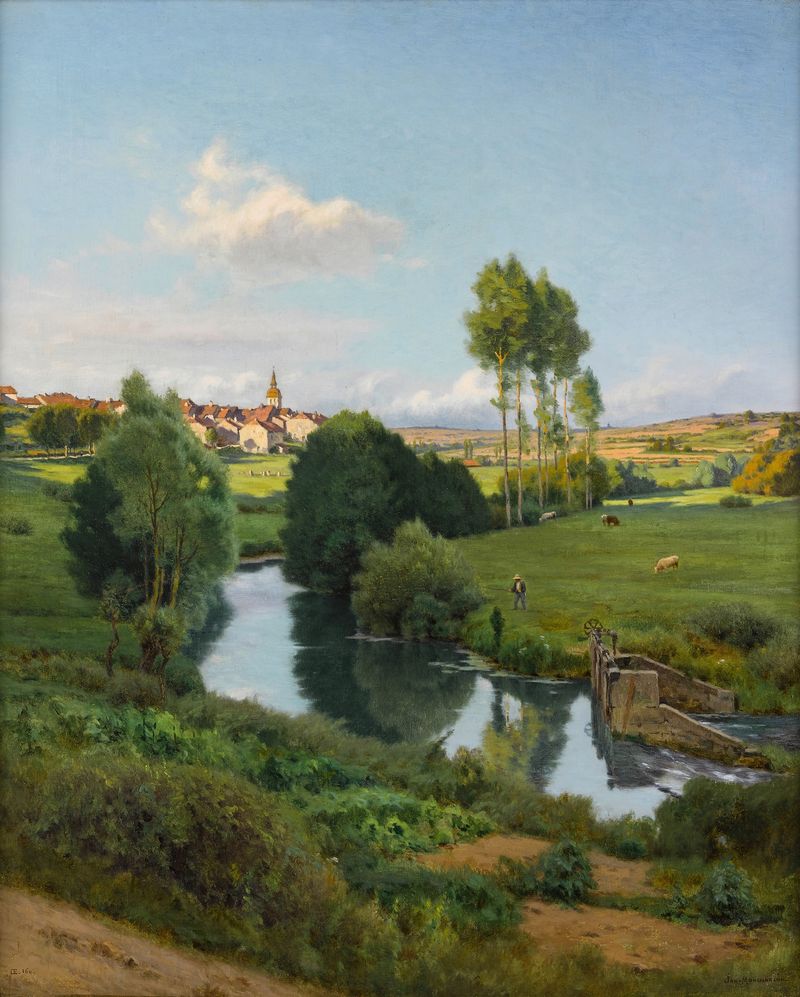
In Paysage Près De Fresnes, the artist captures the delicate balance between serenity and the unsettling whispers of nature's wildness. Look to the foreground where lush greenery bursts forth, vibrant strokes of green and gold intertwining in a dance of life. Notice how the dappled light filters through the trees, casting intricate shadows that hint at hidden depths beyond the surface. The horizon is dotted with soft, rolling hills that fade into a hazy sky, inviting the viewer to explore the layers of color and texture that define this tranquil yet alive landscape. Yet, amidst the beauty, there lies an undercurrent of fear—perhaps of nature's uncivility or the transience of peace.
The tumultuous brushwork in the sky suggests an impending storm, hinting at the frailty of calm moments. Each blade of grass, every whisper of wind, carries a tension that reveals the artist's inner turmoil, blending joy with a hint of foreboding. In 1895, Monchablon painted this piece while residing in France, a time when the art world was shifting towards impressionism and the exploration of natural landscapes. His works reflected an intimate connection with the environment, yet this painting marks a transitional moment, as he navigated his personal struggles while responding to the broader currents of aesthetic change.