Oeuvre Xi. (Summer Landscape) — History & Facts
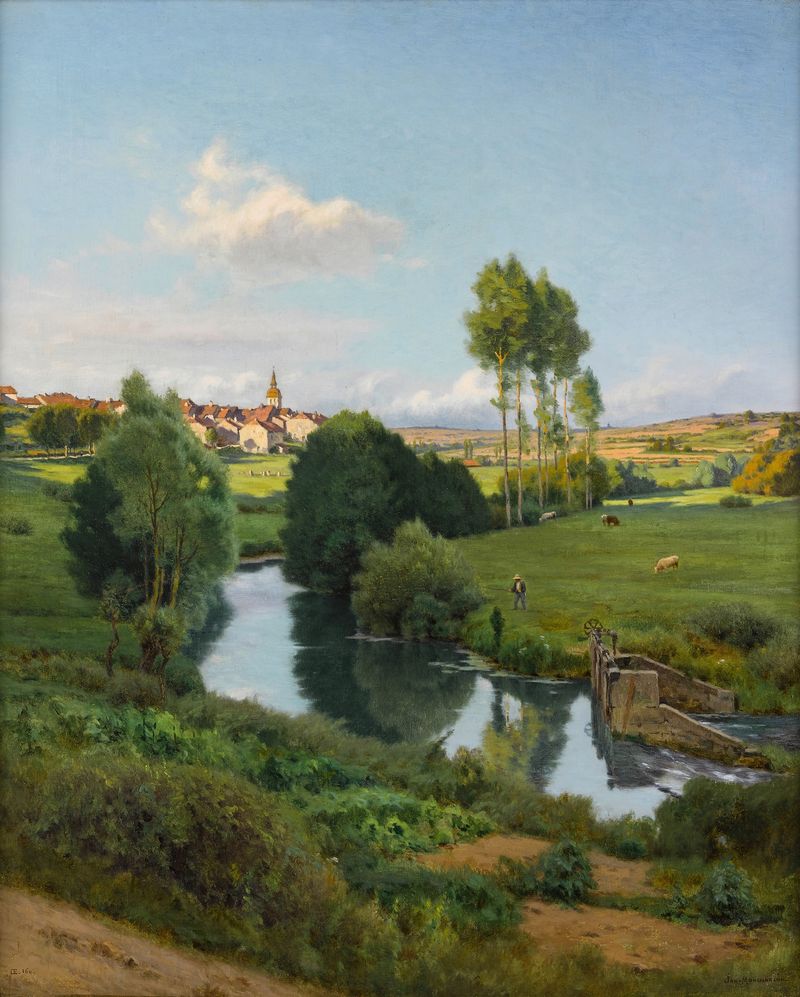
In the realm of landscapes, where the chaos of life converges with serene beauty, Monchablon captures a moment suspended in time, inviting us to delve into a world of vibrant hues and subtle tensions. Focus first on the soft blend of greens and yellows that breathe life into the scene, guiding your gaze across a harmonious interplay of rolling hills and lush foliage. Beneath the gentle brushstrokes, notice how the light dances on the canvas, illuminating hidden patches of wildflowers. The delicate balance of color invites a sense of tranquility, yet there’s an underlying vibrancy, an energy that hints at life's chaotic rhythms just beyond the frame. As you explore deeper, you may uncover a juxtaposition of tranquility and disarray.
The seemingly idyllic summer landscape whispers of peace, yet scattered brushstrokes evoke a sense of movement, emphasizing nature’s unpredictability. The occasional darkened area, perhaps signaling an impending storm, serves as a reminder that chaos lurks in the corners of even the most serene vistas. This interplay urges viewers to confront the fragility of bliss amidst the tumult of life. In 1887, Monchablon was deeply engaged in the vibrant art scene of France, influenced by the Impressionist movement that sought to capture fleeting moments.
Painting in the countryside, he was keenly aware of both the beauty and turmoil that nature embodies. His works during this period reflect an exploration of light and color, as well as a profound connection to the landscape that surrounded him, mirroring both his personal journey and the broader shifts in the artistic community at the time.