La Saone au bas de Lironcourt, Vosges — History & Facts
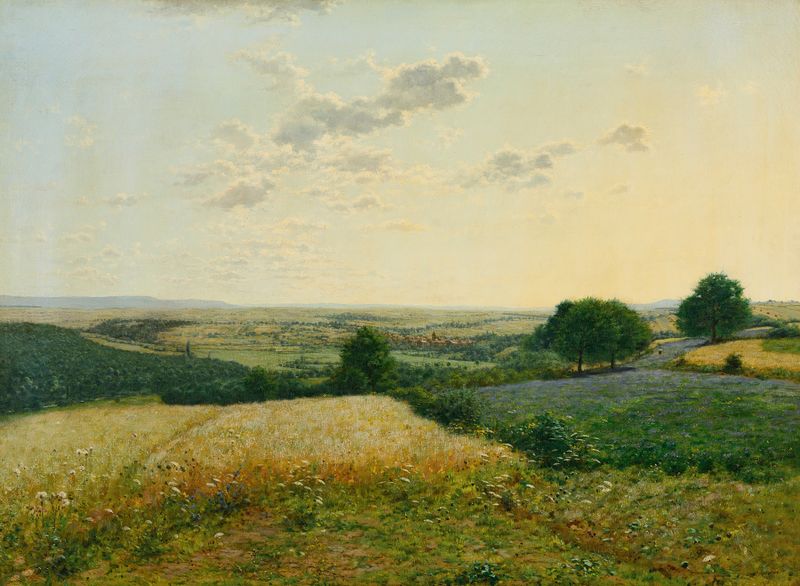
What secret hides in the quiet of the canvas? In La Saone au bas de Lironcourt, Vosges, the stillness of the river reflects a sense of hope, whispering the stories of those who seek solace in nature's embrace. Look to the left at the gentle curve of the riverbank, where the water shimmers with a serene azure, merging with the lush greens of the surrounding flora. Notice how the light softly illuminates the trees, creating dappled shadows that dance upon the water’s surface. The composition draws you in, guiding your gaze along the flow of the river, where the idyllic landscape unfolds like a story waiting to be told.
Each brushstroke evokes the delicate balance between nature and tranquility, inviting you to pause and absorb the peaceful moment captured within the scene. As you explore further, consider the contrast between the vibrant life of the vegetation and the stillness of the water. This juxtaposition speaks to the duality of existence—an underlying current of change amidst the steadfastness of nature. The soft hues create a sense of harmony, while the gentle ripples in the water suggest the presence of unseen forces, hinting at life’s ebbs and flows.
It’s a reminder that even in moments of quiet, there lies an inherent promise of renewal and hope. During the late 19th century, Monchablon was immersed in the French landscape painting movement, which sought to celebrate nature’s beauty and its emotional resonance. He painted this piece in a period marked by artistic exploration and a shift towards Impressionism, reflecting his desire to capture the essence of the Vosges region and its tranquil landscapes. This was a time when artists began to break from traditional constraints, allowing for a more personal and emotive expression of their experiences with nature.