Frühlingsgarten in Starnberg — History & Facts
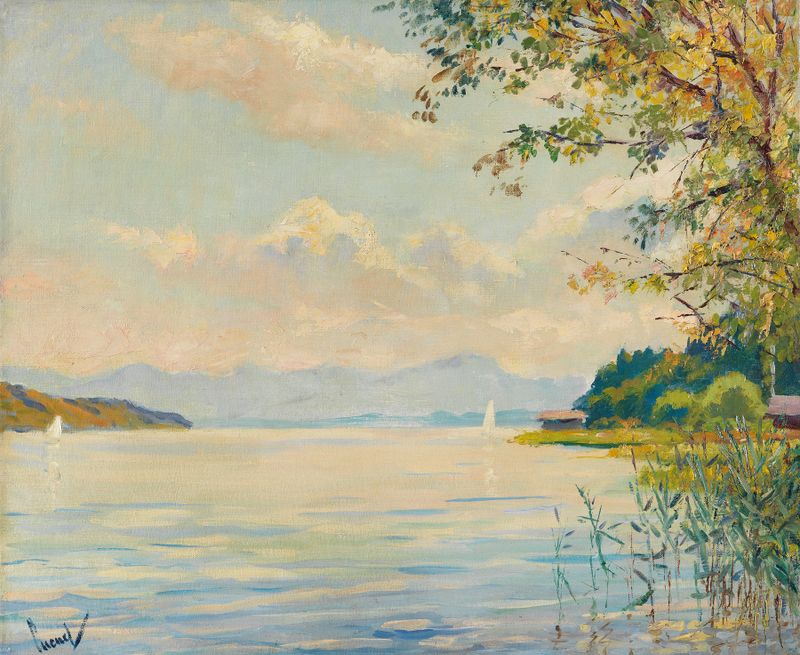
When did color learn to lie? Shadows dance with a deceptive allure in the lush embrace of spring, whispering secrets beneath the sun's warm gaze. Focus on the vibrant greens that dominate the canvas, a celebration of life and renewal. Look closely at the interplay of light and shadow; the sun filters through the foliage, casting intricate patterns on the ground. The brushstrokes are lively and expressive, capturing the gentle sways of flowers and the stillness of the moment, all while the palette sings with rich yellows, soft pinks, and deep blues that evoke a sense of serenity. Yet, beneath this idyllic scene lies a tension between reality and illusion.
The vivid colors suggest warmth and joy, but the elongated shadows hint at the passage of time and the inevitable fading of beauty. Observe the lonely bench tucked in the corner — a reminder of solitude amidst the vibrancy. These details provoke contemplation about the nature of spring: a season of life, yet also a fleeting whisper of what must eventually fade away. In 1920, Edward Cucuel created this work during a period that marked a shift in the art world, as post-war Europe sought renewal and stability.
Living in Germany at the time, he was influenced by the burgeoning movement that combined impressionism and a modern sensibility. The vibrant colors and emotional depth in Frühlingsgarten in Starnberg reflect both his personal artistic journey and the broader cultural longing for rebirth after chaos.