Spring Garden in Starnberg — History & Facts
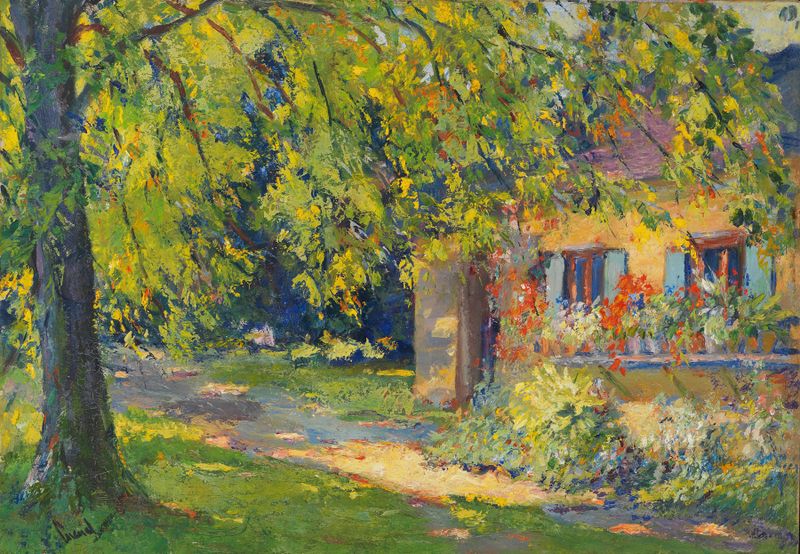
A gentle breeze stirs the vibrant petals as sunlight dances across a brilliant garden. A woman, her delicate figure poised amid a riot of colors, reaches out as if to touch the very essence of spring. The surrounding flora bends slightly, caught in a moment of serenity, as dappled light filters through the branches, wrapping the scene in warmth and a hint of illusion. Look to the left, where a cascade of lush greens and bright blossoms draws your eye.
Notice how the artist employs soft brushwork and a pastel color palette to evoke a sense of freshness and renewal. The interplay between light and shadow creates a depth that invites viewers deeper into this idyllic moment, while the woman’s flowing dress mirrors the natural curves surrounding her. Every petal and leaf feels alive, yet there's an ethereal quality, suggesting a fleeting moment captured before it slips away. Delve into the hidden contrasts within this idyllic scene: the juxtaposition of the ephemeral beauty of the garden with the solitary figure, a reminder of the fleeting nature of life.
The woman's outstretched hand hints at a desire to grasp the ephemeral, while the blossoms around her remind us of the cycle of life. There’s a beautiful tension between presence and absence; she seems both part of the garden and separate from it, caught in a delicate moment that teeters on the edge of reality and fantasy. In 1920, Edward Cucuel created Spring Garden in Starnberg while living in Germany, a time when he was deeply influenced by Impressionism. This period marked a shift in his career, as he began to explore lighter palettes and softer brushwork, embracing the beauty of nature and the ephemeral qualities of light.
The artistic community was evolving, moving towards new expressions of emotion, perfectly encapsulated in this radiant portrayal of a garden in bloom.