Friedhofskapelle Flintsbach — History & Facts
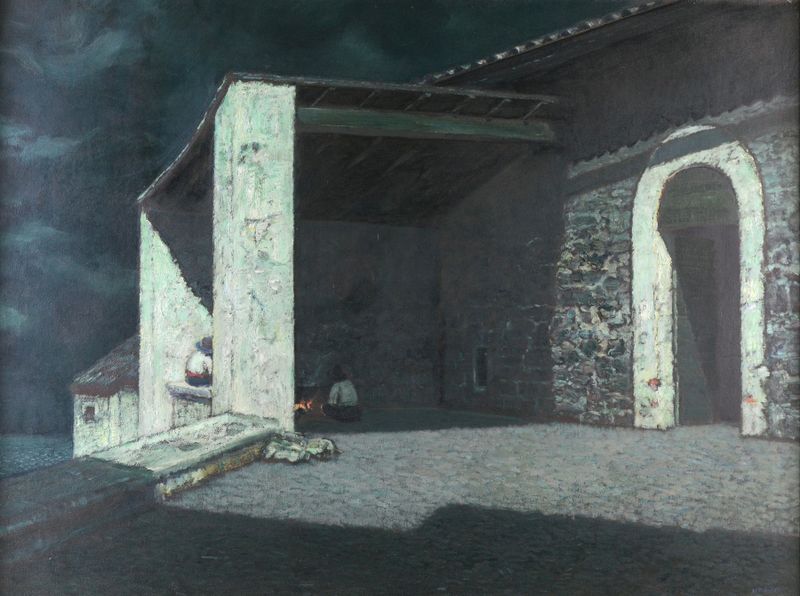
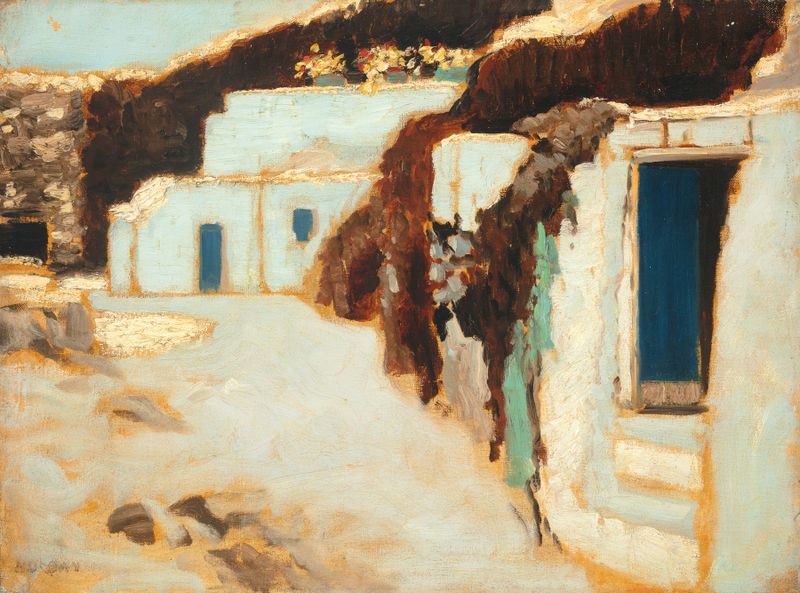
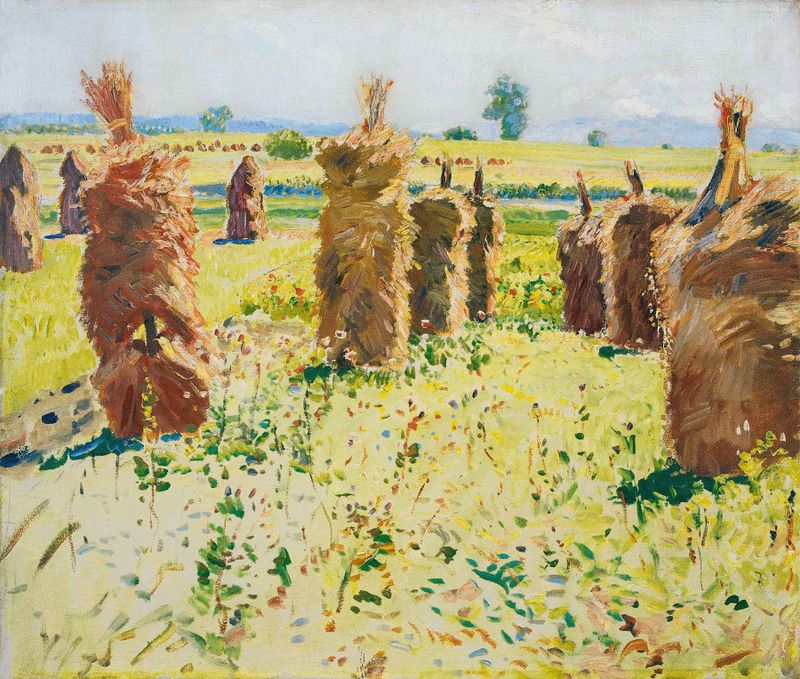
Is this a mirror — or a memory? The haunting reflection of a chapel, with its stark lines and somber hues, raises unsettling questions about presence and absence, faith and loss. Look closely at the angular shadows that cast themselves against the chapel’s weathered facade. Notice how the muted grays and browns dominate the palette, creating a landscape that feels both intimate and desolate. The composition draws your eye to the central doorway, a dark void that seems to beckon yet repulse, whispering secrets of what once was.
The artist’s precise brushwork evokes a texture that mirrors the roughness of the stone, inviting a tactile response in an otherwise silent scene. The interplay between light and shadow reveals deeper emotional tensions within the work. Observe the way the chapel stands resilient, almost defiantly against the encroaching darkness, yet the surrounding landscape is barren, hinting at the violence of history that surrounds this sacred space. Each crack and crevice on the walls seems to narrate a story of forgotten rituals and a lingering sadness, evoking the fragility of life and belief.
The stark contrast between the steadfast structure and the desolate environment invites viewers to reflect on the relentless passage of time. In 1925, Hermann Urban painted this piece during a tumultuous period in Germany, marked by societal upheaval following World War I. As artists sought new directions in the face of modernity and destruction, Urban’s choice of subject reflects a deep engagement with the themes of memory and mortality. The work stands as a testament to the era's struggles, capturing both the fragility and resilience of faith in a changing world.