
From the journey to Constantinople — History & Facts
Who listens when art speaks of silence? In From the Journey to Constantinople, an evocative canvas invites us to ponder dreams, journeys, and the uncharted territory of the human experience. Look at the serene landscape that unfolds before you, where soft, muted colors cradle the horizon. The viewer’s gaze is immediately drawn to the winding road meandering through the foreground, lined with delicate trees that sway gently under the influence of an unseen breeze. Notice how the light casts a golden hue over the scene, creating a harmonious blend of warmth and mystery, while the distant silhouette of a city, perhaps Constantinople itself, looms ethereally in the background, almost beckoning. Yet, beneath this tranquil exterior lies a tension between the known and the unknown.
The road represents both a literal and metaphorical journey, a path filled with dreams and aspirations, but also uncertainty and longing. The figures, small and almost ghostly, evoke the solitude of their quest, suggesting that the journey is as much introspective as it is outward. The layering of the landscape serves to heighten this contrast, illustrating the complexity of travel and the emotions it stirs within. In 1893, Ciągliński created this evocative piece during a time when Europe was experiencing a surge of interest in the East, both culturally and artistically.
Living in a period marked by a fascination with exoticism and the allure of far-off lands, the artist sought to capture the essence of a dreamscape that reflected both personal and collective aspirations. His work resides in the rich tapestry of late 19th-century art, a testament to a world on the brink of modernity, yet still deeply enshrined in mystery.
More Artworks by Jan Ciągliński
Browse all →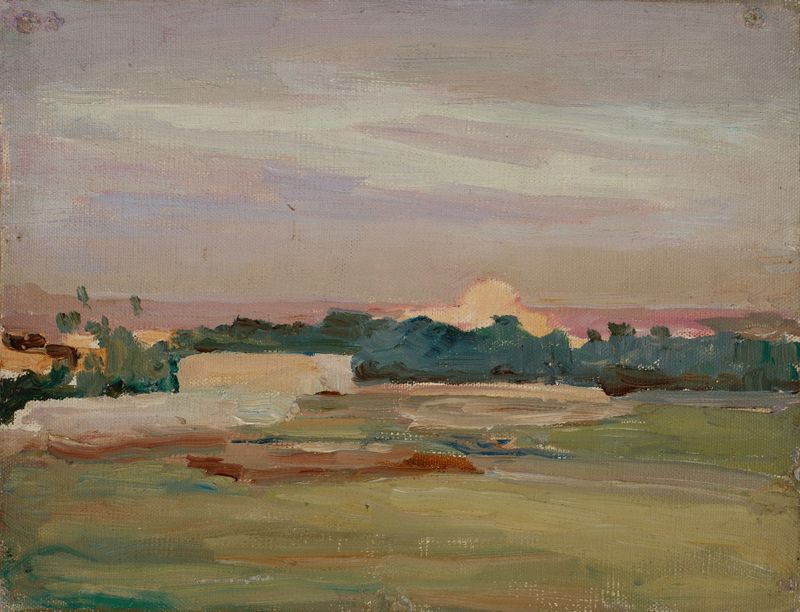
The Sirocco
Jan Ciągliński
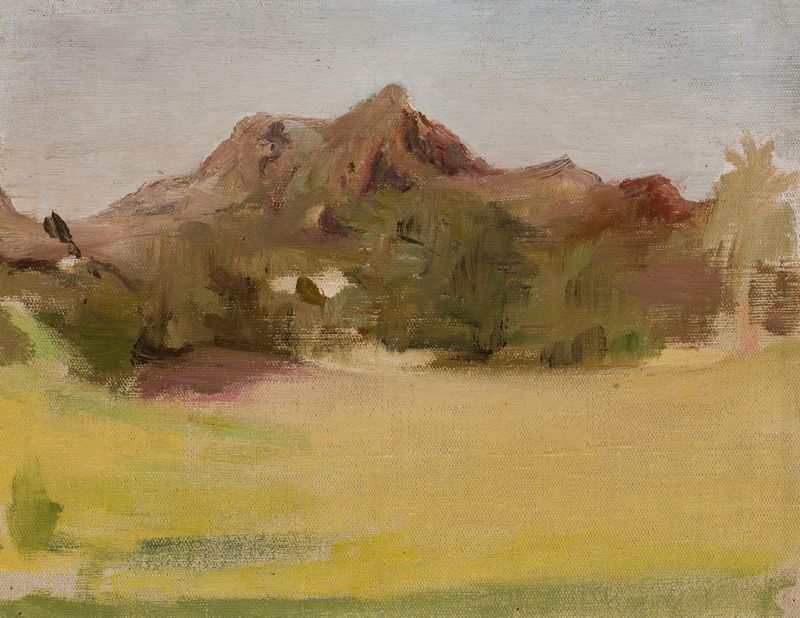
Mountain landscape. From the journey to India
Jan Ciągliński
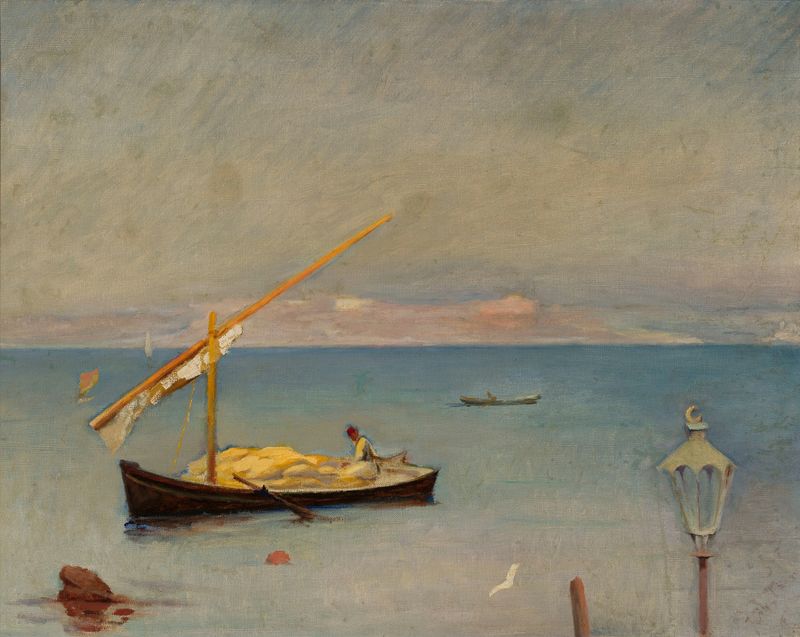
At Bosporus
Jan Ciągliński
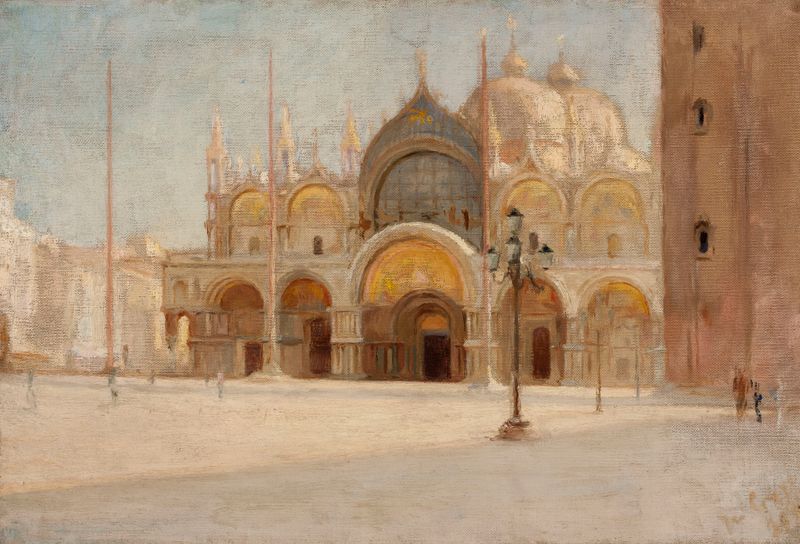
St Mark’s Square in Venice
Jan Ciągliński
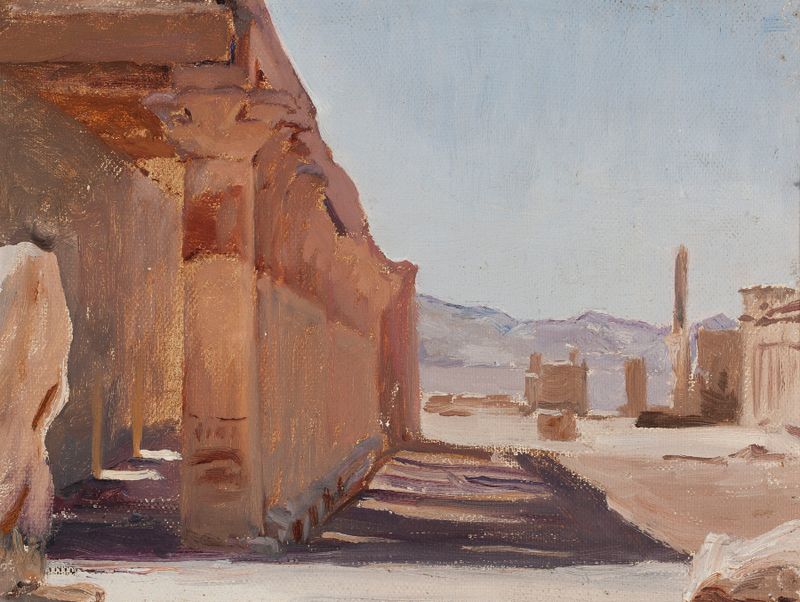
Temple. From the journey to Egypt
Jan Ciągliński
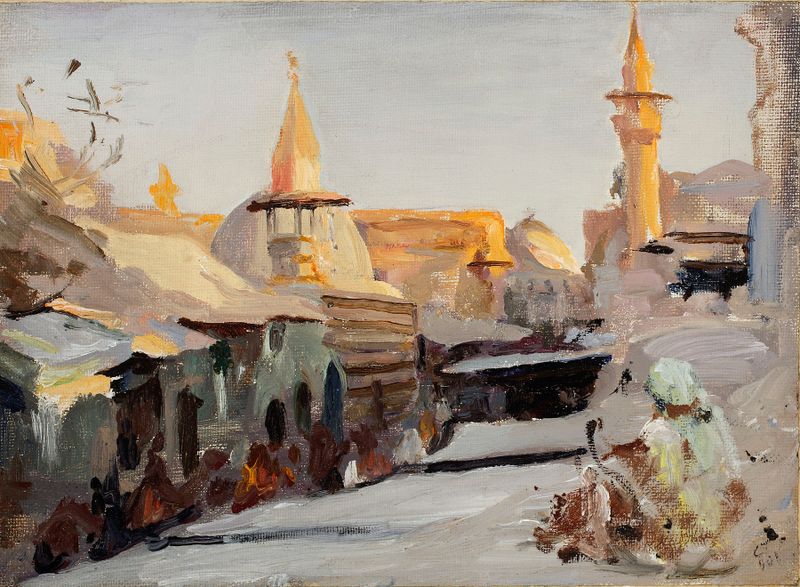
Street in Damascus. From the journey to Palestine
Jan Ciągliński
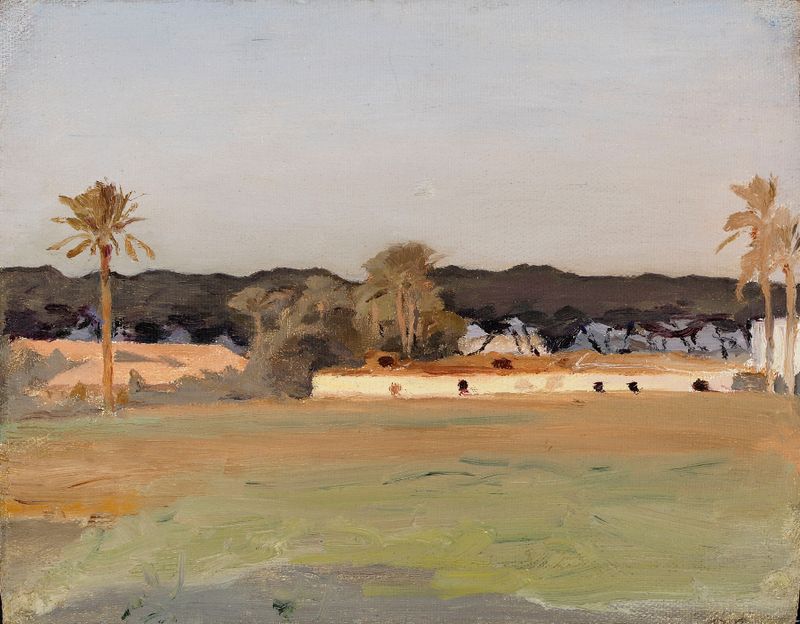
Evening. From the journey to Egypt
Jan Ciągliński
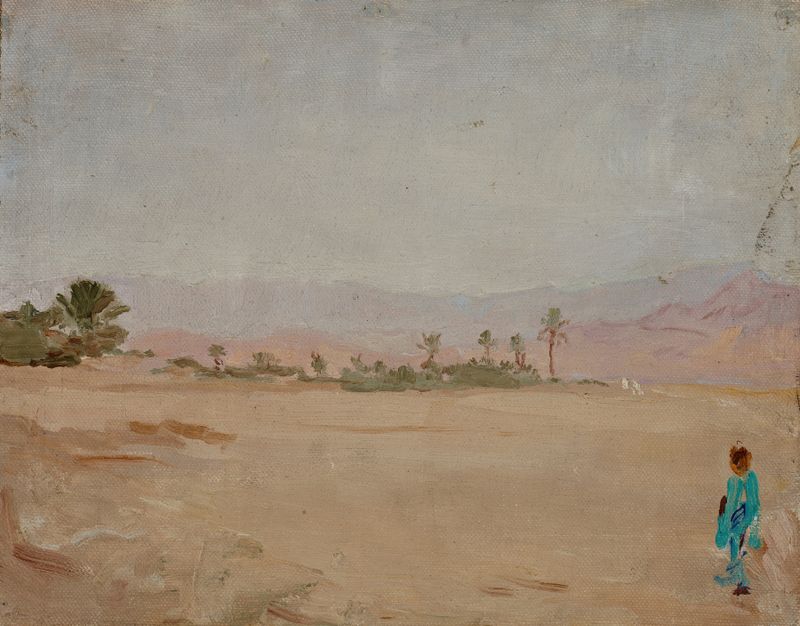
Sahara (Desert)
Jan Ciągliński
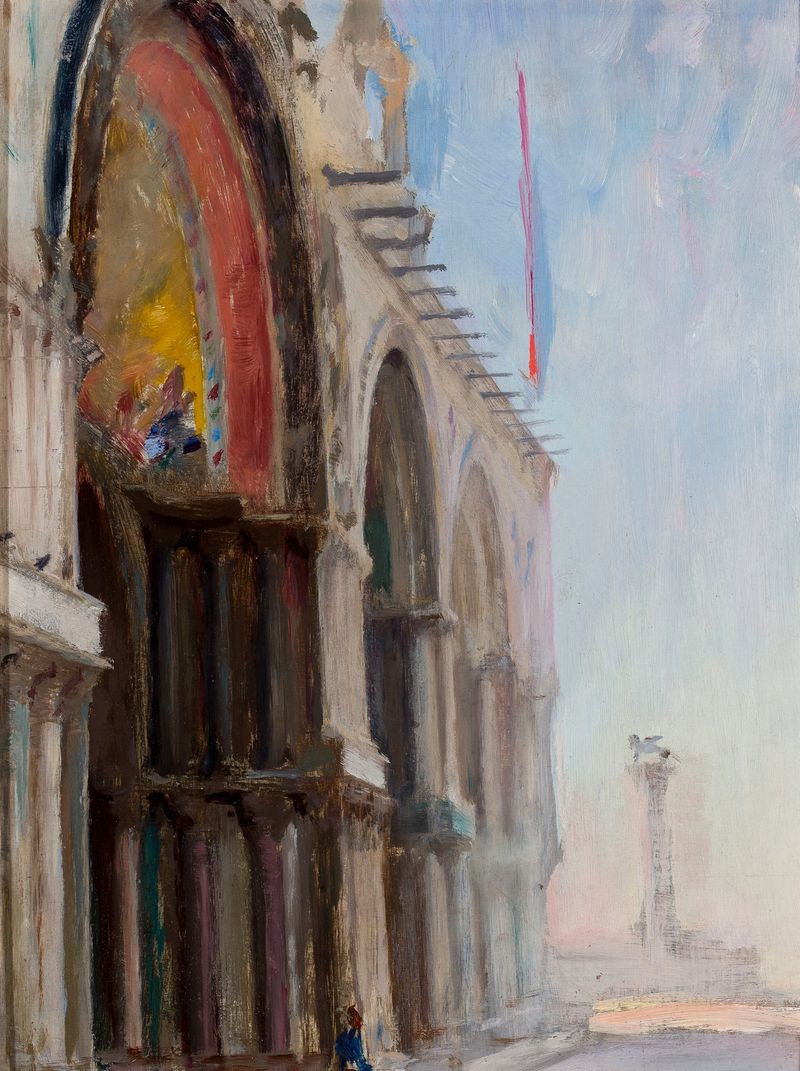
Venice – San Marco. From the journey to Italy
Jan Ciągliński
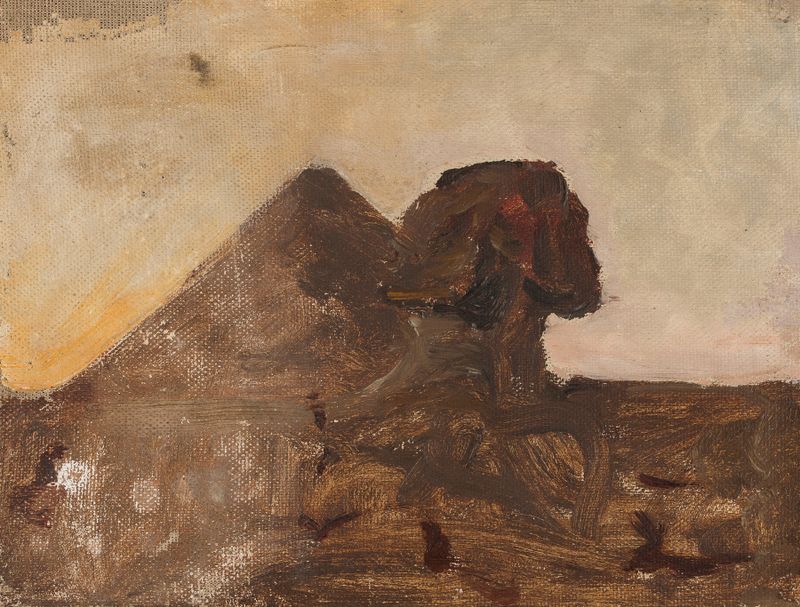
Evening in the desert – Sphinx and pyramid. From the journey to Egypt
Jan Ciągliński





