
Froschhausen bei Murnau — History & Facts
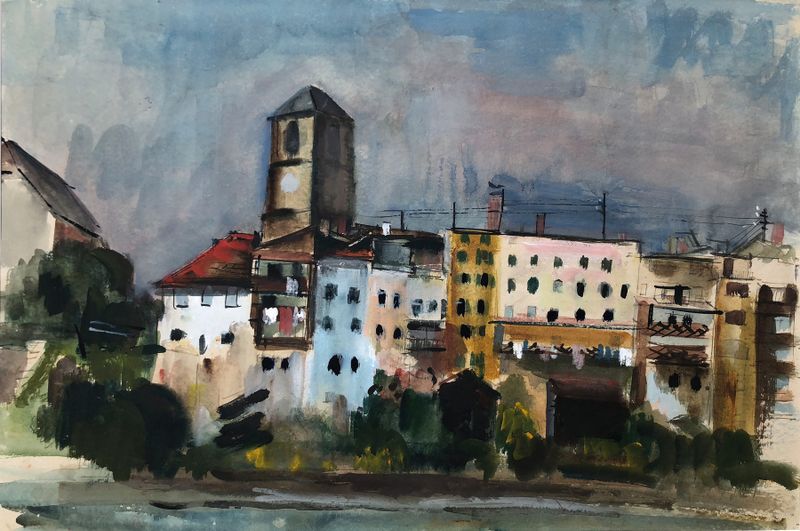
When did color learn to lie? The hues that adorn this canvas speak of a world both vivid and deceptive, inviting the viewer to question the very essence of perception itself. Focus on the vibrant palette that envelops the landscape, where shades of green and blue dance playfully across the canvas. The brushstrokes are lively yet controlled, guiding your gaze through the undulating hills and swaying trees. Look closely at the interplay between light and shadow; the way the sun spills golden warmth onto the fields evokes a sense of nostalgia and yearning.
Notice how the sky, painted in bold strokes, blends into a spectrum that feels almost electric, suggesting an emotional undercurrent beneath the surface. The work contrasts the serenity of nature with an unsettling tension. The exaggerated colors could imply a sense of longing for idealized beauty, or perhaps a refusal to confront an unsettling reality. The looming shapes in the foreground serve as a reminder that beneath the vibrancy, there may be an underlying melancholy.
Each brushstroke seems to echo with the weight of the time, inviting contemplation on what lies beneath the canvas’s surface. Created during a turbulent period in 1942, when the world was engulfed in conflict, the artist found himself in the midst of a profound shift in the art world. Otto Geigenberger, painting in Germany, was influenced by the burgeoning expressions of modernism and the emotional resonance of color, reflecting a desire to escape the chaos around him. The artwork emerges not just as a representation of a place but as a poignant commentary on the complexities of human emotion and the power of color to convey both beauty and disquiet.
More Artworks by Otto Geigenberger
Browse all →
Hohe Munde bei Seefeld in Tirol
Otto Geigenberger
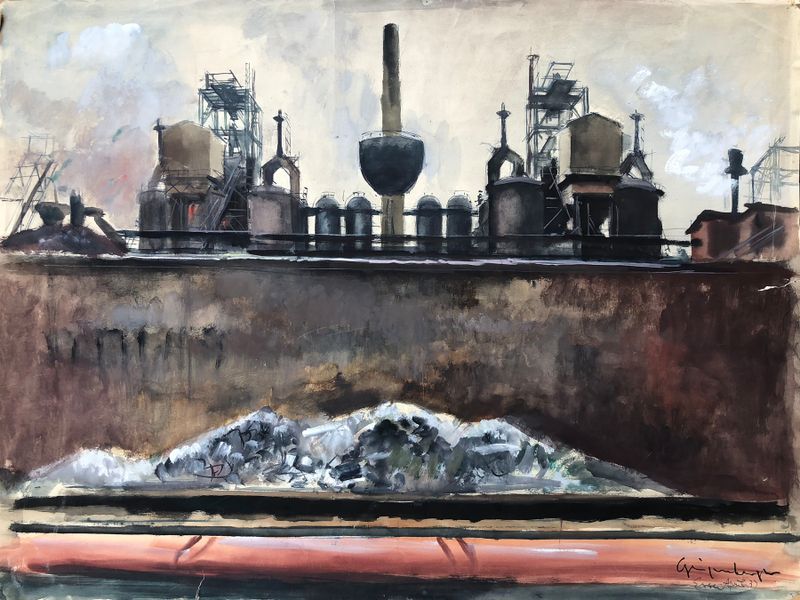
Stahlwerk Krupp in Essen
Otto Geigenberger

Landschaft mit Kirche
Otto Geigenberger

Passau am Inn 2
Otto Geigenberger
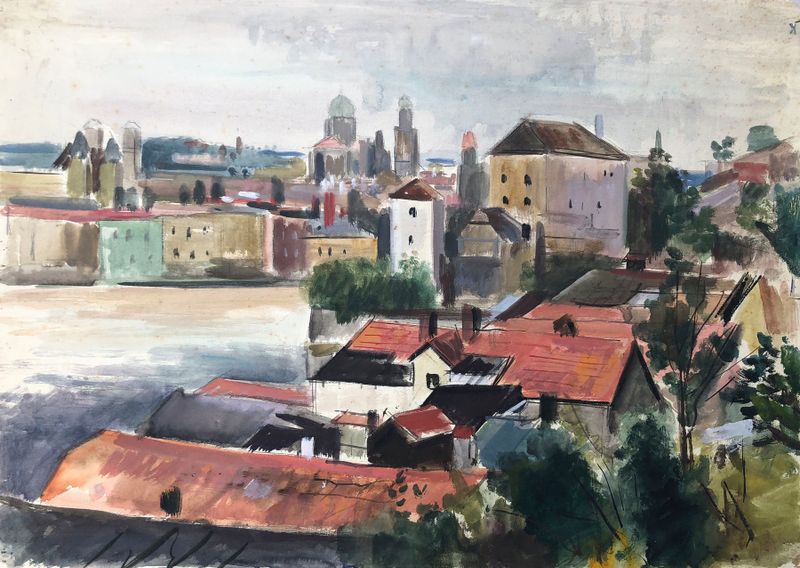
Passau am Inn
Otto Geigenberger
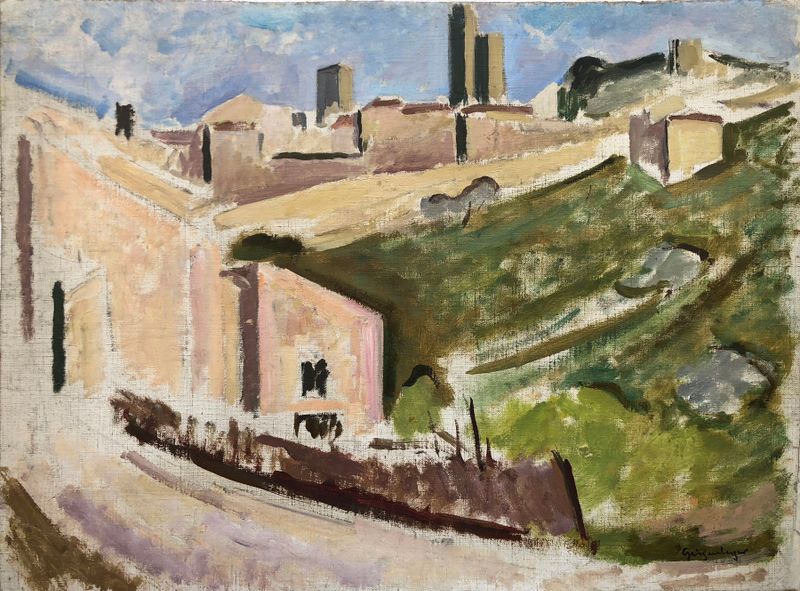
Südliche Stadt auf einem Hügel
Otto Geigenberger

Wasserburg am Inn – Häuserpartie am Inn
Otto Geigenberger

Wasserburg am Inn – Innfront
Otto Geigenberger
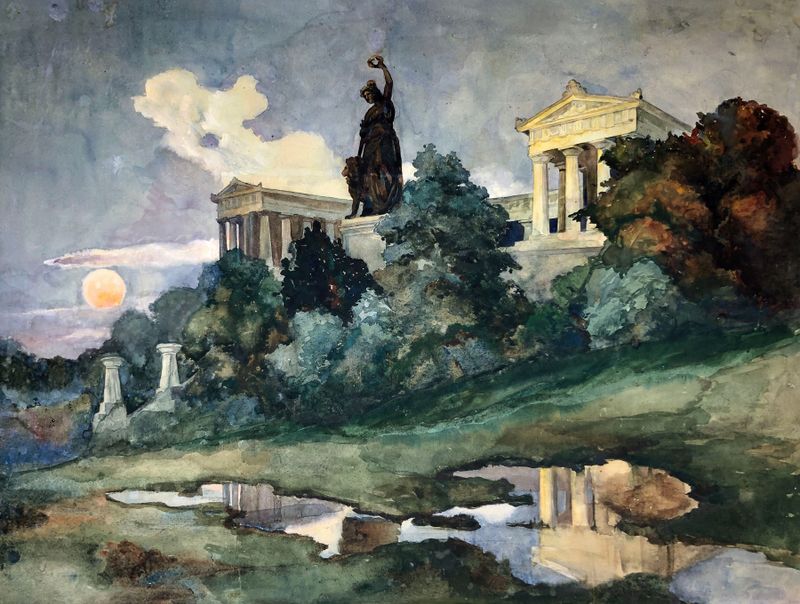
Sonnenuntergang an der Bavaria und Ruhmeshalle in München
Otto Geigenberger
Wasserburg am Inn – Innfront.
Otto Geigenberger





