Garden fragment — History & Facts
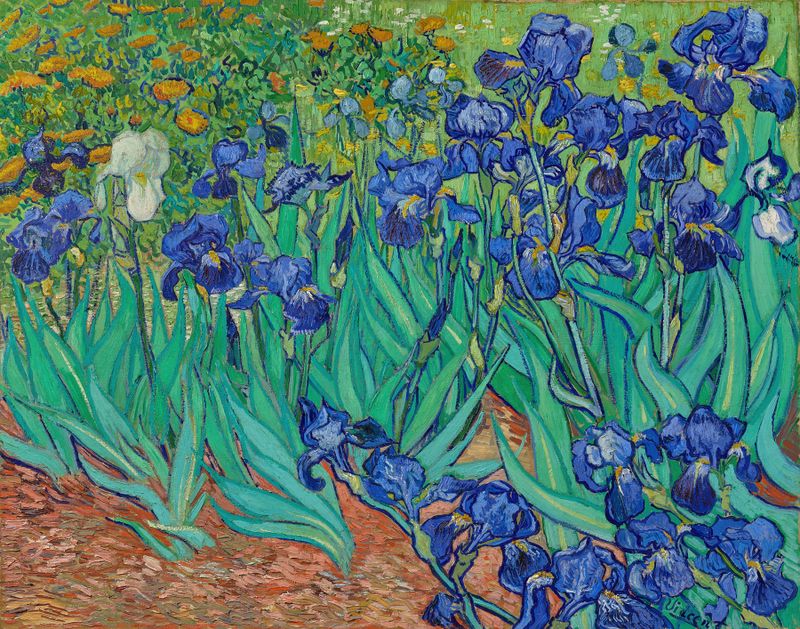
The air is thick with the scent of blooming flowers, their vibrant colors swirling in the golden light of the setting sun. A solitary figure kneels among the lush greenery, hands sunk deep into the soil, the world around them dissolving into a dreamlike blur. In this moment, faith manifests not through words but through the silent communion between human and earth. Look to the left, where soft pinks and whites of blossoms beckon your gaze, each petal a brushstroke of hope against the rich, dark soil.
Notice how the light filters through the leaves above, casting a gentle glow that caresses the scene, illuminating the figure's serene expression. The delicate interplay of colors and the masterful layering of paint create a tactile quality, inviting you to reach out and touch the life beneath your fingertips. The act of planting becomes a ritual here, a meditation on growth, rebirth, and the cycle of life. The juxtaposition of the figure's quiet determination against the chaotic beauty of nature suggests a profound relationship between humanity and the environment, underscoring themes of resilience and nurturing.
Each flower appears to pulse with life, echoing the figure’s own journey of faith and connection to the earth. Julian Maszyński created Garden Fragment during a time when his artistic focus gravitated towards themes of nature and spirituality. Working in relative solitude, he explored how the natural world could reflect deep human emotions. In this period of introspection, he sought to capture the essence of life’s simplicity, through an intimate lens that highlights both personal and universal experiences of faith.