Garden Landscape — History & Facts
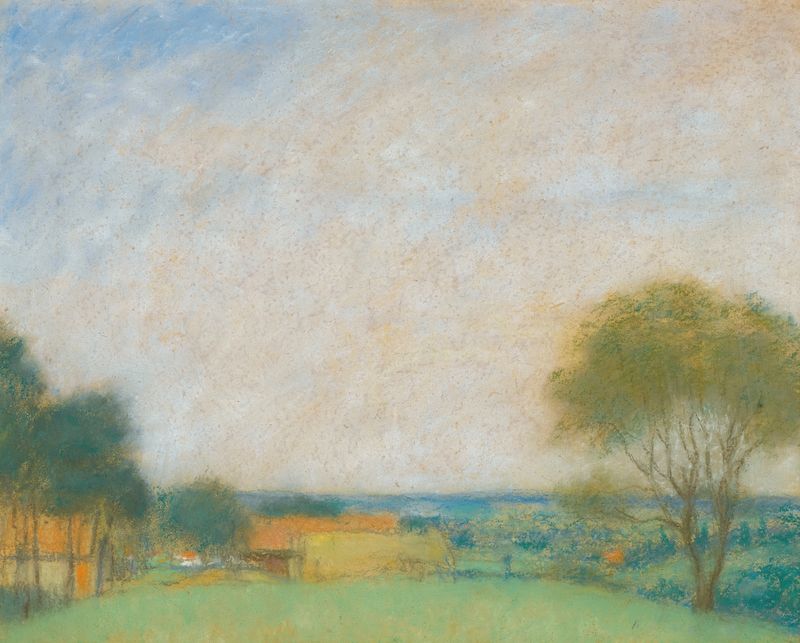
In a sun-drenched garden, a gentle breeze rustles the leaves, carrying the scent of blooming flowers through the air. A solitary figure leans against a wooden fence, softly gazing at the vibrant palette of nature before them. The light spills over the landscape, casting playful shadows that dance on the ground, creating an enchanting tableau of serenity and reflection. Look to the left at the lush green hues, where every stroke of the brush captures the essence of life and time within the garden.
The deft application of color immerses the viewer in a harmonious blend of deep greens and sunlit yellows. Notice how the artist's brushwork invites you to meander through the garden, and how every blade of grass and petal seems to whisper stories of growth and change. The juxtaposition between the vibrancy of the flowers and the stillness of the figure hints at a deeper contemplation of existence. One can sense the quiet dialogue between the beauty of nature and the passage of time, evoking feelings of nostalgia and peace.
The softness in the landscape contrasts with the weight of the figure’s thoughts, symbolizing both the fleeting and eternal qualities of life. József Rippl-Rónai painted Garden Landscape during a period of introspection in his life, while residing in Hungary from 1861 to 1927. This era was marked by a shift in artistic focus towards the integration of personal experience and emotion in art. As a pivotal figure in the Hungarian avant-garde movement, his work captured the delicate interplay between nature and human sentiment, reflecting both the aesthetic values and the existential inquiries of the time.