Gebirgslandschaft — History & Facts
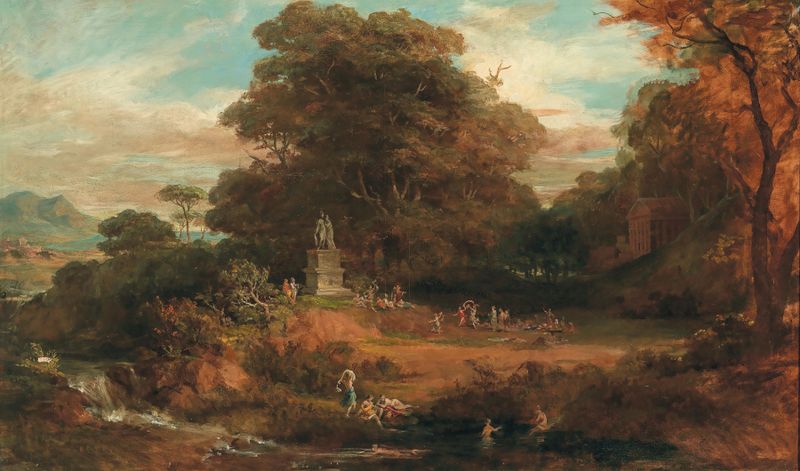
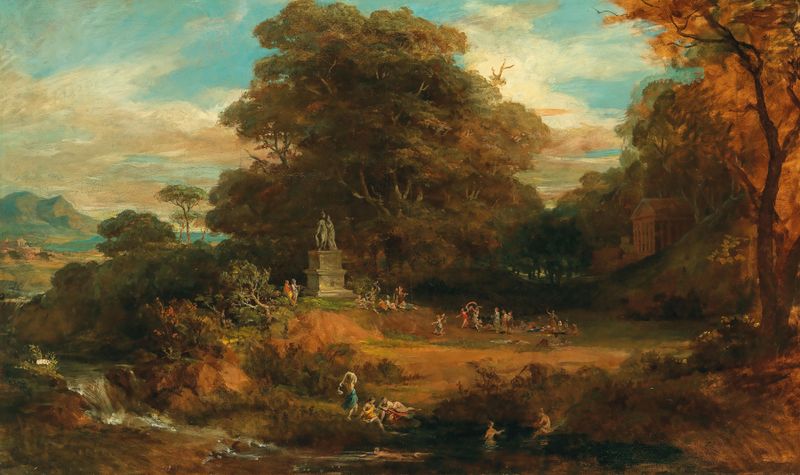
What if silence could speak through light? In Gebirgslandschaft, the tranquility of the mountains whispers a beauty that transcends words, inviting contemplation and reverence. Look to the foreground where a gentle stream meanders through lush valleys, its serene waters catching the early morning light. The artist's brushstrokes create an intricate tapestry of greens and browns, while the rising peaks in the background are flecked with soft whites, hinting at the remnants of winter. Notice how the light falls upon the rugged cliffs, illuminating their features and casting long shadows that interplay with the vibrant colors of the flora.
This careful composition leads the eye upward, urging one to ponder the vastness of nature. Delve deeper into this landscape, and you’ll uncover a dialogue between serenity and grandeur. The small figures of travelers in the distance symbolize the human experience within the overwhelming beauty of the natural world, bridging the gap between the intimate and the infinite. The contrast between the delicate blossoms in the foreground and the imposing mountains reflects the delicate balance of life amidst nature's majesty, evoking a sense of both vulnerability and strength. In 1859, Friedrich von Amerling painted this scene while immersed in the cultural movements of Vienna, where Romanticism was flourishing.
This was a time of personal reflection for the artist, deeply inspired by the dramatic landscapes surrounding him. His work was a response not only to the aesthetic shifts of his era but also to a growing appreciation of nature's sublime power, encapsulated in the breathtaking beauty of his alpine vision.