A Vast Idealised Landscape with Antique Figures around a Double Statue of Mars and Venus, Temple Architecture in the Background — History & Facts
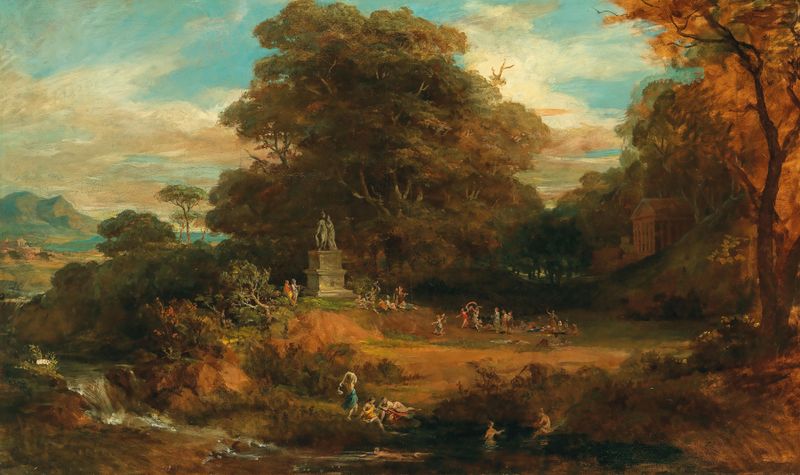
Is this a mirror — or a memory? In A Vast Idealised Landscape with Antique Figures around a Double Statue of Mars and Venus, Temple Architecture in the Background, the boundary between reality and illusion blurs, inviting viewers to traverse a dreamscape steeped in a classical reverie. Look to the center where the majestic double statue of Mars and Venus stands, their forms entwined in an eternal embrace. Notice how the artist employs a rich palette of greens and blues, evoking a serene, tranquil atmosphere that seems to breathe life into the ancient figures. The temple architecture looms in the background, its columns casting delicate shadows that enhance the composition's depth, while the figures arranged around the statue appear engaged in a timeless dialogue, their gestures hinting at a narrative just beyond reach. Delve deeper into the subtle interplay of presence and absence: the antique figures, though vibrant, evoke a sense of nostalgia as they embody ideals of love and war, harmony and conflict.
The juxtaposition of the lovers with the temple speaks to the enduring nature of human emotions juxtaposed against the transient quality of life itself. Each element, from the flowering landscape to the serene expressions, contributes to a layered dialogue about memory, longing, and the passage of time. Friedrich von Amerling painted this work during a period marked by a revival of classical themes in the mid-19th century. Living in Vienna, at a time when neoclassicism was giving way to romanticism, he was immersed in a world where the ideals of beauty stirred a growing fascination with the past.
This creation reflects both his artistic prowess and the cultural zeitgeist, merging historical reverence with personal introspection.