Mondlandschaft (Walpurgisnacht) — History & Facts
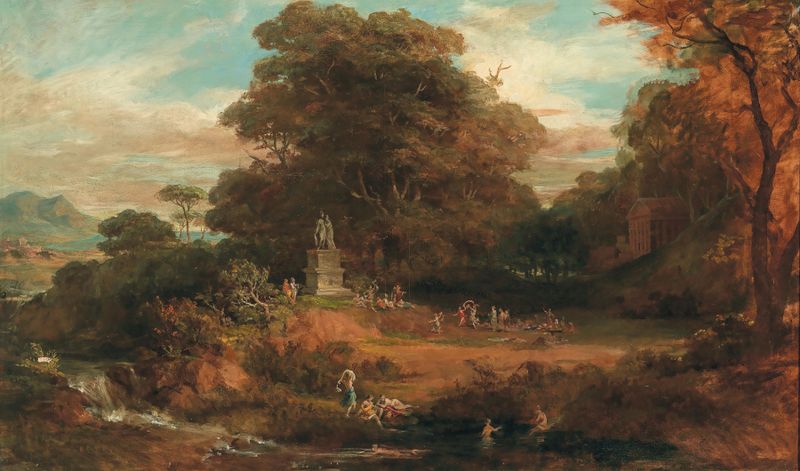
In moments of betrayal, we find clarity—the kind that transcends mere sight and reaches into the depths of the heart. Look closely at the foreground, where the silhouette of a dark figure stands stark against the luminous landscape. The ethereal light bathes the moonlit scene, casting delicate shadows that dance upon the hills. The sky, a mélange of deep blues and vibrant silvers, draws the eye upward, inviting contemplation of the mysteries that lie beyond.
The deft brushwork captures the delicate play of light, revealing the artist’s mastery in rendering the nocturnal world. As you explore further, notice the tranquil stillness that envelops the canvas, juxtaposed against an undercurrent of tension. This serene ambiance hides the looming sense of betrayal, suggested through the distant, twisting trees that seem to reach out, as if grasping for something lost. The contrast between the tranquil beauty of the moonlit night and the disquiet of the unseen tension invites viewers to ponder their own narratives of trust and disillusionment. In 1862, while residing in Vienna, the artist created this piece amidst a vibrant art scene that was transitioning towards modernism.
Known for his portraiture, Amerling was deeply engaged in capturing the essence of human emotion, a pursuit that found expression in this work. The tumultuous socio-political climate of the time, marked by uncertainty and change, provided fertile ground for exploring themes of inner conflict and existential solitude.