Gezicht in de stad Montfoort — History & Facts
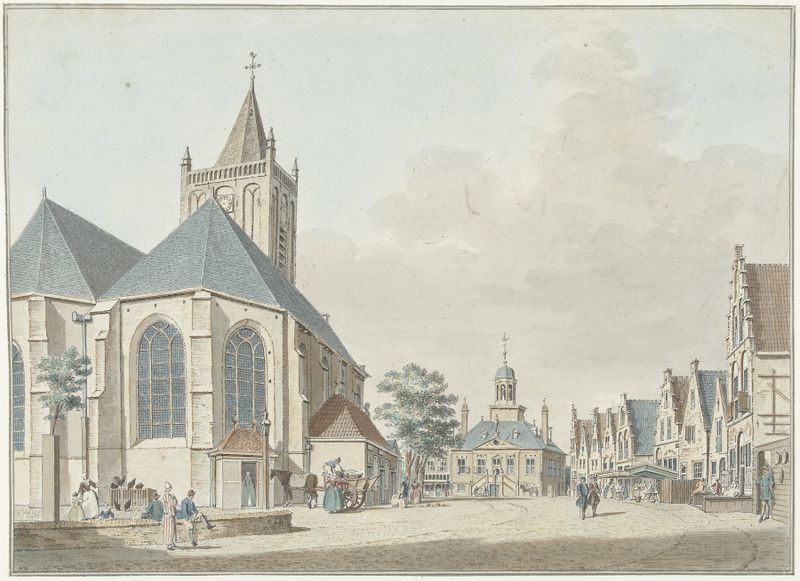
Can beauty exist without sorrow? In Gezicht in de stad Montfoort, a moment is captured where the essence of a quaint Dutch town intertwines with the whispered echoes of time, suggesting that every serene vista holds hidden depths. Look to the center of the canvas, where the heart of Montfoort lies—its charming architecture stands resolute against a backdrop of clear blue sky. The delicate brushwork skillfully renders the play of light on the buildings, creating a soft contrast between the vibrant hues of the town and the muted tones of the cobblestone streets. Notice how the painter's attention to detail draws your gaze through the winding pathways, inviting you to explore the hidden corners of this tranquil scene. Amidst the idyllic portrayal, subtle hints of transience linger.
The fleeting shadows cast by the passing clouds evoke a sense of impermanence, while the distant figures move through the town, embodying the lives lived within its embrace. This interplay between stillness and movement suggests a deeper reflection on the passage of time—beauty becomes intertwined with the unyielding march of life, where joy is undeniably tinged with melancholy. In 1775, Pieter Jan van Liender created this work during a period of artistic transition in the Netherlands. As the country navigated the shifting tides of societal change and urbanization, the artist's focus on everyday life and landscapes reflected a growing appreciation for the sublime beauty of the ordinary.
This painting not only captures the charm of Montfoort but also serves as a poignant reminder of how beauty and sorrow are forever bound in the tapestry of existence.