Gezicht op akkers — History & Facts
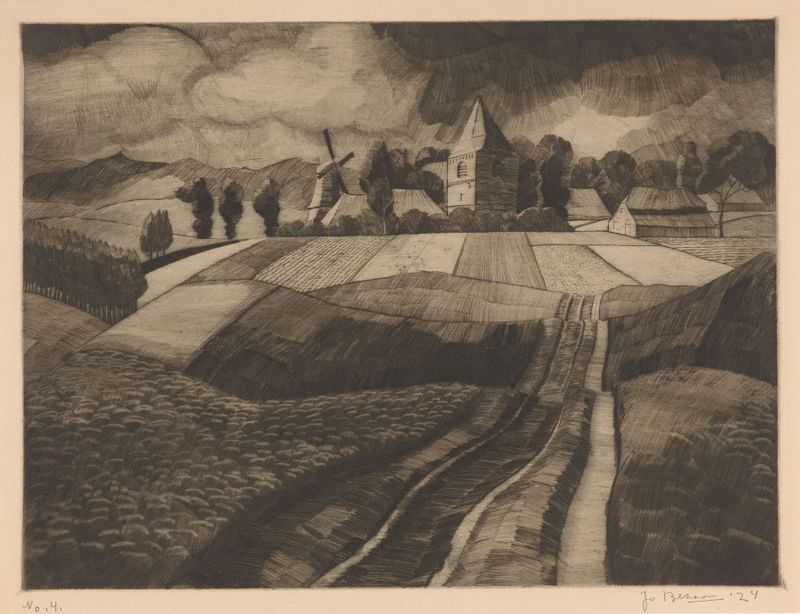
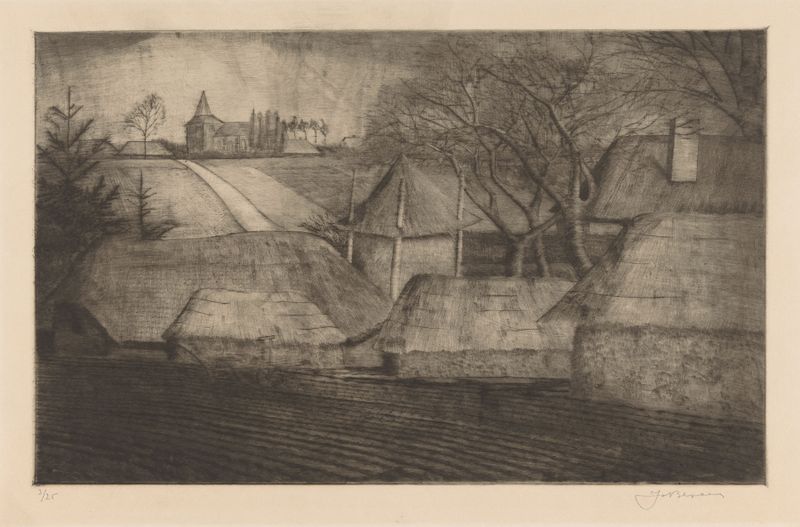
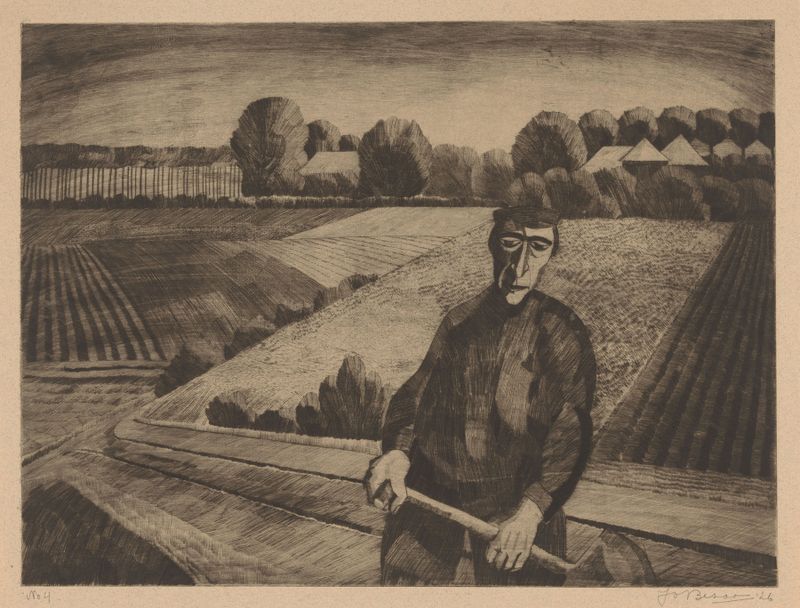
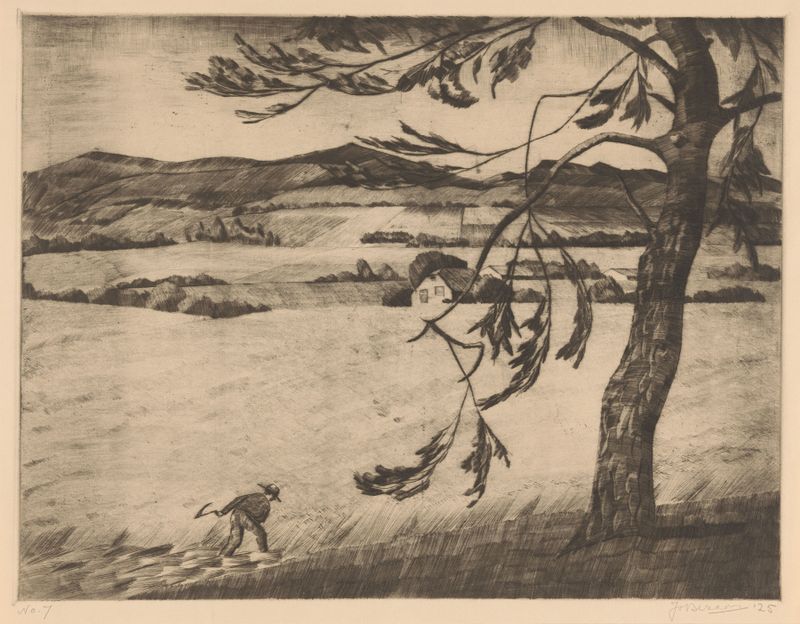
Who listens when art speaks of silence? In Gezicht op akkers, the canvas quietly echoes a solitude that resonates deeply, inviting reflection on the human condition. Look to the bottom left, where the earthy tones of the fields blend seamlessly into a muted sky. The contrast between the rich browns and the soft blues creates a sense of expansiveness, suggesting both physical space and emotional depth. Notice how the brushstrokes vary in intensity; some areas are meticulously detailed, while others dissolve into a gentle blur, evoking the passage of time and evanescence.
The composition leads the viewer’s eye through horizontal lines, guiding us across the landscape while simultaneously enclosing us in a moment suspended in quiet contemplation. The painting captures a poignant loneliness, where solitude is both a burden and a refuge. The fields, stretching endlessly, evoke a sense of separation, yet they also speak of resilience—a reminder of nature's enduring presence amidst human struggles. The delicate balance of light and shadow amplifies this tension, reflecting the artist's inner dialogue with isolation while hinting at the beauty found within it.
Each stroke invites introspection, as if the land itself holds secrets of yearning and connection. In 1931, Jo Bezaan produced Gezicht op akkers against the backdrop of a world grappling with economic turmoil and artistic upheaval. As modern movements gained traction, Bezaan sought to carve his own path, drawing inspiration from the landscapes of his native Netherlands. This period marked a turning point in his career, as he distilled his observations into a profound exploration of emotional landscapes, encapsulating both the external world and the internal struggles of humanity.