Gezicht op de Brouwersvliet in Antwerpen — History & Facts
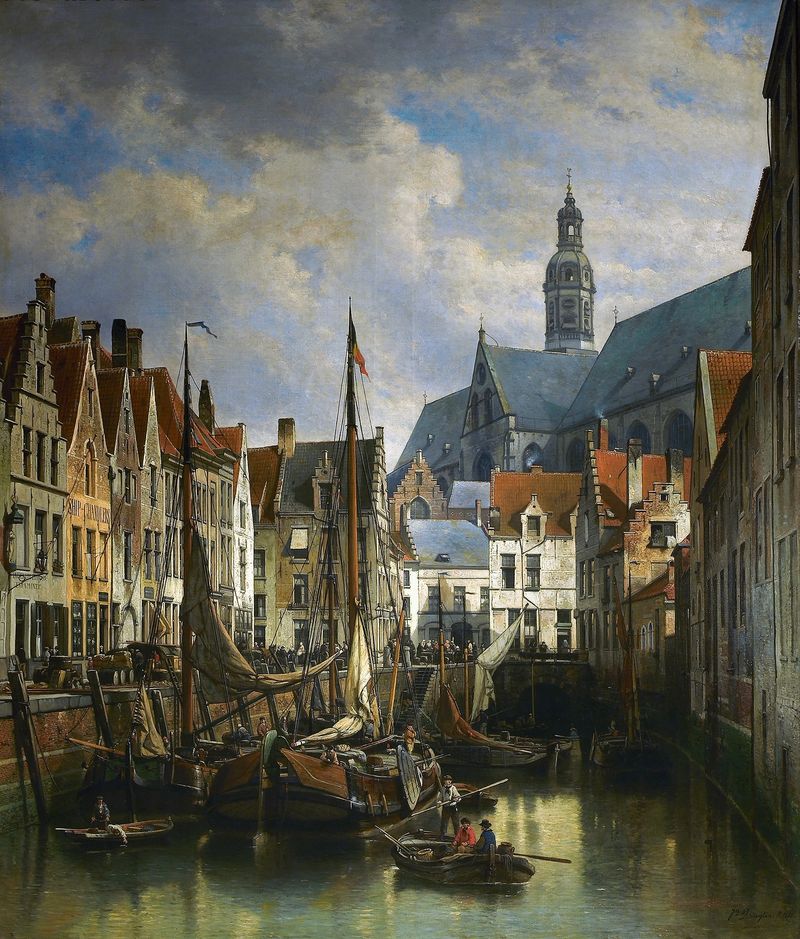
The illusion of a serene world painted in delicate strokes can often mask the complexities of reality. Gezicht op de Brouwersvliet in Antwerpen invites us to explore the intricate dance between calm and tumult that lies beneath its surface. First, look to the foreground where the calm waters reflect a melting sky of soft blues and warm ochers. Ruyten’s brushwork creates a shimmering effect, drawing the eye to the tranquil canal that winds through the scene.
Notice how the buildings lining the water’s edge lean slightly towards the viewer, creating a sense of intimacy and immediacy. The color palette harmonizes, yet contrasts: dark shadows lurk in the corners, hinting at the bustle of life that continues beyond this picturesque moment. Delve deeper, and you may discern the tension between man-made structures and nature, represented through the gentle waves and rustling trees. The carefully balanced composition evokes a fleeting sense of peace, suggesting that tranquility is an illusion easily disrupted.
Ruyten captures not just a scene but an emotional landscape, reminding us that serenity often coexists with chaos — a theme reflective of urban life itself. In 1876, Jean Michel Ruyten painted this piece while living in Antwerp, a city undergoing rapid industrialization. The historical context of a bustling port city brought both opportunity and turmoil, a backdrop that undoubtedly influenced his work. At this time in the art world, realism was gaining traction, allowing artists to explore everyday moments — a direction Ruyten embraced, merging the ordinary with the exceptional through his unique vision.