De Groenplaats te Antwerpen — History & Facts
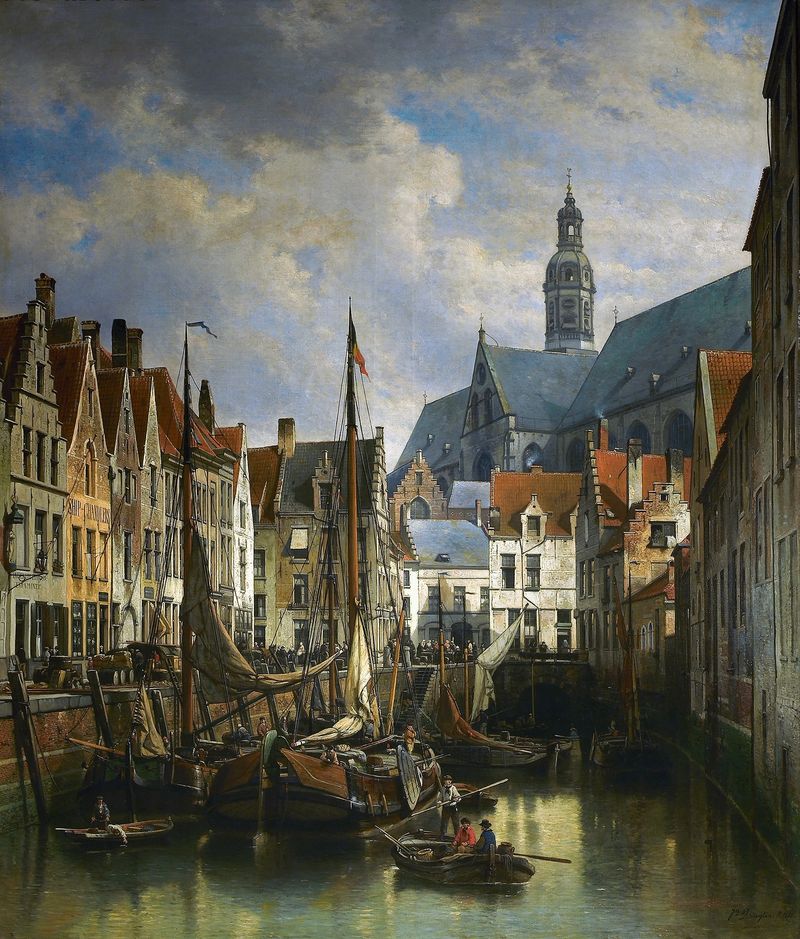
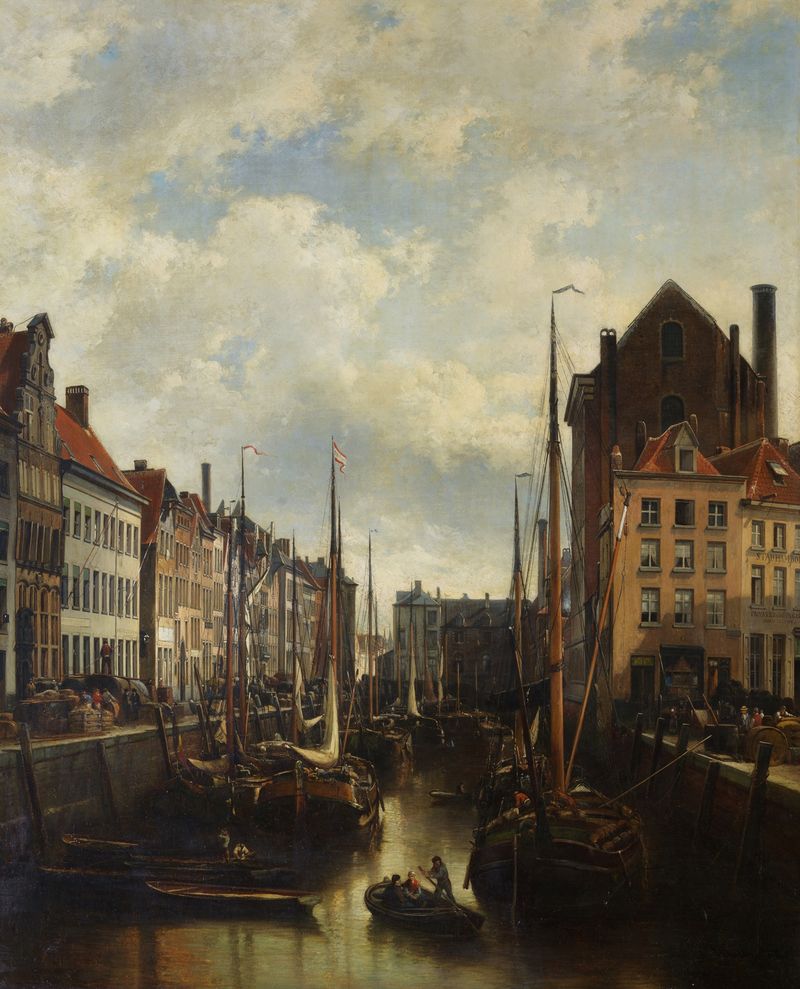
Is this a mirror — or a memory? The interplay of light and shadow in this piece invites a dialogue with the past, whispering stories of a time long gone. Look to the left, where a sun-drenched square unfurls, the cobblestones warm beneath the presence of people lingering in their daily pursuits. The artist utilizes a palette of soft ochres and muted blues, skillfully balancing warmth and coolness, creating a serene yet vibrant atmosphere. Notice how the figures, subtly defined, blend seamlessly with their surroundings, each gesture revealing a moment in time captured as if in a photograph. As you explore further, observe the intricate details — the architecture that looms in the background, a testament to endurance through the ages, and the delicate play of light filtering through the trees.
There’s a contrast between the vitality of the figures and the stillness of the square, evoking a sense of nostalgia for what once was, hinting at the legacies we inherit and leave behind. Each element resonates with the idea of continuity, suggesting that even the most transient moments contribute to a larger narrative. This work emerged during a period when Jean Michel Ruyten was immersed in the vibrant atmosphere of Antwerp, reflecting the city’s rich history and architectural grandeur. Although the exact date remains uncertain, the artist was known for capturing urban landscapes with meticulous attention to detail, mirroring the growing interest in realism within the 19th century.
At this time, the art world was evolving, embracing new techniques and perspectives, and Ruyten’s oeuvre stands as a notable testament to that transformative era.