Gezicht op de Koolvliet te Antwerpen — History & Facts
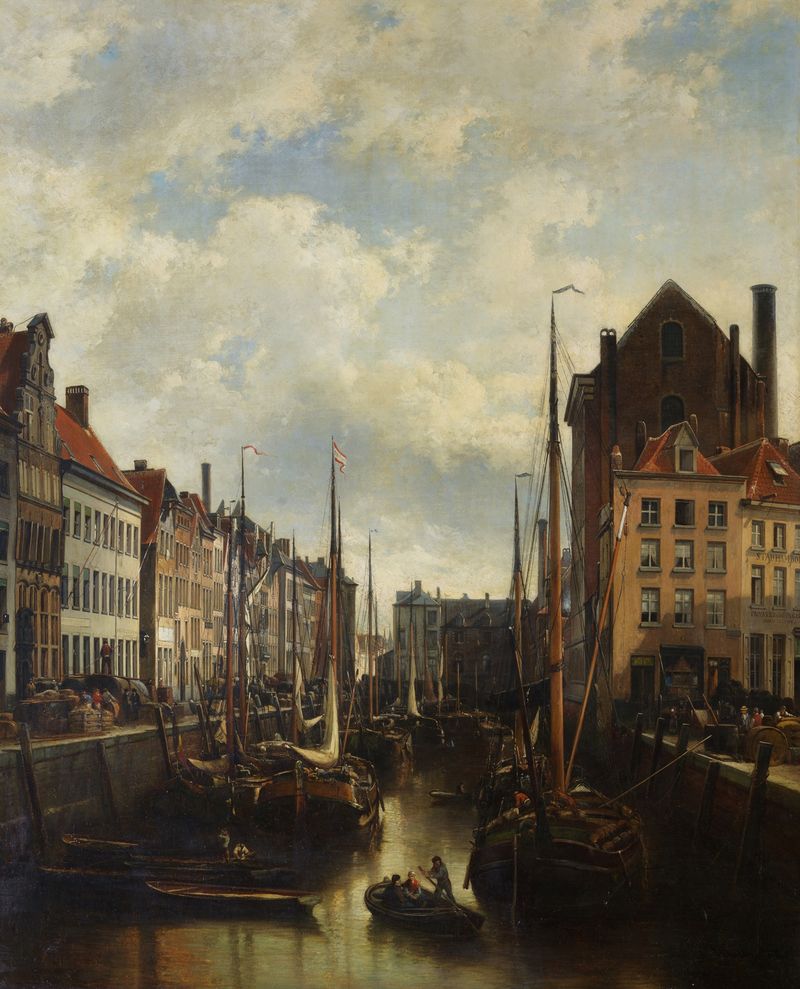
In the stillness of this moment, a void lingers just beyond the canvas, inviting the viewer to confront both absence and presence. The empty expanse of the river reflects a yearning that speaks of what once was, echoing the gentle sighs of history. Look to the bottom left where the water ripples softly, inviting the eye to glide across its tranquil surface. The cool blues and muted greens create a serene atmosphere, contrasting with the warm hues of the buildings that rise steadfastly along the riverbanks.
Notice the delicate brushwork employed to depict the clouds, their soft edges blurring into the sky, suggesting a transient beauty that captivates and momentarily suspends time. Yet, there is an underlying tension present—a juxtaposition between the lively scene of the city and the foreboding emptiness of the water. The silhouette of the distant bridge looms like a reminder of connections now lost, while the scattered boats hint at the absence of life, evoking a sense of longing. This empty space in the painting, a void, speaks volumes about the intricacies of human experience, where silence often reveals deeper truths. Jean Michel Ruyten created Gezicht op de Koolvliet te Antwerpen in 1875 while residing in Antwerp, a time when he was exploring a unique blend of Impressionism and Realism.
The industrial revolution was reshaping the city, and Ruyten sought to capture both its beauty and the changes it underwent. This era marked a significant evolution in the art world, as artists began embracing the emotional resonance of their surroundings, reflecting the complexities of modern life.