
De Grote Markt met vrijheidsboom in 1875 — History & Facts
In De Grote Markt met vrijheidsboom in 1875, hope emerges as a silent yet profound force, beckoning the viewer to witness the resilience of the human spirit amidst turmoil. Look to the center of the canvas where the towering freedom tree stands, its rich greens contrasting with the warm earth tones of the marketplace. Notice how the sunlight bathes the scene in a golden glow, illuminating the faces of the townsfolk gathered around, each one a testament to a shared experience. The gentle brushstrokes create a sense of movement, as if the figures are caught in a moment of hushed anticipation, inviting you to step closer and feel their collective heartbeat. Beneath the surface, one can sense underlying tensions—the juxtaposition of celebration and uncertainty.
The freedom tree symbolizes hope and unity, yet the subdued expressions of the figures hint at the struggles they face. The painting captures a delicate balance between joy and anxiety; it’s a reminder that even in the most festive occasions, shadows of doubt can linger. Each element, from the vibrant colors to the poignant expressions, weaves a narrative of resilience and aspiration, urging viewers to hold onto their hopes. Jean Michel Ruyten created this work in 1875, a time when Europe was undergoing significant social and political changes.
Living in Belgium, Ruyten was influenced by the growing nationalistic sentiments and the collective yearning for freedom among the people. This painting reflects not just a moment in time but also the broader struggles for identity and hope that characterized the era, embedding layers of meaning within an ostensibly simple scene.
More Artworks by Jean Michel Ruyten
Browse all →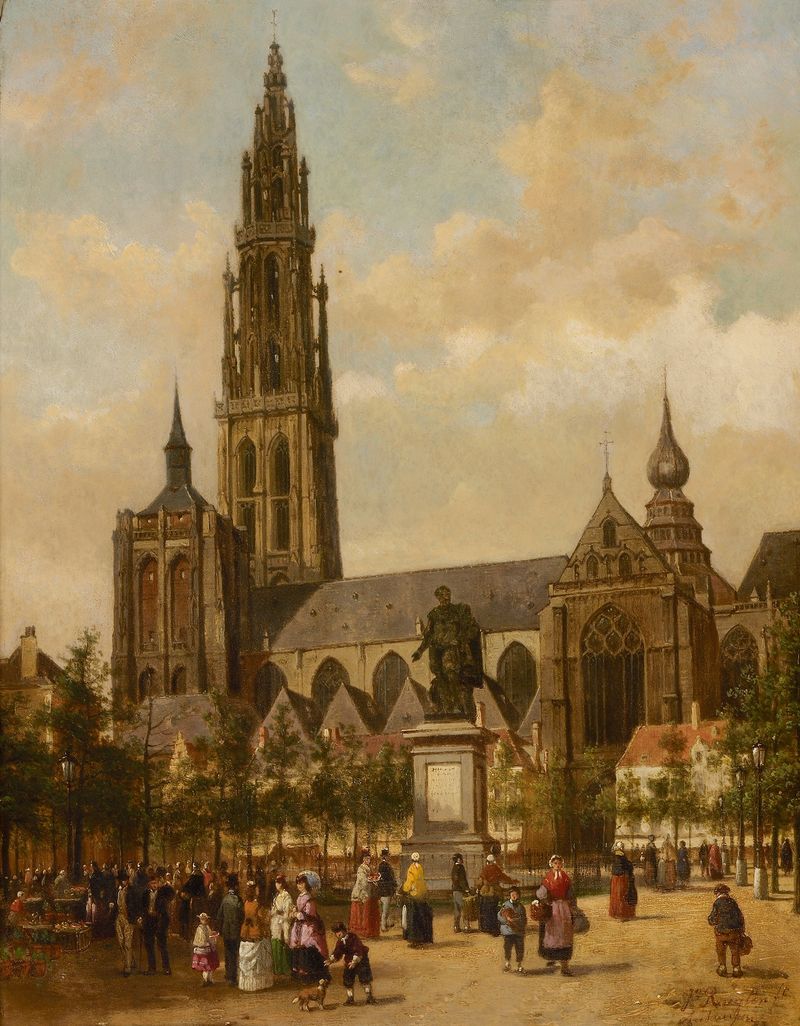
More Historical Art
Browse all →
The Night Watch Militia Company of District II under the Command of Captain Frans Banninck Cocq
Rembrandt van Rijn

Lincoln Memorial
Henry Bacon

The Third of May 1808
Francisco de Goya

Isaac and Rebecca, Known as ‘The Jewish Bride’
Rembrandt van Rijn

The Charge of the Mamelukes (1814)
Francisco de Goya

De vier ruiters van de apocalyps
Albrecht Dürer