
Gezicht op de gracht te Hasselt — History & Facts
What if silence could speak through light? In Gezicht op de gracht te Hasselt, the interplay of muted tones and gentle illumination evokes a profound sense of grief intertwined with beauty, as if the scene has been paused in time, whispering its elegy to the viewer. Look to the left at the calm waters of the canal reflecting the overcast sky, which seems to cradle the weary buildings lining the bank. The brushwork is meticulous, with soft attention directed toward the architectural details that define the space—each structure appears both sturdy and melancholic. Notice how the pale light seeps through the clouds, rendering the scene in shades of gray and earth, as if capturing a fleeting moment of introspection in the midst of bustling life. Delve deeper into the subtext: the stillness of the water may symbolize a moment frozen in time, a metaphor for loss that resonates with each wave of perhaps unfulfilled memories.
The figures—distant and scarcely discernible—hover at the edges, suggesting isolation despite their physical proximity. The tension between vibrant life and pervasive silence hints at the unspoken grief that lies beneath the surface, quietly echoing the human experience. Cornelis Springer painted this scene in 1863, during a period marked by the rise of realism in the art world. At this time, he was established in The Netherlands but grappling with the societal transformations brought about by industrialization.
His focus on capturing the essence of everyday life in his works reflects a deeper contemplation on the passage of time and the subtle grief that accompanies change.
More Artworks by Cornelis Springer
Browse all →
The Royal Palace and the Nieuwe Kerk on the Dam, Amsterdam
Cornelis Springer
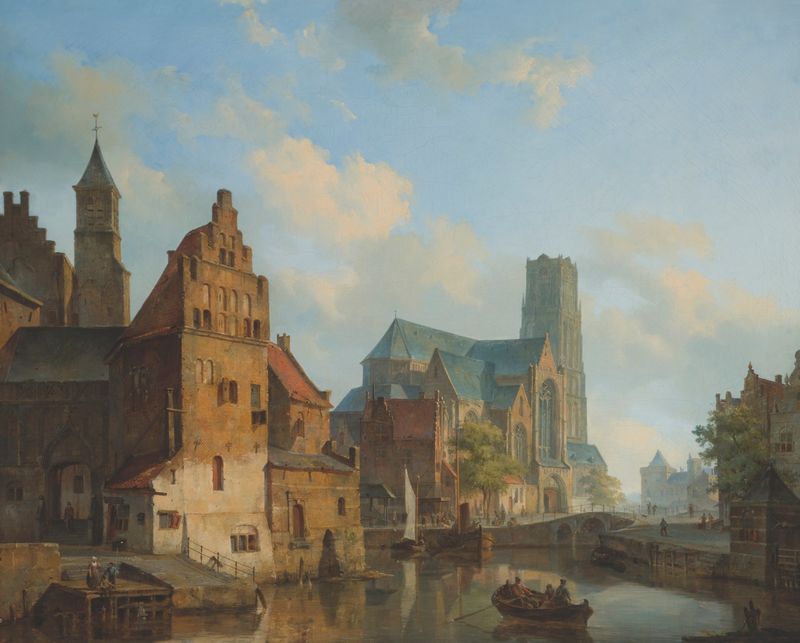
A View Of The Delftse Vaart And St Laurens Church, Rotterdam
Cornelis Springer

The Kerkgracht In Leiden
Cornelis Springer
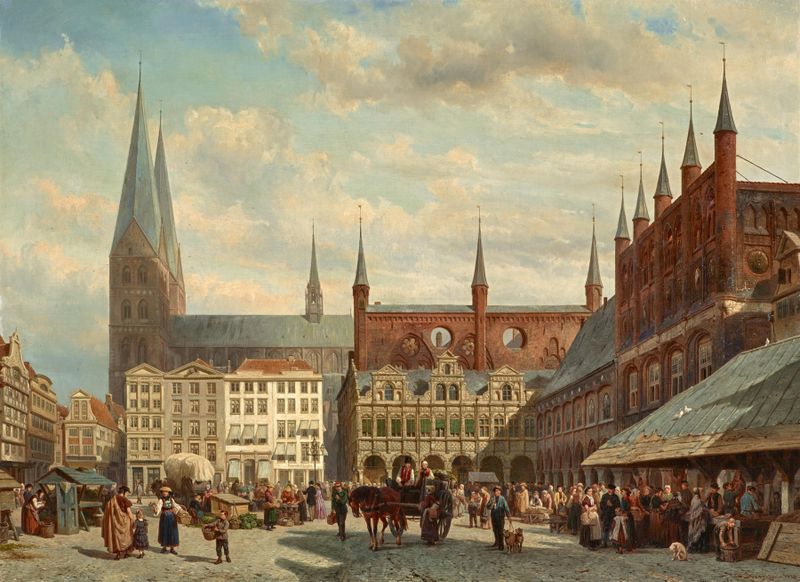
Ansicht des Lübecker Marktes
Cornelis Springer

View of The Hague
Cornelis Springer
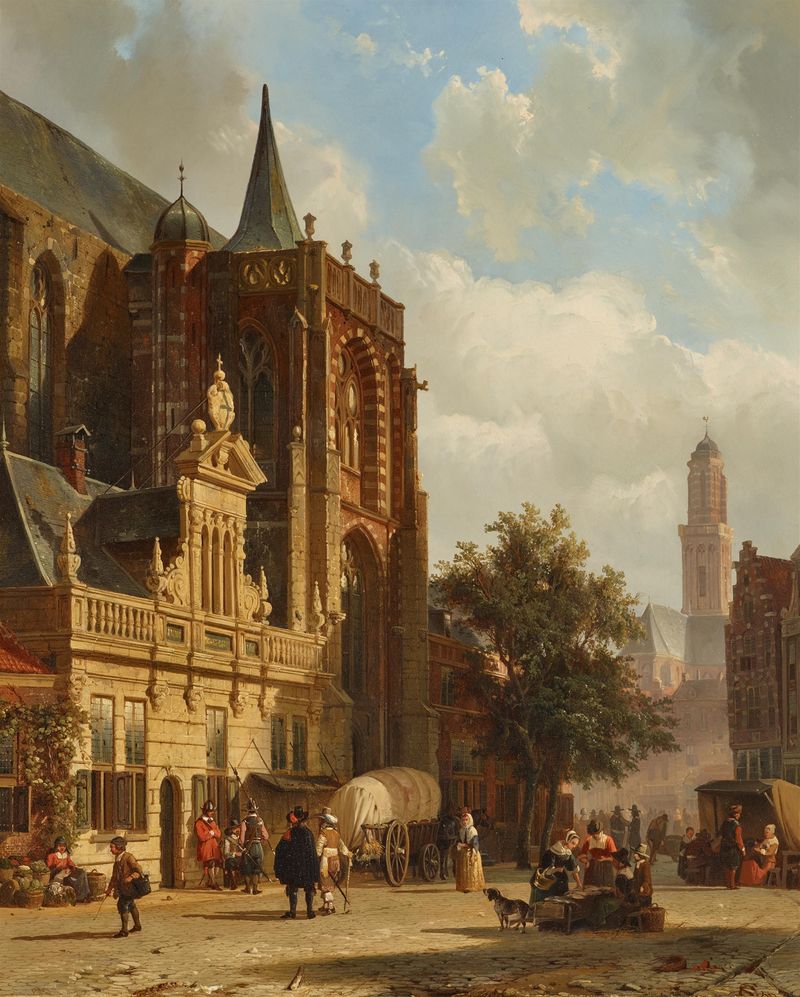
Der Grote Markt in Zwolle
Cornelis Springer
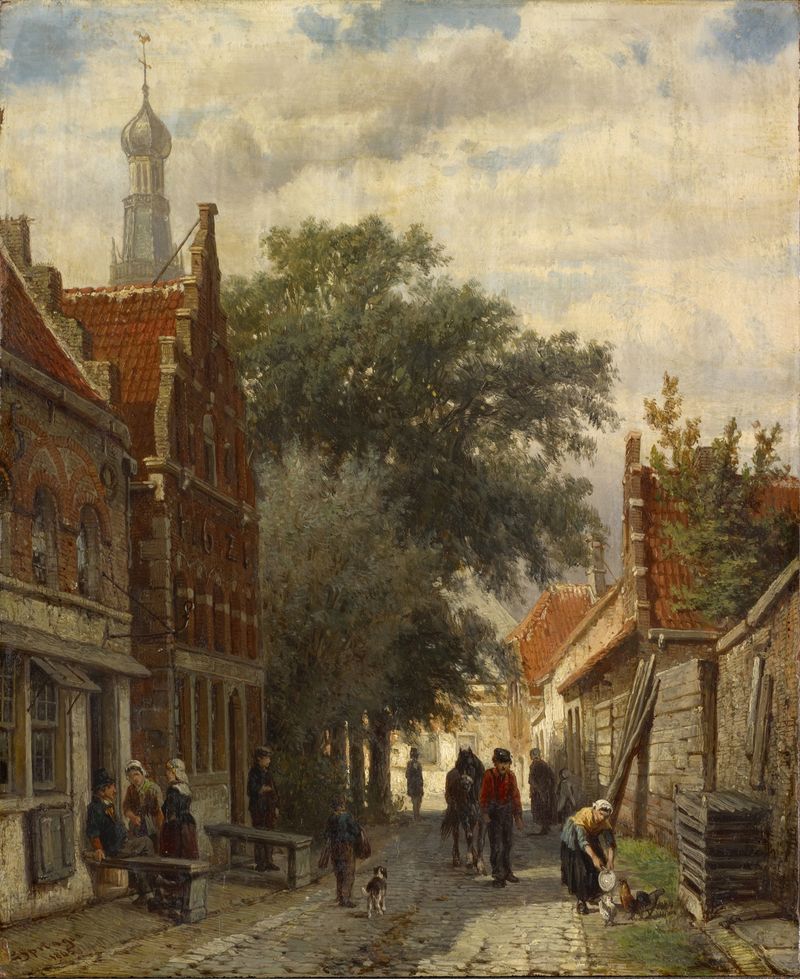
Street in Enkhuizen
Cornelis Springer

View of The Hague from the Delftse Vaart in the Seventeenth Century
Cornelis Springer
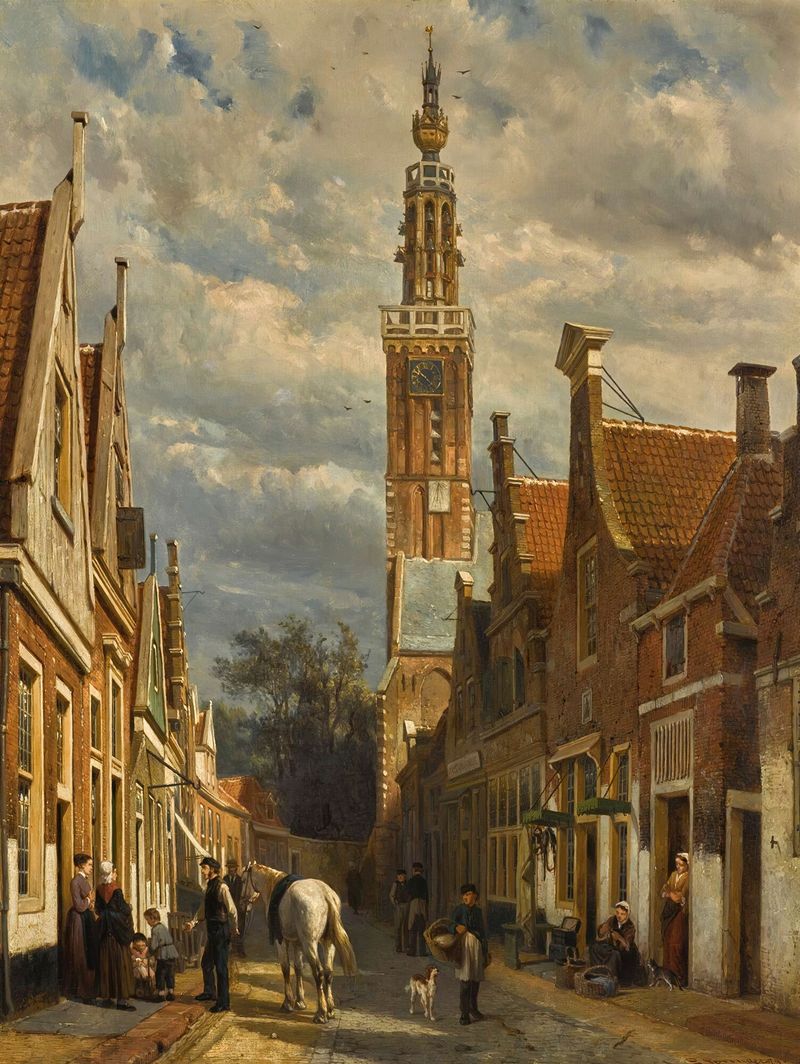
The carillon tower in Edam
Cornelis Springer
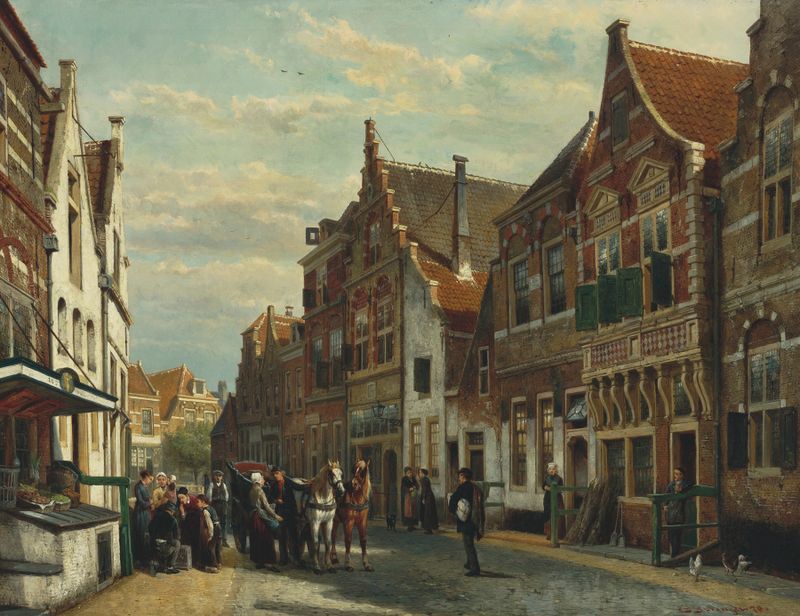
The Wijdstraat, Oudewater, in summer
Cornelis Springer





