Gezicht op Kasteel Rheinfels aan de Rijn — History & Facts
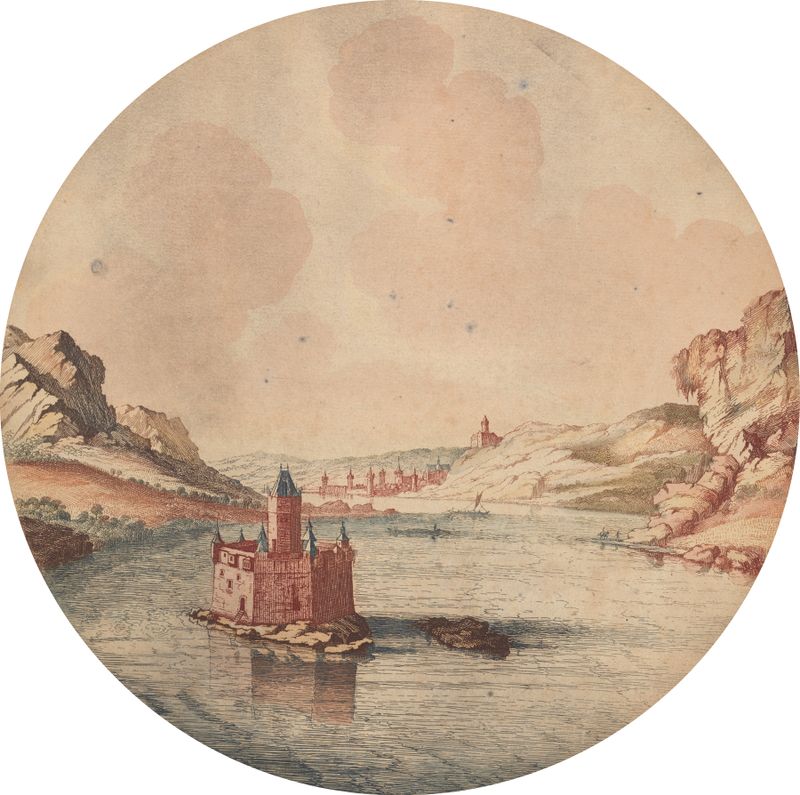
Where does light end, and longing begin? In Gezicht op Kasteel Rheinfels aan de Rijn, the boundary blurs as a castle rises majestically against the backdrop of a fleeting twilight, evoking a sense of rebirth infused with nostalgia. Look to the left at the lush, verdant slopes that cradle the castle, where soft greens melt into the deep blues of the river. The artist employs a delicate palette, expertly contrasting the warm tones of the setting sun with the cool shadows enveloping the structure. Above the castle, wisps of clouds swirl, absorbing the fading light, guiding your gaze to the intricate stonework of the fortress.
The meticulous attention to detail in the castle's façade reveals a world steeped in history, whispering stories of resilience and renewal. As you absorb the scene, notice the duality of nature and architecture—the castle, a symbol of human strength, stands strong amid the ever-changing landscape surrounding it. The flowing river mirrors the passage of time, suggesting a continuity of life that defies decay. The juxtaposition of the natural world against the manmade structure speaks to an enduring connection, where the longing for the past intertwines with the promise of new beginnings. Painted between 1688 and 1698, this work emerged during Johann Teyler's tenure in Northern Europe, a region recovering from turmoil and striving toward artistic enlightenment.
The era was marked by an evolving appreciation for landscapes, as artists increasingly turned their gaze toward natural beauty. Teyler's piece reflects this transformation, capturing not just a moment in time but a vivid testament to resilience and the human spirit’s ability to find beauty amid change.