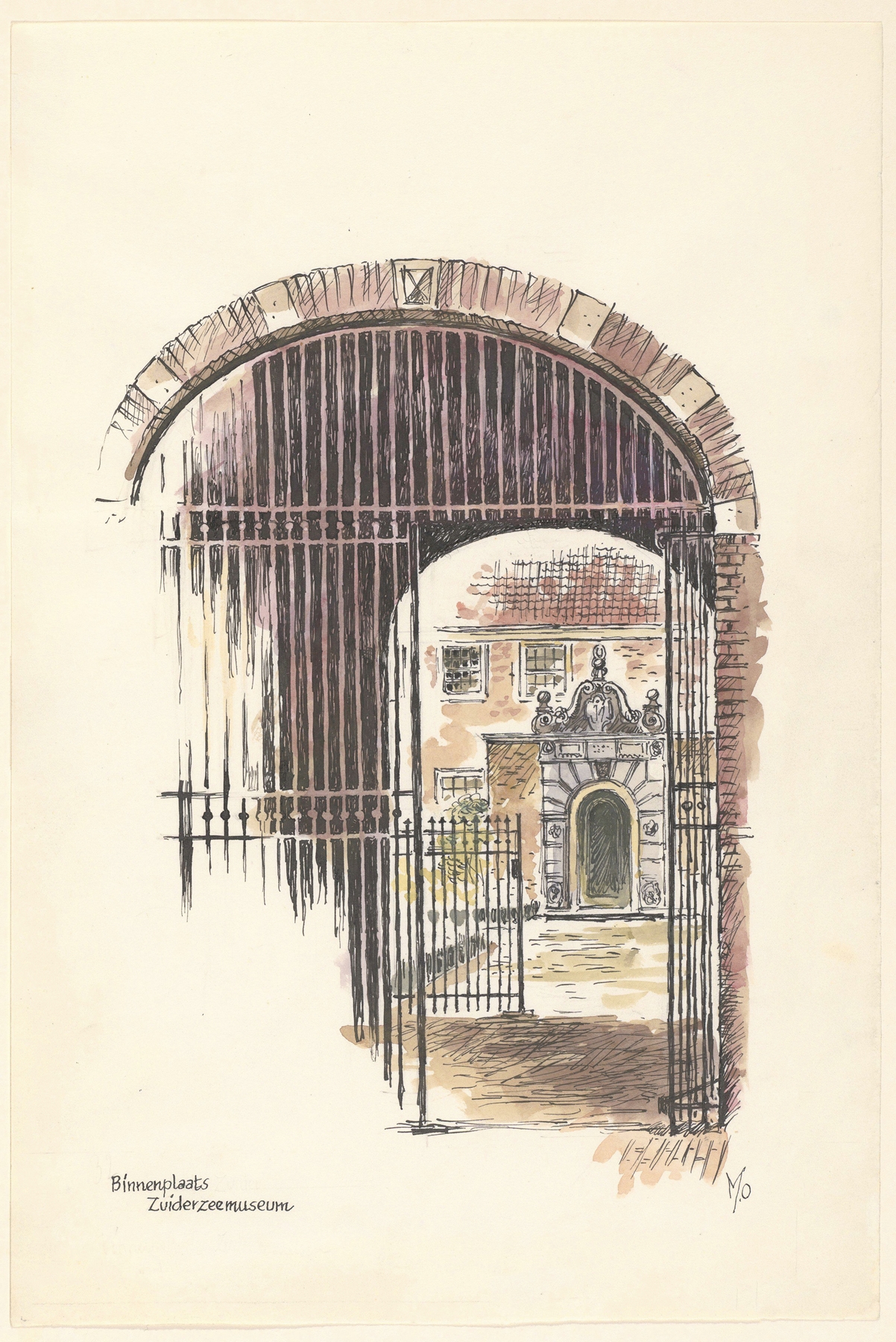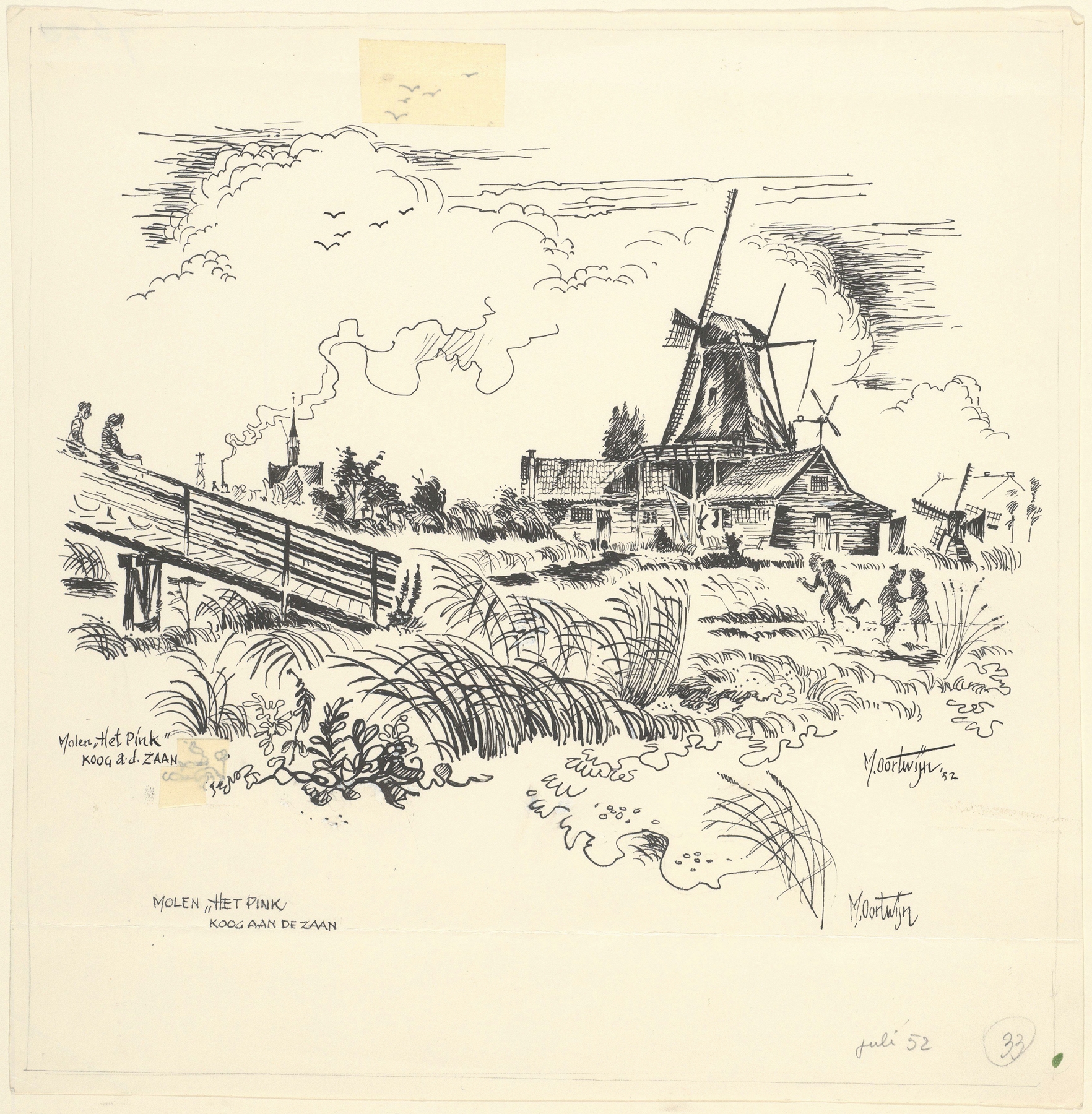
Gezicht op molen ,,Het Pink” aan de Pinkstraat te Koog aan de Zaan. — History & Analysis
“Every silence here is a confession.” In the stillness of a quiet landscape, the absence of noise draws the viewer into a world where thoughts linger like the wisps of cloud across the sky. Each element, from the gracefully turning blades of the windmill to the placid waters reflecting its stature, seems to echo the void—an invitation to contemplate what lies beneath the surface. Focus first on the windmill, a steadfast sentinel in the composition. Its towering presence commands attention, rendered with a palette of muted greens and warm earth tones. The gentle brush strokes breathe life into the scene, capturing the essence of a tranquil afternoon. Notice how the light interacts with the clouds, casting soft shadows that dance across the water, evoking a sense of peace intertwined with solemnity. Delve deeper into the contrasts presented in this work. The windmill stands proud against the serene backdrop, a symbol of labor and tradition in a world increasingly overshadowed by modernity. Yet, the surrounding tranquility hints at a nostalgic longing for simpler times, the void reflecting both the permanence of the structure and the transient nature of human endeavors. Each detail, from the ripples on the water to the way the trees frame the scene, whispers stories of resilience and solitude. In 1952, Maarten Oortwijn painted this piece during a time when the Dutch landscape was evolving, grappling with post-war reconstruction and an emerging modern identity. Working from his studio near Koog aan de Zaan, the artist drew inspiration from the rich tapestry of regional history and the steadfast symbols of the past, encapsulating a moment that resonates with the quiet pulse of rural life.