
Gezicht te Honfleur — History & Facts
Who listens when art speaks of silence? In Gezicht te Honfleur, the stillness of the scene invites us to contemplate shadows that stretch infinitely, whispering secrets of a world untraveled. Look to the left at the delicate interplay between water and sky, where soft pastel hues blend seamlessly. The calm waters, reflecting a muted palette of blues and greys, lead your gaze towards the horizon, creating a sense of depth and tranquility. Notice how the wispy clouds cast a gentle shadow across the landscape, hinting at the fleeting nature of time.
The brushstrokes are deft yet subtle, allowing the viewer to feel the atmosphere rather than just observe it. Hidden within this serene milieu lies the tension between light and dark, suggesting more than mere beauty. The shadows that play across the boats hint at untold stories of those who navigated these waters, each shadow a reminder of lives intertwined with nature's rhythm. Additionally, the quietness of the setting evokes a sense of solitude, encouraging introspection amidst the bustling chaos of life. Paul Huet created this work between 1861 and 1866, during a period marked by the rise of Romanticism in France, where artists sought to capture the sublime beauty of nature.
At this time, Huet was deeply influenced by his surroundings in Normandy, witnessing the transition of French art as it moved towards Impressionism. This painting serves as a bridge between the two movements, encapsulating a moment of stillness in a rapidly changing world.
More Artworks by Paul Huet
Browse all →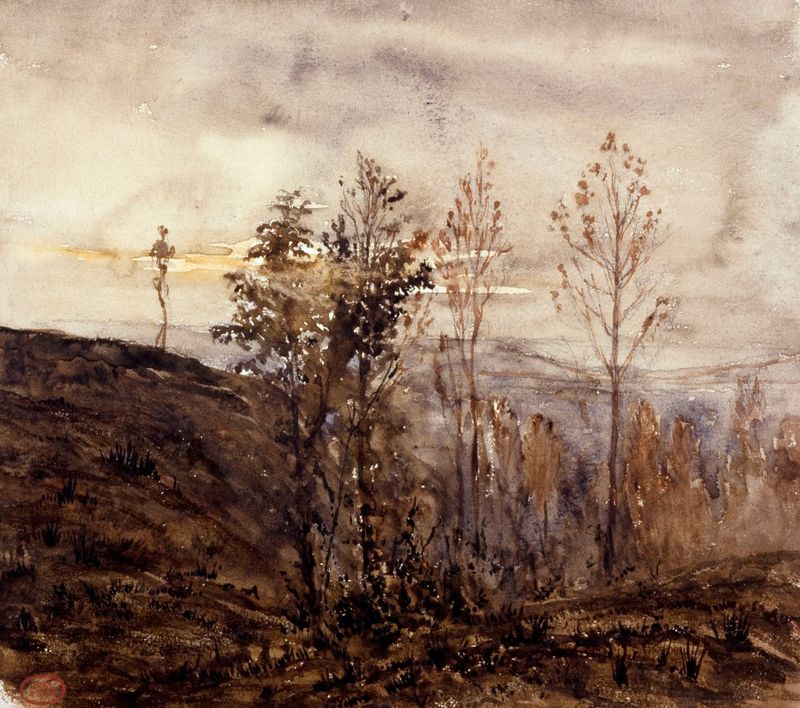
Les bois de Sèvres
Paul Huet

An Abbey by a Wooded Lake at Twilight
Paul Huet

Woodland Stream
Paul Huet
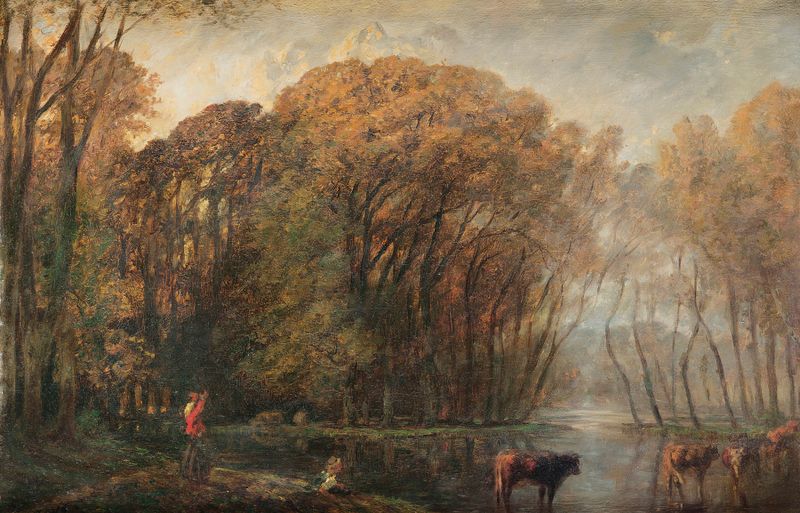
The Laïta in high tide, Brittany
Paul Huet

Sur la route de Nice
Paul Huet
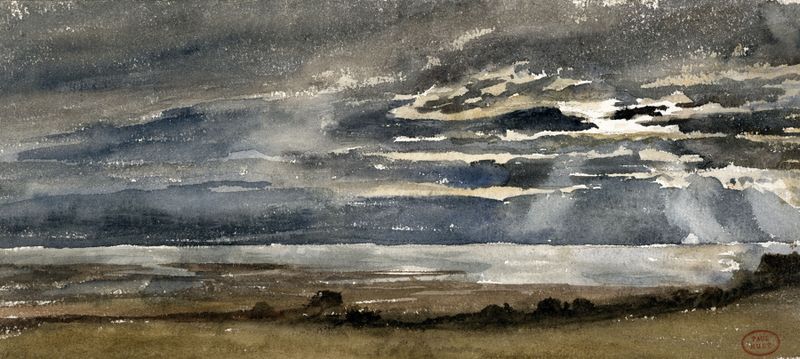
Soleil couchant
Paul Huet

A Wild Beech in Full Leaf
Paul Huet

Les Roches noirs, bij Villers
Paul Huet

Cannes
Paul Huet

Mountain View at Oisans (Isère)
Paul Huet





