
Goldau. Départ pour le Righi — History & Facts
In Goldau. Départ pour le Righi, the essence of awe captures the viewer in a moment suspended between nature's grandeur and human aspiration. Look to the left at the majestic mountains, towering and resolute against the soft azure sky. Notice how the delicate play of light creeps over the rugged terrain, illuminating the vibrant greens and earthy browns of the valley below.
The composition draws your gaze toward the winding path that leads into the distance, hinting at both adventure and uncertainty. Each brushstroke reveals meticulous attention to detail, creating a palpable tension between the serenity of nature and the dynamic movement of the departing figures. Amidst the tranquil beauty, the painting conveys an underlying sense of journey and exploration. The figures, small against the vast landscape, embody the human spirit's desire to conquer and connect with the sublime.
The contrast between the static grandeur of the mountains and the fleeting presence of the travelers serves as a reminder of our transience in the face of nature's timelessness. Each element harmonizes, evoking a feeling of both solitude and camaraderie, as the viewer contemplates their own place within this vast tableau. Created during a time when Romanticism inspired a deep appreciation for nature, the artist painted this work in the late 19th century, likely while reflecting on the evolving relationship between humanity and the natural world. Jacottet's practice was characterized by an exploration of light and landscape, and during this period, the art community was increasingly captivated by the interplay of emotion and environment.
More Artworks by Jean Jacottet
Browse all →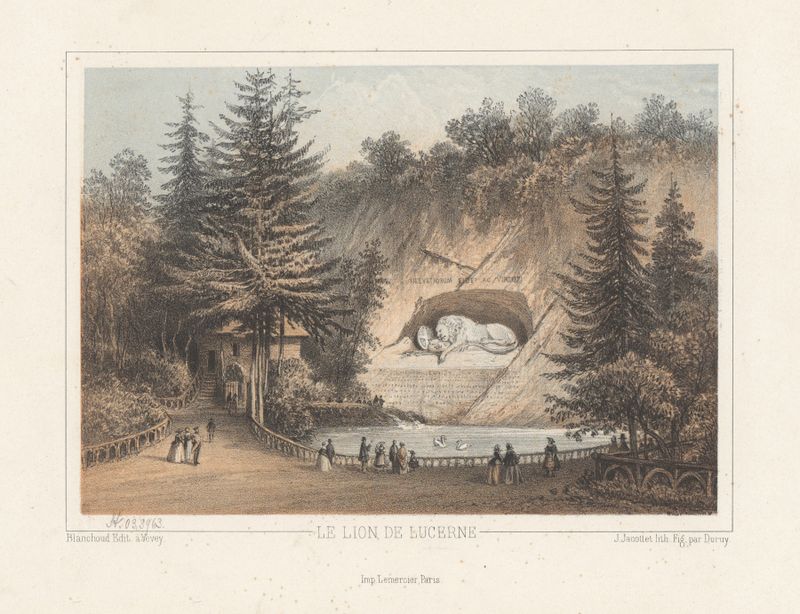
Le lion de Lucerne
Jean Jacottet
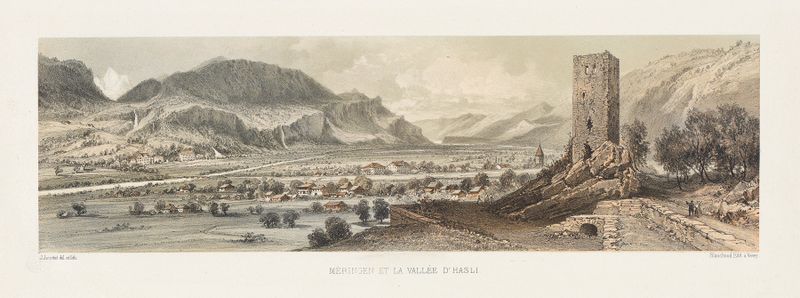
Méringen et la vallée d’Hasli
Jean Jacottet
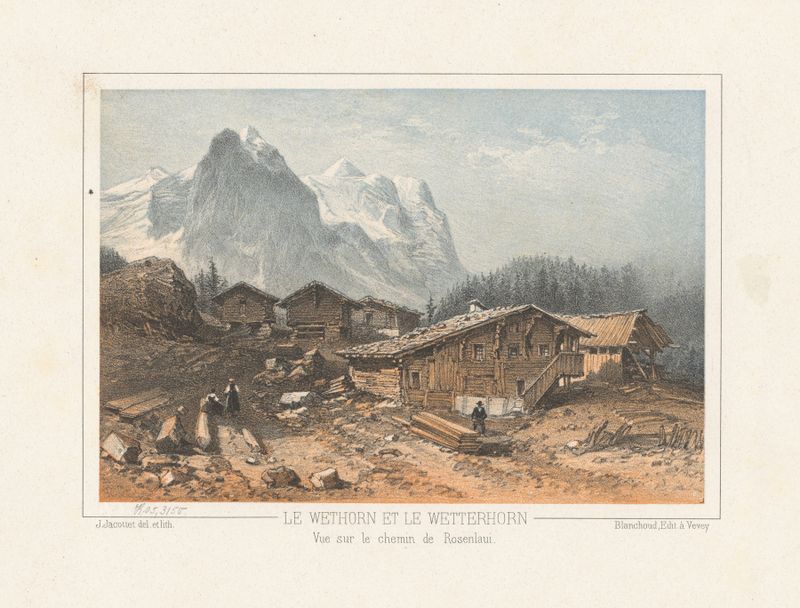
Le Wethorn et le Wetterhorn Vue sur le chemin de Rosenlaui
Jean Jacottet
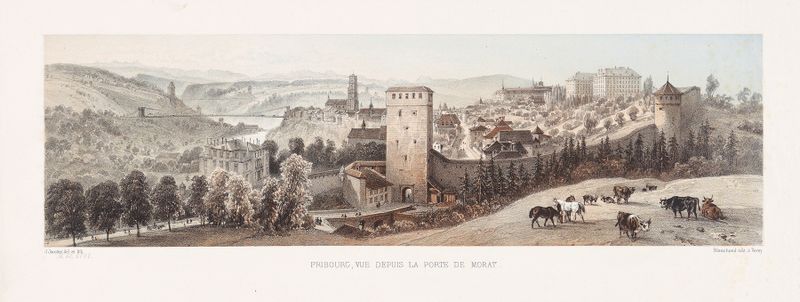
Fribourg, vue depuis la porte de Morat
Jean Jacottet
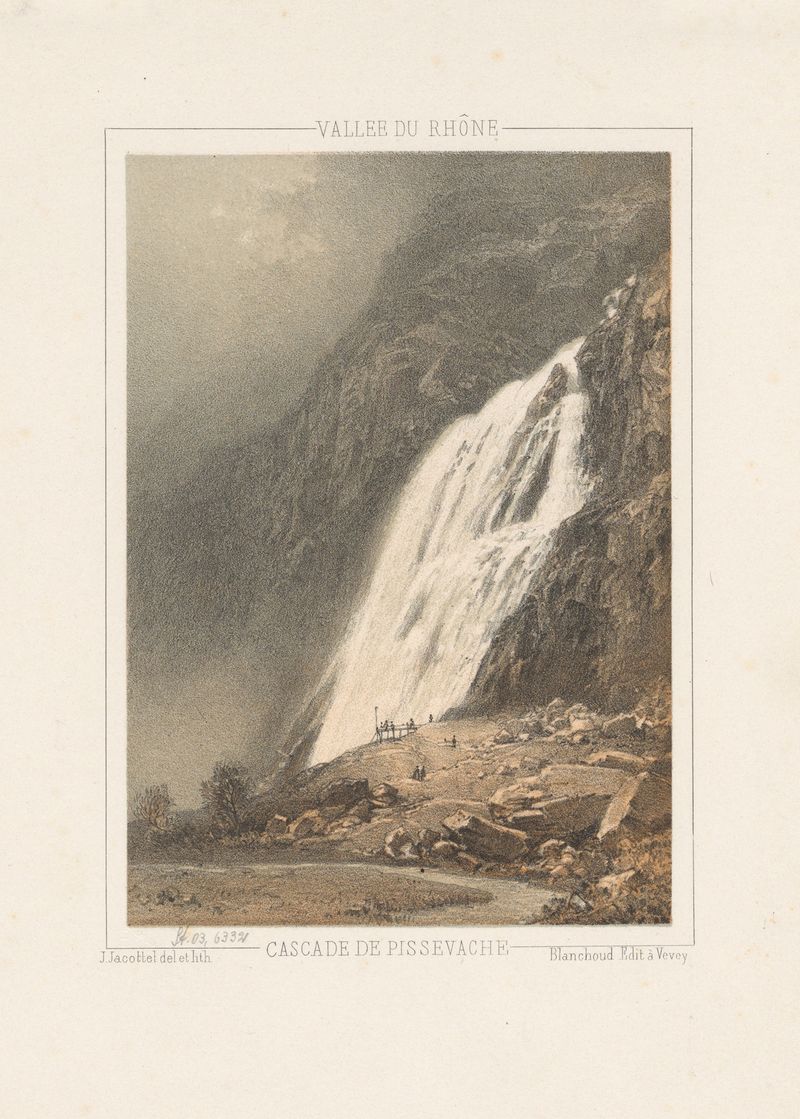
Cascade de Pissevache
Jean Jacottet
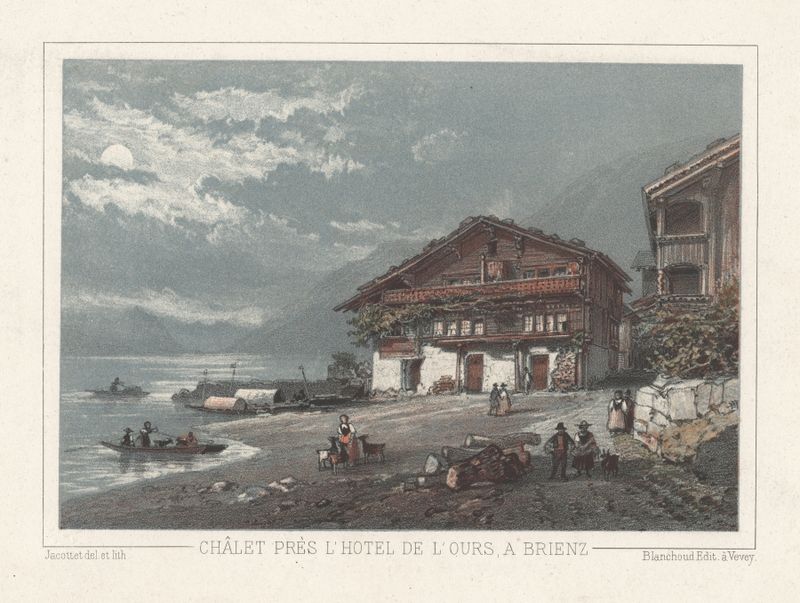
Châlet près l’Hotel de l’Ours, a Brienz
Jean Jacottet
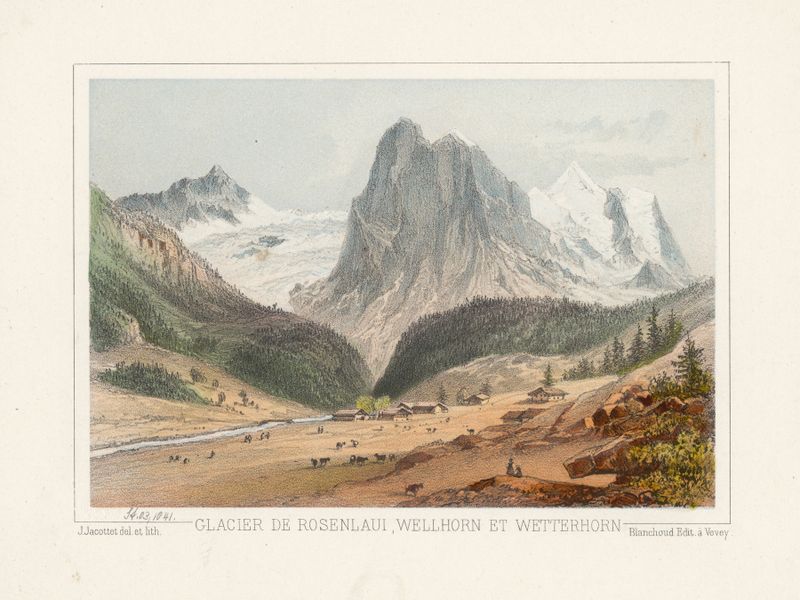
Glacier de Rosenlaui, Wellhorn et Wetterhorn
Jean Jacottet
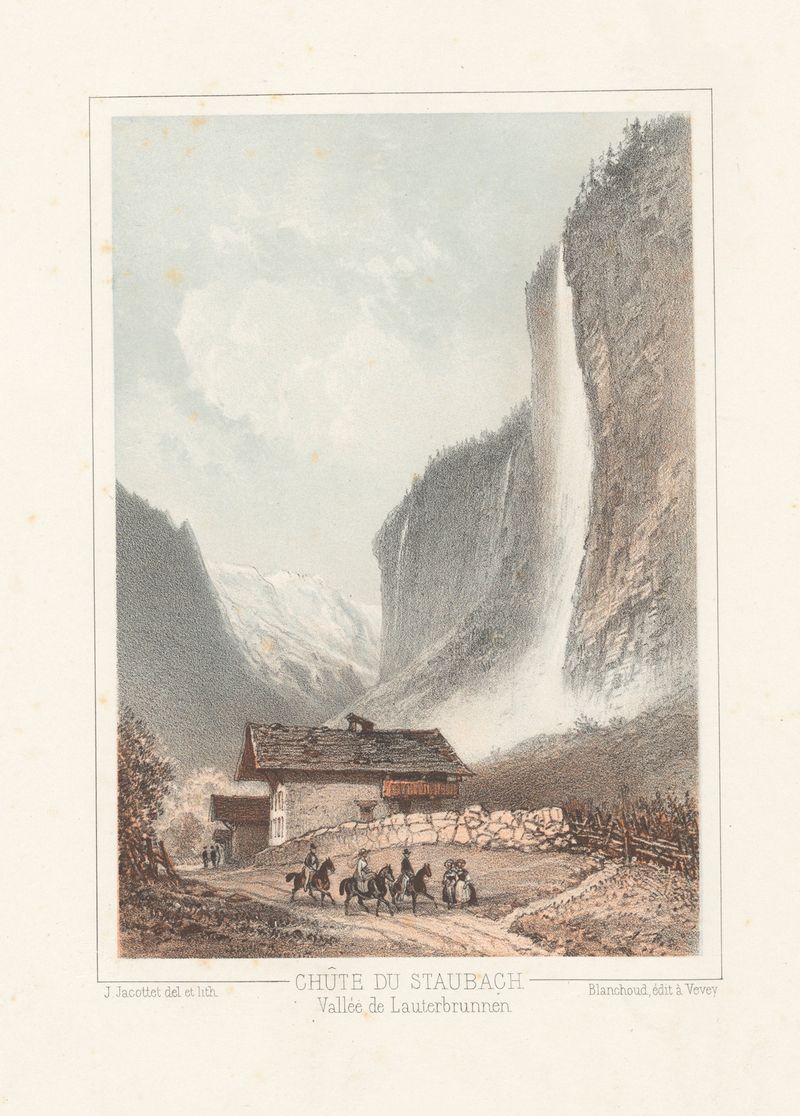
Chûte du Staubach Vallée de Lauterbrunnen
Jean Jacottet
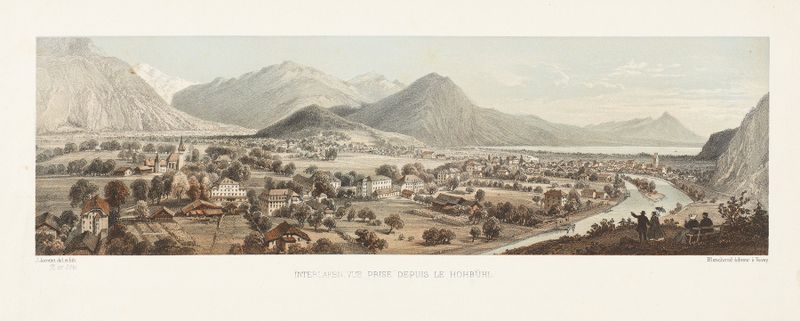
Interlaken, vue prise depuis le Hohbühl
Jean Jacottet
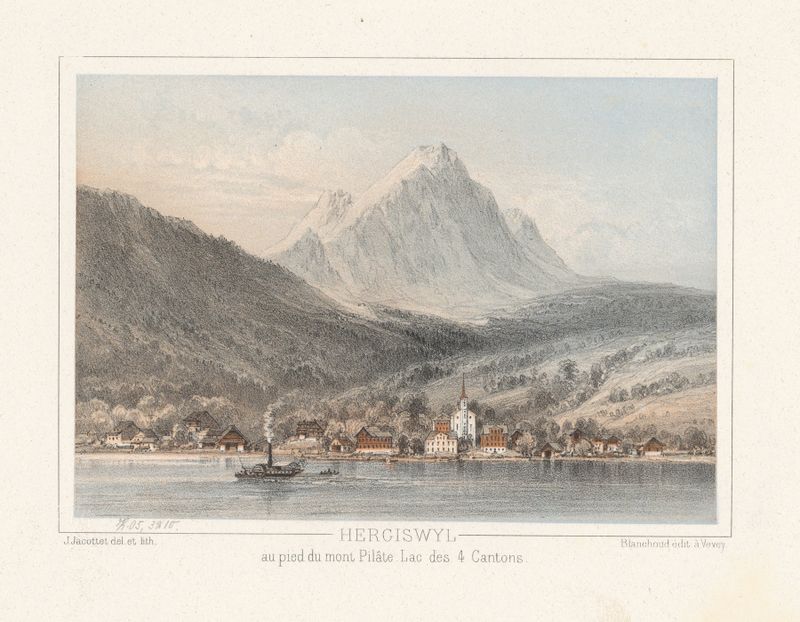
Hergiswyl au pied du mont Pilâte. Lac des 4 Cantons
Jean Jacottet





